The FABC Commission for Synodality urged national synodal teams across Asia to remain patient and hopeful in advancing the Church’s synodal journey, reminding them that their task is to “sow” while trusting God to bring about growth.
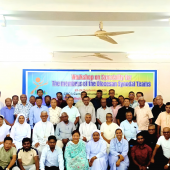
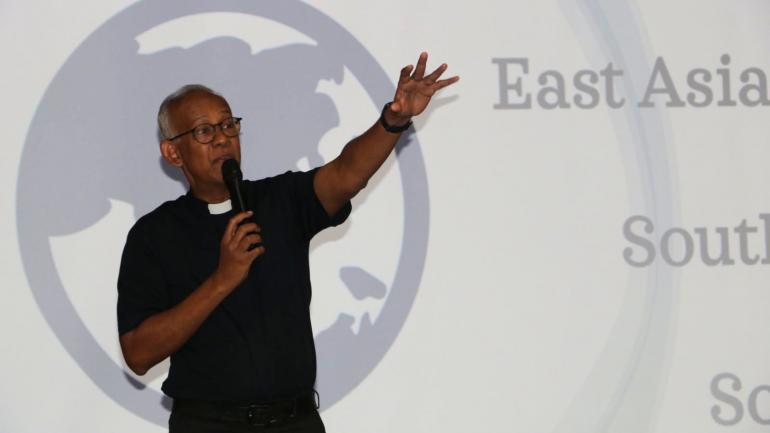
Fr. Clarence Devadass, executive secretary of the FABC Commission for Synodality, delivered the closing remarks on September 3 at Joseph Nattaya Conference Hall, Baan Phu Waan Pastoral Training Center in Bangkok, at the conclusion of a three-day National Synodal Teams Meeting.
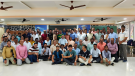
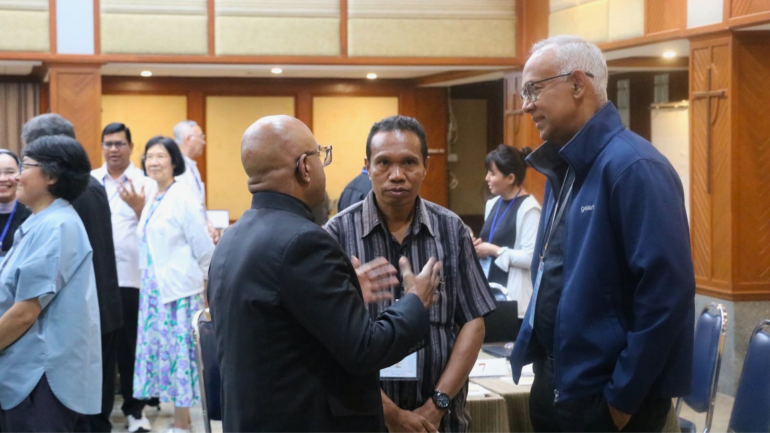
The September 1–3 gathering was organized by the FABC Commission for Synodality under the leadership of Cardinal Pablo Virgilio David, bishop of Kalookan in the Philippines and chairman of the commission, and Fr. Devadass. More than 60 participants from across Asia, including bishops, priests, religious and lay leaders, took part in the meeting.
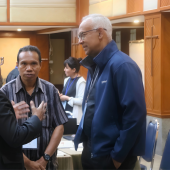
The gathering brought together members of national synodal teams to reflect on their experiences, share emerging initiatives and challenges, and strengthen collaboration as the Churches of Asia continue their synodal journey.
In his closing message, Fr. Devadass said the gathering itself was “a sign of hope” for both the Churches of Asia and the universal Church.
He acknowledged that not all members of national synodal teams could attend because of logistical and financial limitations, but urged participants to bring the fruits of the meeting back to their countries, dioceses and wider teams.
“We are on a journey,” he said, describing synodality as “a journey of synodal conversion” that requires the Church to listen more deeply, walk together more intentionally and discern where the Holy Spirit is leading.
Fr. Devadass also cautioned participants against becoming discouraged when progress appears slow.
Some Churches may already have developed new initiatives, while others may still be struggling to begin or facing obstacles, he said. Differences in progress should not become a reason for comparison.
Instead, he encouraged the participants to learn from one another.
“Let the experience of one Church become encouragement for another,” he said, adding that the struggles of one Church can become wisdom for another, while small signs of hope can give courage to others.
Drawing on Jesus’ parable of the growing seed in Mark 4:26–27, Fr. Devadass emphasized that the work of synodality often produces results that cannot be seen immediately.
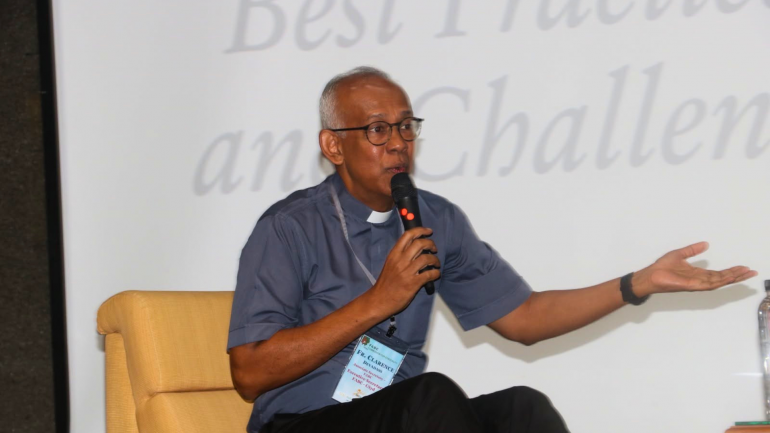
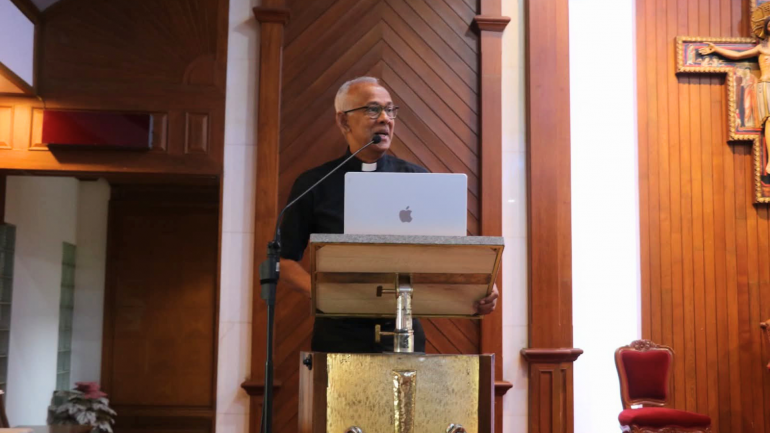
“Our task is to sow. God gives the growth,” he said.
Every listening session, conversation, effort to bring people together and act of patient accompaniment, he explained, can become a seed that contributes to a more synodal Church.
He recalled that the commission’s hope from the beginning has been “to inspire one another, encourage one another and accompany one another.”
Fr. Devadass stressed that synodality should not be reduced to another pastoral program or project.
“Synodality is not simply a program that we implement; it is a way of being Church,” he said.
He encouraged participants to return home carrying whatever “seed” they had received during the three days — whether a new idea, friendship, deeper understanding of synodality or simply the reassurance that they were not alone.
“Take that seed home and plant it,” he said.
He urged national teams not to lose heart when the “soil seems hard” or growth is slow, but to continue their mission with patience, humility and hope.
“The harvest belongs to God,” he said.
As the meeting concluded, Fr. Devadass thanked participants for their openness, honesty, sharing and commitment, as well as his colleagues in the commission who helped organize the gathering.
He expressed hope that the three days would not simply become an event to remember but would continue to bear fruit in the Churches of Asia.
“We go home with renewed courage not because we have all the answers, but because we know that we are walking together, and that the Holy Spirit continues to work in ways that we may not always see,” he said.
Fr. Devadass concluded by calling on the participants to continue sowing “seeds of hope for a greater synodal missionary Church,” as the Churches of Asia seek to embody communion, participation and mission.
Radio Veritas Asia (RVA), a media platform of the Catholic Church, aims to share Christ. RVA started in 1969 as a continental Catholic radio station to serve Asian countries in their respective local language, thus earning the tag “the Voice of Asian Christianity.” Responding to the emerging context, RVA embraced media platforms to connect with the global Asian audience via its 21 language websites and various social media platforms.
Latest News