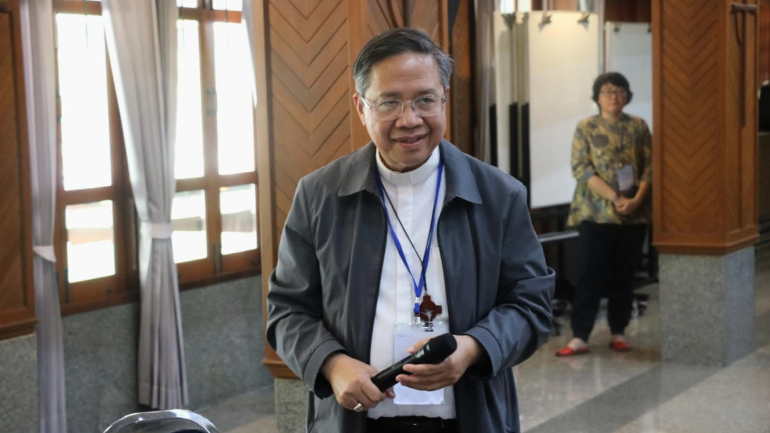
Synodality has changed the way Bishop Joseph Do Manh Hung leads the Diocese of Phan Thiet, Vietnam, moving him from a leadership approach centered on providing answers toward one that first listens to the questions and experiences of the People of God.
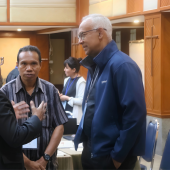
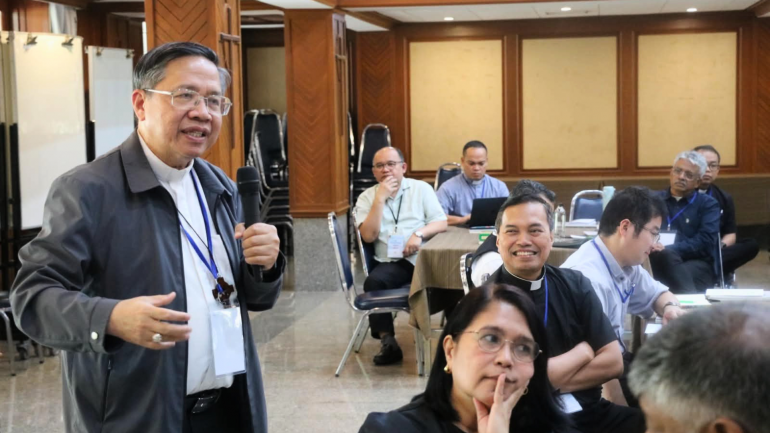
“Synodality has transformed me from a leader who felt responsible for giving answers into one who is learning to receive questions,” Bishop Joseph said during a conversation with Dr. Christina Kheng, a member of the FABC Commission for Synodality.
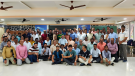
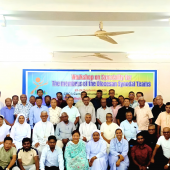
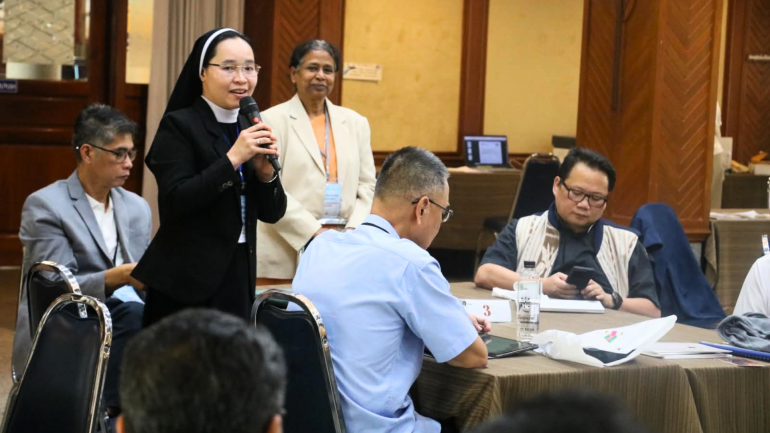
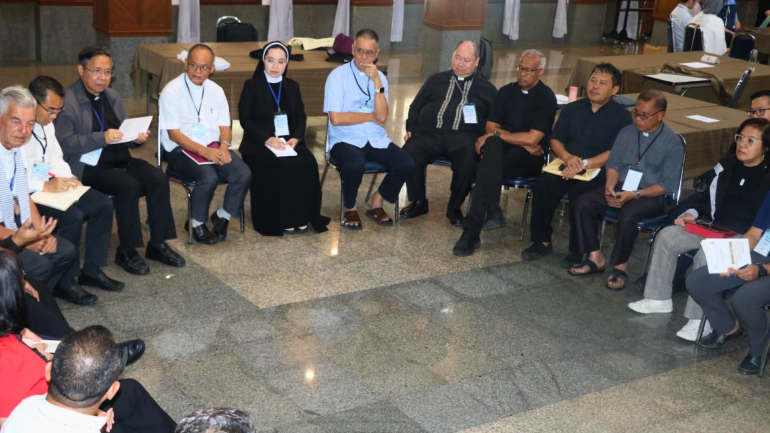
The sharing took place during a three-day conference in Bangkok from September 1–3, bringing together bishops, national synodal team members and other delegates from across Asia to discuss practical steps for strengthening the synodal journey at diocesan and national levels.
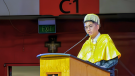
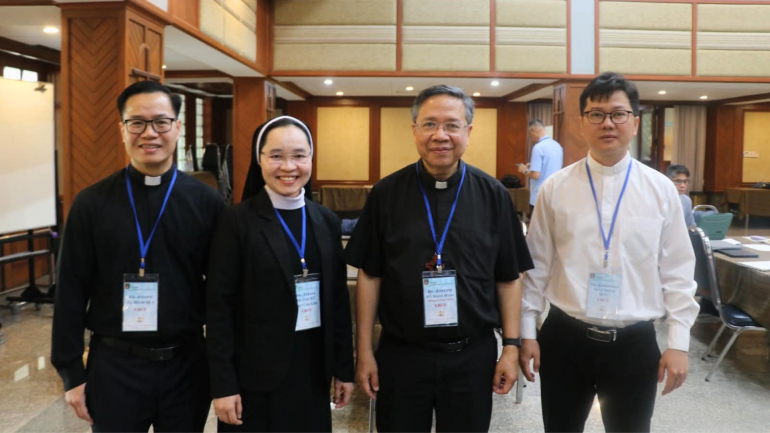
Bishop Joseph was among about 10 bishops from across Asia who attended the gathering. He presided over the welcome Mass on Aug. 31 at St. Michael Chapel, urging delegates to approach the synodal journey with humility and openness. He remained present throughout the sessions and made several important interventions. Three other delegates represented the Bishops’ Conference of Vietnam: Sr. Teresa Huỳnh Nữ Phượng Chi, Fr. Joseph Tạ Minh Quý and Fr. Alphonsus Trần Trọng Quốc.
For Bishop Joseph, synodality is not primarily about creating new structures or holding more meetings, but about conversion in how Church leaders listen, discern and relate to others.
The Diocese of Phan Thiet began its synodal journey in response to the pastoral direction of the Bishops’ Conference of Vietnam and preparations for its golden jubilee.
The Vietnamese bishops developed consecutive three-year pastoral plans, initially focusing on communion, participation and proclaiming the Gospel, followed by a missionary emphasis on every Christian as a missionary disciple, every Christian family as a missionary community and the Church’s mission to make disciples.
The diocese marked its 50th anniversary in 2025 after observing a Holy Year in 2024 centered on the Shrine of Our Lady of Ta Pao. Priests, religious, catechists, parish councils, youth, parents, choirs and people with disabilities gathered there for formation and practiced “Conversation in the Spirit.”
Bishop Joseph said one of the greatest surprises was discovering how clearly the Holy Spirit can speak through ordinary people.
He recalled a conversation in a small fishing parish where a parish council member told him that the parish priest was like the body of a crab, while the parish council was its legs and claws. Without them, the crab could not move.
The experience challenged the bishop, who had spent 26 years teaching theology at a major seminary in Saigon before becoming a bishop.
“I learned that evangelization must speak the language of the people,” he said, noting that the fishermen naturally expressed their understanding through images drawn from their own experience.
The crab also became an unexpected lesson in synodality.
“A crab does not walk in a straight line; it moves sideways,” Bishop Joseph said. “My task as a bishop is not to make everyone walk in my stride, but to ensure we are all moving toward the same destination: Christ.”
That insight has influenced decision-making in the diocese. Rather than asking what decision the bishop should make, diocesan leaders increasingly ask how an issue can be discerned together.
Conversation in the Spirit has consequently become part of regular meetings of the diocesan curia and councils, involving priests, religious and lay faithful in prayerful listening and discernment.
Bishop Joseph also recalled a dialogue with about 600 young people. One young man asked him for two “road signs” to help young people navigate the internet, one showing the right direction and another warning of danger.
Rather than simply warning young people about harmful online content, Bishop Joseph said the Church should also point them toward “beautiful destinations”: good witnesses, vibrant communities and digital spaces where they can encounter Christ.
For the bishop, this illustrates why listening cannot be treated as a delay to evangelization.
“Listening is the mission,” he said.
He identified four challenges for the synodal journey: understanding synodality as conversion rather than a procedural change; recognizing listening as part of mission; respecting different paces; and ensuring that synodality becomes a culture rather than a temporary program.
He said collaboration among priests, religious and lay Catholics has deepened through shared prayer, listening and discernment. Lay Catholics, he noted, are increasingly recognizing that they are not merely assistants to priests but share responsibility for the Church’s mission by virtue of baptism.
For other dioceses, Bishop Joseph urged Church leaders to begin with people rather than structures, emphasizing formation in prayer, listening and discernment. He also recommended bringing formation closer to local communities and listening especially to voices that can easily be overlooked, including children, youth, fishermen, people with disabilities and families facing hardship.
Looking ahead, Bishop Joseph said he hopes the Church in Asia will become increasingly a “listening Church, a discerning Church, and a missionary Church increasingly.”
In a continent experiencing urbanization, migration, poverty, religious pluralism and rapid digital change, he said the Church cannot respond effectively without the participation of the entire People of God.
“The future of the Church in Asia will depend not on what we build, but on who we become,” Bishop Joseph said, calling Asian Catholic communities to “listen deeply, discern humbly, walk together patiently, and witness joyfully.”
Radio Veritas Asia (RVA), a media platform of the Catholic Church, aims to share Christ. RVA started in 1969 as a continental Catholic radio station to serve Asian countries in their respective local language, thus earning the tag “the Voice of Asian Christianity.” Responding to the emerging context, RVA embraced media platforms to connect with the global Asian audience via its 21 language websites and various social media platforms.
Latest News