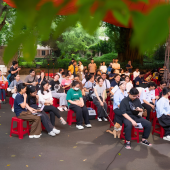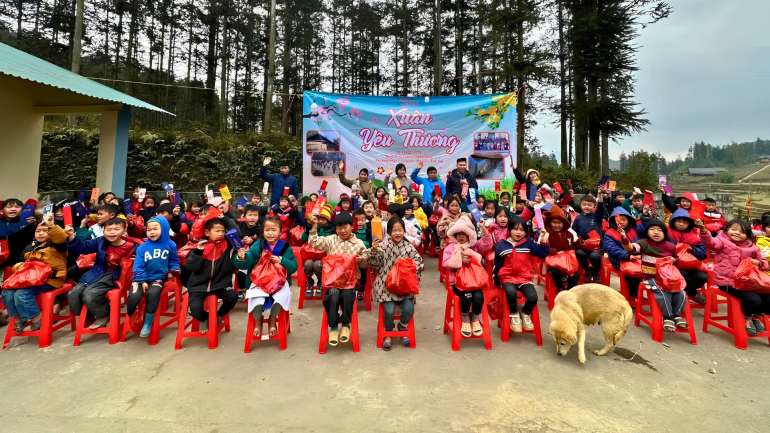
A youth volunteer group in Vietnam is combining practical assistance, education and faith formation to support ethnic minority communities living in remote mountainous areas of the country’s northern highlands.
Called Love on the Periphery, the group was founded in late 2022 by Anton Pham Tan and Paul Pham Quoc Su after the two began organizing “Zero-Dong Markets” during the COVID-19 lockdowns in Hanoi. The markets provided food and other necessities to families and individuals stranded by pandemic restrictions.
Their experience during the pandemic led them to continue serving vulnerable communities, eventually focusing their efforts on remote mission stations and impoverished villages in northern Vietnam.
The region includes some of the country’s most mountainous and difficult-to-reach areas, where ethnic minority communities live in scattered villages and access to education, transportation and other basic services can be limited.
Love on the Periphery works with local communities in several areas, particularly supporting children and families.
For children, volunteers provide meals, warm clothing, books and school supplies. They also help renovate deteriorating schools, construct pathways to classrooms and organize activities such as Mid-Autumn Festival celebrations and traditional Banh Chung wrapping during Tet, the Vietnamese Lunar New Year.
During school holidays, volunteers visit remote mission stations to organize youth camps that combine catechism, life skills and music.
The group also supports families through home construction, food assistance, warm clothing and livelihood projects. These include providing livestock and crops and helping families obtain water tanks.
Its projects have reached mountainous communities in provinces including Ha Giang and Son La. The group has built charity houses for poor families in Dong Van, Ha Giang, and constructed two roads providing access to schools in Son La and Mau Due, Ha Giang.
Volunteers also prepare meals for patients at Dong Van Hospital. In Hoang Su Phi, Ha Giang, they worked with local residents to plant 10,000 Shan Tuyet tea trees as a long-term livelihood initiative.
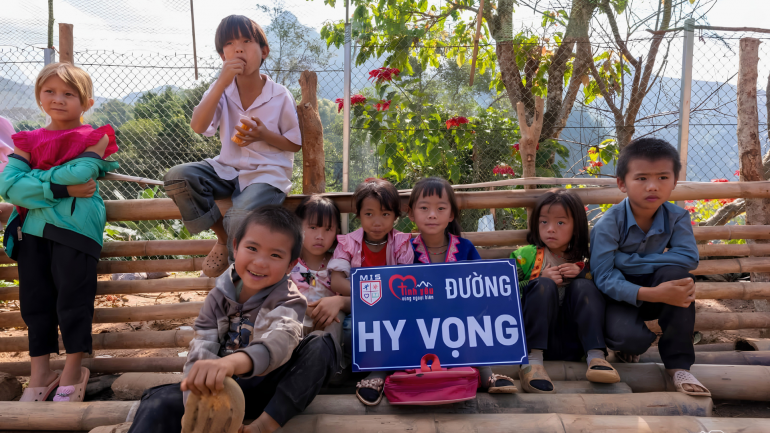
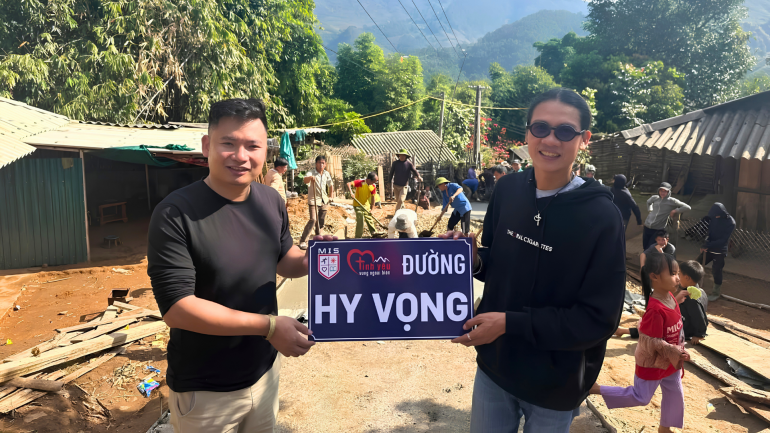
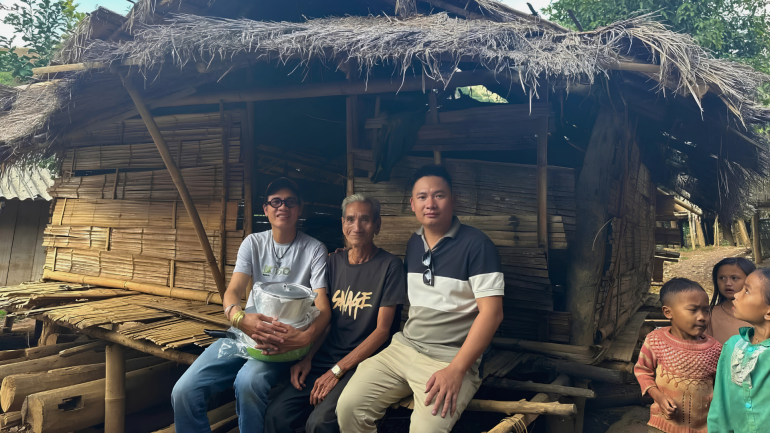
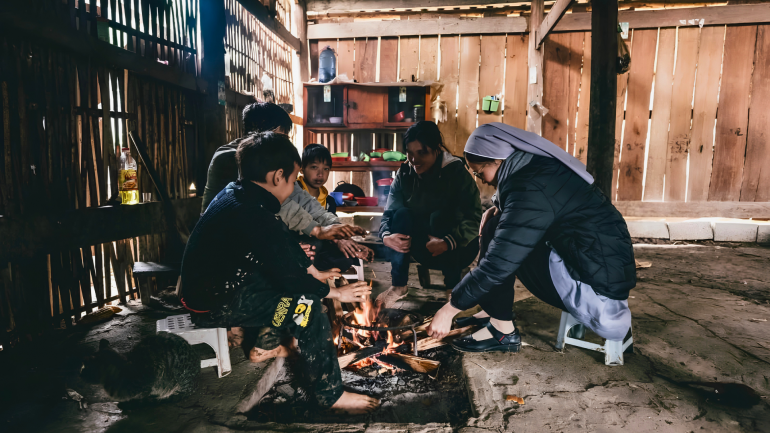
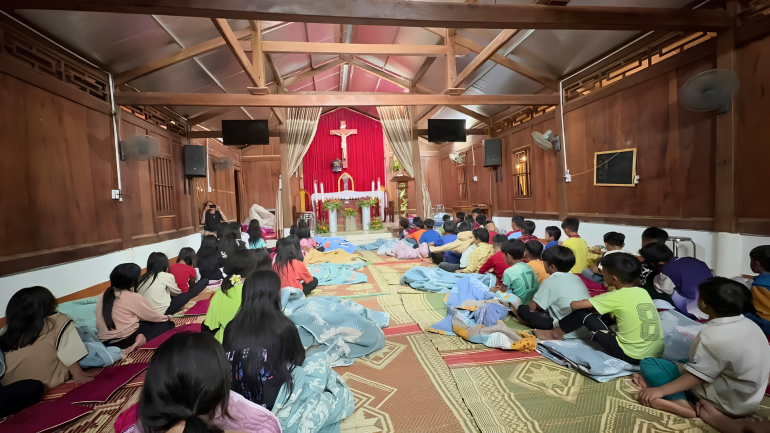
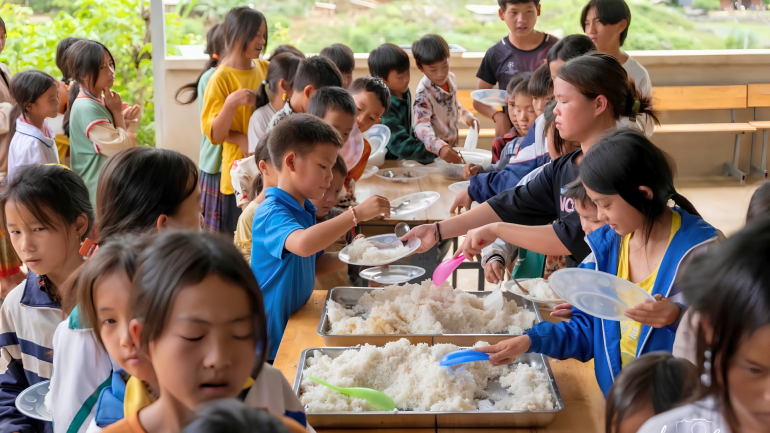
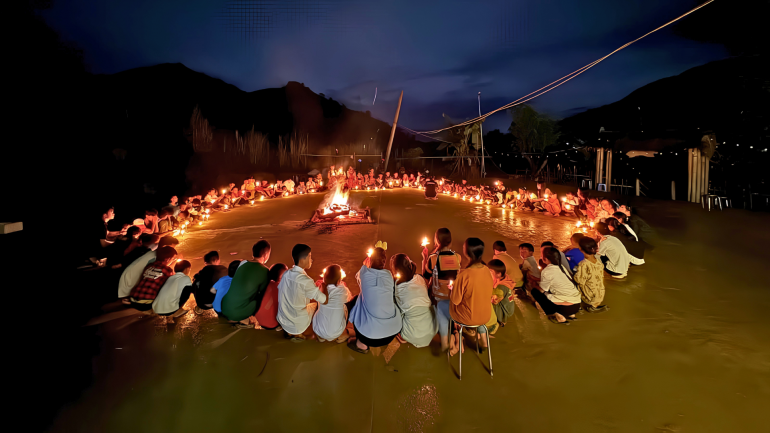
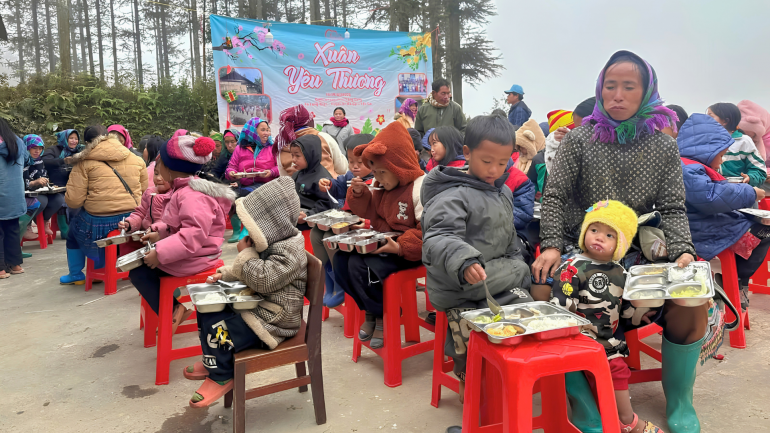
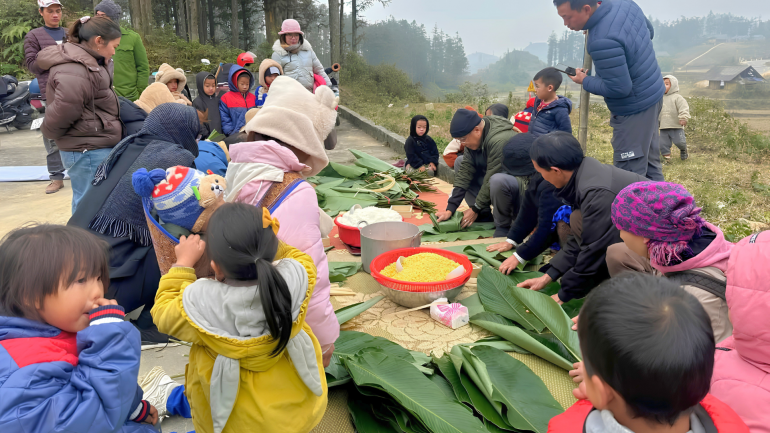
The group has also visited remote mission stations and villages including Long Hom, Phu Yen, Su Pan, Bao Yen, Nui Hong, Che Me, Huoi Thuon, Na Va, Huoi Den, Khau Pum, Ban Phung, Ban Toong and Tram Trau, providing activities in faith formation and youth engagement.
For Paul Pham Quoc Su, the experience is rooted in personal encounters with the communities they serve.
“I find true joy simply by looking at the smiles of the children and local villagers during our programs in the highlands,” he said.
He said the group is guided by the belief that service to others is also service to Christ.
“Whatever little we do for others, we do for Christ Himself,” he said, adding that members seek to give their time and effort fully to the people they encounter.
From its beginnings during the pandemic, Love on the Periphery has developed into a continuing volunteer mission among communities in northern Vietnam. Its work combines material assistance, education, youth activities, livelihood support and faith formation, with volunteers traveling regularly to areas where communities and mission stations are separated by long distances and mountainous terrain.
For the young volunteers, the mission is expressed not only through what they bring to remote communities, but also through the relationships they build with the people they meet.
Radio Veritas Asia (RVA), a media platform of the Catholic Church, aims to share Christ. RVA started in 1969 as a continental Catholic radio station to serve Asian countries in their respective local language, thus earning the tag “the Voice of Asian Christianity.” Responding to the emerging context, RVA embraced media platforms to connect with the global Asian audience via its 21 language websites and various social media platforms.
Latest News