


"We Cannot Journey as 'I'; It Has to Be 'We,' Says Sr. Maria Nirmalini After Vatican Appointment

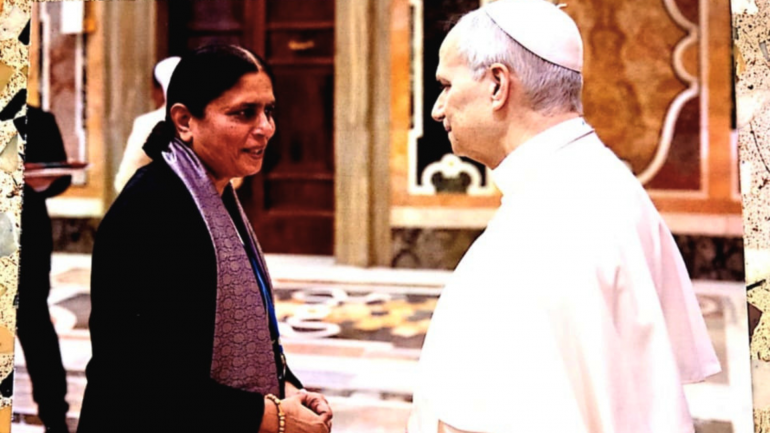
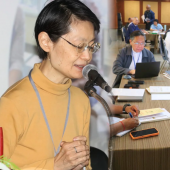
"We cannot go through this journey as 'I'; it has to be 'We.'" That conviction lies at the heart of Sr. Maria Nirmalini A.C.'s vision for the future of consecrated life, and now, it will also shape her service to the universal Church.
On June 18, Pope Leo XIV appointed Sr. Nirmalini, Superior General of the Apostolic Carmel and President of the Conference of Religious Women India (CRWI), as a member of the Vatican Dicastery for Institutes of Consecrated Life and Societies of Apostolic Life for a five-year term.
In an interview, Sr. Nirmalini described the appointment as an unexpected gift and a profound call to serve.
"I felt very humbled, unworthy, emotional, and grateful to God for this blessing," she said. "I see it as a gift entrusted to me by God and an opportunity to serve the universal Church."
The dicastery oversees and accompanies religious institutes, secular institutes, and societies of apostolic life throughout the world, helping them remain faithful to their founding charisms while responding to the pastoral needs of the Church today.
Although she is preparing to take on this global responsibility, Sr. Nirmalini approaches it with characteristic humility.
"I will know more when I become involved," she said, adding that her first task will be to listen and learn before offering her own contribution.
Listening, she believes, is the foundation of authentic leadership.
Reflecting on the Synod on Synodality, she said the Church has entered a new way of journeying together, one rooted in communion, participation, and shared responsibility.
"It is no longer going to work if we move in silos," she said. "The synodal pathway sets before us a shared journey for a shared vision and mission."
For Sr. Nirmalini, synodality is more than a pastoral strategy; it is a way of being Church. It calls leaders to listen attentively, especially to those on the margins, and to build communities marked by dialogue, mutual respect, and co-responsibility.
"Leadership begins with listening, to every individual, especially the vulnerable and the marginalized," she said.
Her vision is also shaped by the changing realities facing religious life across the world.
While describing the global sisterhood and brotherhood of consecrated life as one of its greatest strengths, she believes religious communities are being called to renew themselves in response to the signs of the times.
"God is inviting us to evolve and be relevant to the signs of the times," she said.
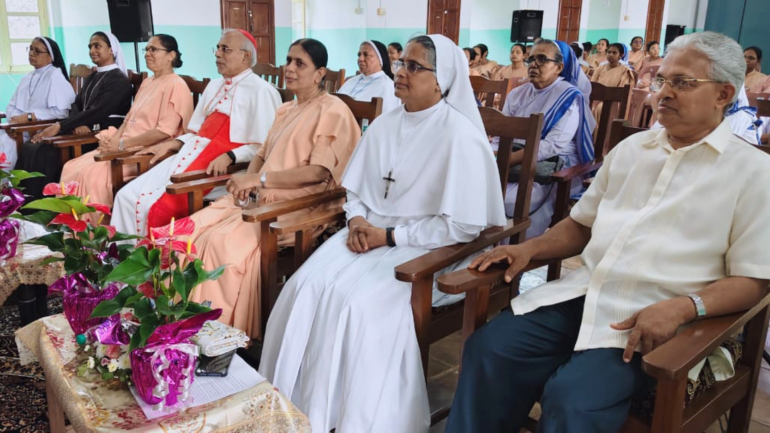
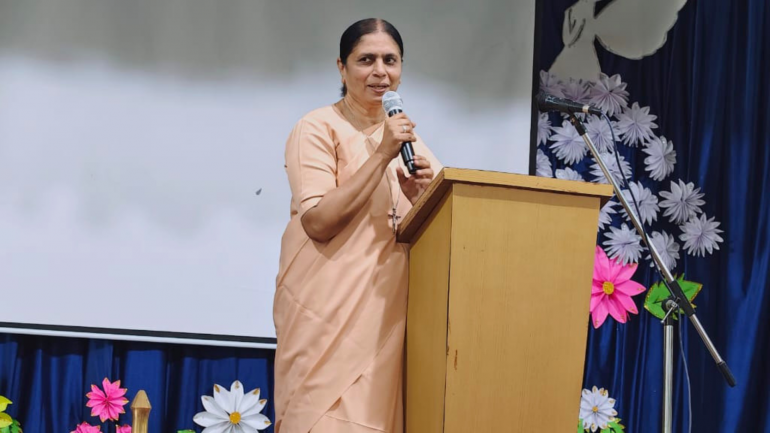
She explained that renewal must begin with a deeper encounter with God. Recalling the guiding question of her congregation's General Chapter, "How small or how big is our God?", she said religious are challenged to broaden their vision without losing fidelity to their founding charisms.
"We have to make a shift in our consciousness through a deeper encounter with God," she said. "The follower of Jesus is called to be the compassionate face and heart of Jesus."
As president of the Conference of Religious Women India, Sr. Nirmalini has accompanied thousands of women religious serving in education, health care, social ministry, pastoral work, and outreach to marginalized communities across one of the world's most culturally and religiously diverse nations.
She believes the Indian Church has much to offer the universal Church through its rich cultural heritage, missionary vitality, and lived experience of diversity.
At the same time, she sees her new role at the Vatican primarily as an opportunity to learn.
"Firstly, it will be a learning for me, to listen to all that is happening within and around," she said. "We cannot go through this journey as 'I'; it has to be 'We.'"
Looking ahead, Sr. Nirmalini hopes her service will contribute to building "a Church that walks together regardless of hierarchy, one that smells its sheep and listens to every voice."
Above all, she said, she dreams of "a Church that witnesses to the love of Jesus for all."
Her appointment by Pope Leo XIV marks another significant recognition of the contribution of Indian women religious to the life and mission of the universal Church. As consecrated life continues to respond to new pastoral realities, Sr. Nirmalini's emphasis on humility, listening, and synodality offers a vision of leadership rooted not in authority, but in service.
Radio Veritas Asia (RVA), a media platform of the Catholic Church, aims to share Christ. RVA started in 1969 as a continental Catholic radio station to serve Asian countries in their respective local language, thus earning the tag “the Voice of Asian Christianity.” Responding to the emerging context, RVA embraced media platforms to connect with the global Asian audience via its 21 language websites and various social media platforms.
Comments

Latest News



- Reply
Permalink