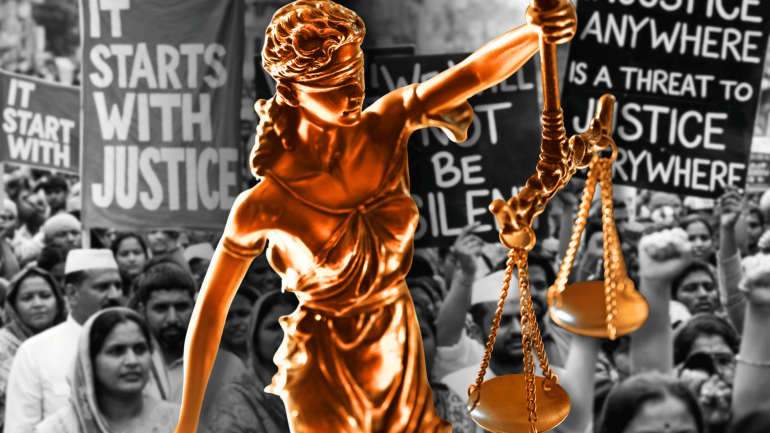
On Feb 20, the world will observe the ‘World Day of Social Justice’. Each year, leaders and politicians speak eloquently about the urgent need for justice, equality and dignity for all. Yet, more often than not, those who possess the power to ensure justice fail to act. Words are plentiful; political will is scarce.
This year’s theme, “Renewed Commitment to Social Development and Social Justice,” follows the Second World Summit for Social Development held in Doha in November 2025. The summit reaffirmed a global responsibility to eradicate poverty, promote decent work, foster inclusive growth and strengthen peace. These are noble goals: reducing social exclusion, guaranteeing fair wages and safe working conditions, ensuring marginalized communities access resources and decision-making, and recognizing that justice is the bedrock of peace.
But while these ideals resonate internationally, their realization within India appears increasingly distant.
Across the country, the cries for justice are growing louder. They arise from exploited workers, marginalized communities, minorities, environmental victims, journalists and ordinary citizens who feel excluded from the promises of democracy. Anyone with a conscience can hear these cries. The tragedy is that those in authority seem unwilling to listen.
Widening Economic Inequality
Economic inequality remains one of the gravest concerns. A recent working paper on income and wealth inequality in India highlights a dramatic concentration of wealth. The top one percent now commands a staggering share of national income and wealth. Over the past decade, wealth concentration has intensified sharply. The pattern is unmistakable: the rich grow richer while the poor struggle to survive. Economic growth has not translated into equitable distribution. For millions, aspirations of upward mobility have faded into frustration.
Environmental Degradation and Climate Injustice
Environmental justice presents another painful reality. India ranks near the bottom of global environmental performance assessments. Poor air quality, rising emissions, biodiversity loss and heavy reliance on coal continue to harm both ecosystems and public health. Several of the world’s most polluted cities are in India. Environmental degradation disproportionately affects the poor—those who lack access to clean air, water and healthcare. Climate vulnerability compounds existing inequalities. Yet meaningful corrective action remains inadequate.
Erosion of Press Freedom
Freedom of the press, a cornerstone of democracy, has also come under strain. India’s low ranking in global press freedom indices reflects concerns about media concentration, political pressure and attacks on journalists. A climate of fear discourages critical reporting. Media houses that challenge authority risk losing revenue or facing investigations. Amendments to digital and IT regulations raise concerns about censorship and surveillance. A democracy cannot thrive without independent journalism.
Precarious Labour Conditions and Informal Workers
Labour rights form another troubling chapter. Nearly 400 million Indians work in the informal sector, often without contracts, social security, healthcare or safe working conditions. Migrant workers remain especially vulnerable. Implementation of new labour codes has sparked criticism that protections are being diluted in favour of corporate interests. Rural employment guarantees also face serious challenges. For countless labourers, daily survival is uncertain.
Religious Freedom and Minority Insecurity
Religious freedom and minority rights have come under intense scrutiny. Muslims, Christians, Sikhs and other minority communities report intimidation, discrimination and violence. Demolitions, anti-conversion laws and hate speech have deepened insecurity. Allegations of impunity for perpetrators and misuse of laws undermine constitutional guarantees. A nation founded on pluralism must safeguard the rights of all its citizens equally.
Disenfranchisement and Electoral Concerns
Electoral and constitutional processes have generated apprehension. The Special Intensive Revision of electoral rolls has reportedly disenfranchised vulnerable populations. Debates over delimitation, census exercises and the status of tribal communities who adopt different faiths have heightened anxieties. When citizens fear exclusion from the democratic process, trust in democracy erodes.
Weakening of Democratic Institutions
Beyond specific policies lies a broader anxiety: a perceived weakening of democratic and secular institutions. Critics point to controversial legislation, sweeping policy changes and increasing centralization of authority. Institutions meant to function independently—the Election Commission, investigative agencies and even segments of the judiciary—face accusations of partisanship. Public confidence suffers when constitutional bodies appear compromised.
Corruption and Lack of Accountability
Corruption scandals and financial controversies have shaken public trust. The promise of transparency and accountability must not remain rhetorical. Justice demands integrity in governance. When corruption becomes normalized, citizens lose faith in the system meant to serve them.
Marginalization of Vulnerable Communities
Women and children facing violence, members of the LGBTQIA+ community seeking equality, refugees struggling for protection, academics and human rights defenders confronting restrictions—all reflect a society grappling with exclusion. Vulnerable and marginalized communities continue to battle systemic barriers that deny them dignity and opportunity.
Rule of Law and Access to Justice
India’s performance in global rule of law assessments underscores deeper structural concerns. Rule of law is not merely about legislation; it requires equal application, independent institutions and accessible justice. Without these pillars, constitutional promises lose meaning. Justice delayed or denied erodes the moral foundation of democracy.
Yet, amid the gloom, hope persists. India’s Constitution enshrines justice—social, economic and political—as a foundational value. Civil society organizations, grassroots movements, journalists, lawyers and ordinary citizens continue to advocate for accountability and reform. The resilience of democratic engagement remains a powerful force.
On this World Day of Social Justice, the question confronting India is not whether injustice exists—it undeniably does. The real question is whether those entrusted with power will listen and act.
Justice is not an abstract ideal. It is experienced in daily life—when a worker receives fair wages, when a journalist reports without fear, when a minority family lives without threat, when a child breathes clean air, when a citizen votes freely and confidently.
The cries for justice across India are not whispers; they are urgent appeals. They demand courage from leaders, vigilance from institutions and solidarity from citizens.
The question remains: Is anybody listening—and willing to act?