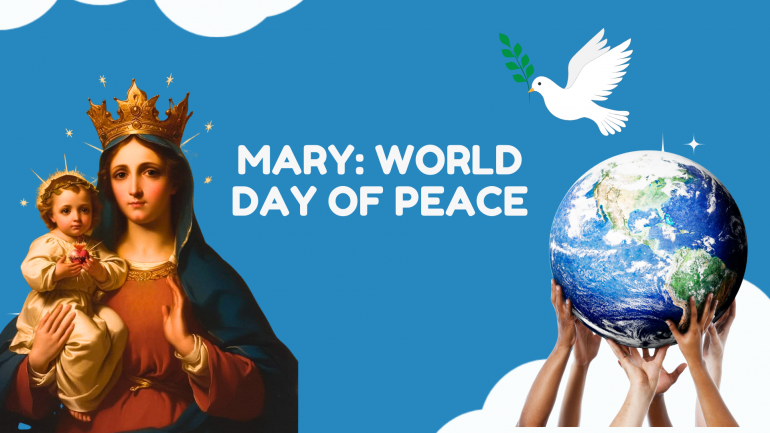
On 1 January, Catholics observe the Solemnity of Mary, Mother of God. It is a feast that prefers silence over noise and spectacle. Mary speaks little in the Gospel. She does not interpret events or assign meaning to them. Instead, she “treasures all these things and ponders them in her heart.” The Church also designate this day as the World Day of Peace. The pairing is intentional and profoundly countercultural.
Peace, in this vision, is not something imposed from above or enforced through strength. It begins in vulnerability. God enters history not as a ruler but as a child, dependent on a mother’s care. Mary’s role is not ideological; it is profoundly human. She receives, nurtures, and trusts. In doing so, she becomes a quiet sign of how peace might take root in a wounded world.
That message feels particularly relevant as Malaysia steps into another year marked by strain and fragmentation. Our public life is loud. Politics thrives on suspicion. Faith is often reduced to identity markers or mobilised as a weapon in cultural battles. Differences of race, religion and region, long part of our national fabric, are increasingly framed as lines of conflict rather than sources of shared meaning.
Yet this is not Malaysia’s story alone. Across Asia and much of the world, societies are grappling with similar tensions: polarised politics, hardened identities, and the shrinking space for nuance. From religious nationalism to culture wars, belief is too often conscripted into struggles for power rather than allowed to remain a source of moral depth and social healing.
We speak frequently of harmony, unity and moderation. Yet these words too easily become slogans, invoked without the patience and discipline they require. Public discourse rewards certainty, speed and outrage. What is lost is the slower work of listening, holding complexity, and acknowledging the dignity of those who do not think, worship or vote as we do.
Mary offers a different posture. She does not rush to explain the mystery entrusted to her. She does not seek control over events unfolding beyond her understanding. Her strength lies in attentiveness and endurance. In a culture that equates power with volume, her silence is not weakness but depth. She teaches that peace begins not in conquest, but in consent, in the courage to say yes to responsibility, even when the future is unclear.
To call Mary the Mother of God is to affirm something radical about God’s way of being in the world. God chooses proximity over distance, relationship over domination. Divinity enters history through dependence, not force. This theological claim carries social implications. If God does not impose himself, how can believers justify imposing faith, morality or identity through fear and exclusion?
Malaysia’s fractures are not only political; they are relational. Trust between communities is fragile. East and West Malaysia continue to negotiate questions of recognition and fairness. Economic anxiety sharpens social fault lines. In such a climate, peace cannot be reduced to the absence of conflict. It must be cultivated as a practice, learned, protected and renewed.
Mary’s motherhood reminds us that peace begins in the ordinary spaces of care. In families struggling to stay together under pressure. In communities choosing dialogue over demonisation. In leaders willing to restrain their rhetoric for the sake of the common good. These are not dramatic gestures. They are quiet, often unseen acts of fidelity to one another.
The World Day of Peace does not offer easy prescriptions. Instead, it invites reflection on the moral habits that sustain social life. Are we willing to slow down? To listen before responding? To recognise that dignity precedes agreement? These are Marian virtues, even if they rarely trend or win applause.
As the new year unfolds, Mary stands at its threshold, holding a child who will later be called the Prince of Peace. She does not know how the story will end. She knows only that love has entered the world in fragile form, and that she has been entrusted with its care.
For a fractured society like ours, and a fractured world beyond it, that may be the most honest place to begin. Not with grand declarations, but with a renewed commitment to proximity, patience and trust. Peace, like a child, must be carried attentively, humbly and together.