




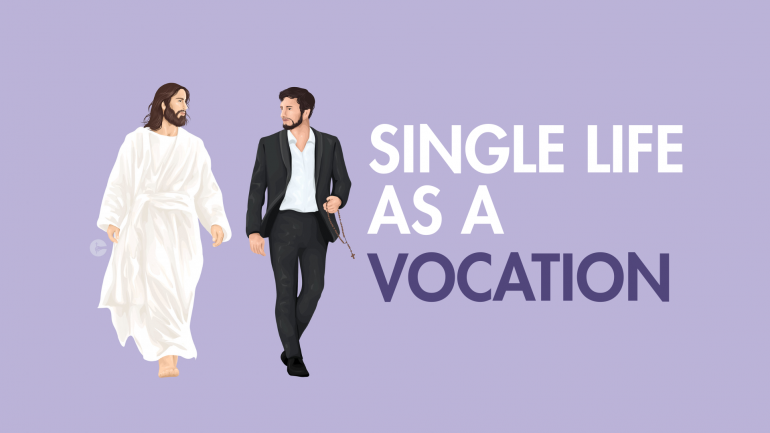
If you are Catholic, one might recognize that the three Church designated vocation callings are- religious life, marriage and being single. However, within the Catholic community discourse, one needs to say that being single is not always fun. Traditionally the single life has not been viewed as a vocation because it is not a vowed life.
The single life vocation-whilst overlooking its contribution to society are sporadically denigrated, with the default vocations of marriage, religious life or consecrated life getting more prominence.
Misconceptions About the Single Vocation
The general perception within Catholic discourse also mimics our postmodern age which indicates that single life is for partying and then a “way-station” until marriage, or between marriages, or a dumping-ground designation for those who are unable to attract a partner.
Many enter marriage or religious life in haste, sometimes for the wrong reasons, without adequate discernment or preparation, leading to unfulfilled vocations. On the other hand, there is also the perception that the single life vocation is only limited to the “never married,” whilst overlooking the widowed, single parents, separated, annulled, or divorced.
According to the Pew Research Centre, among Catholics who have ever been married, roughly one-third (34%) have experienced a divorce. This high divorce rates have led to the Vatican in 2022 releasing suggestions for lengthier and revamped marriage preparation with Pope Francis emphasizing that "superficial" marriage preparation programs leave many couples at risk of having invalid marriages or are unprepared to cope with the struggles that arise in every marriage.
Despite the protracted formative years, religious vocations also exhibit this pattern. In 2014 there were nearly 1.2 million religious’ brothers, sisters, order and diocesan priests in the world. In 2020 or in the next five years, 5,383 of these left their priestly vocations and a good number of religious requested dispensation. Some of the reasons include inadequate pastoral formation, crises of faith, depression or psychological issues, conflicts with superiors or acceptance of the Magisterium, and choosing the wrong vocation for the wrong reasons.
Challenges exist across all vocations. Each vocation—whether marriage, priesthood, or single life—has its own set of difficulties. While religious life is essential to the Church, marriage and family life play a key role in the growth of the domestic church. However single life, excluding age factors, should not be dismissed, as it is also a legitimate vocation.
The Reality of Vocational Challenges
Just as marriage and religious life require discernment and commitment, single life is not merely an accident of circumstances. Some individuals actively choose to remain single for reasons such as:
-
Caring for aging or sick family members
-
Discerning religious life or marriage
-
Personal health challenges
-
Loss of a spouse
-
A deep sense of mission in professional or spiritual life
-
Divorce or annulment.
-
Religious dispensation
Far from being a secondary or lesser calling, the single vocation allows individuals to devote themselves more fully to their communities, ministries, and personal spiritual growth.
The Church’s View on Single Life
The Catechism of the Catholic Church states that single individuals are an integral part of the Church:
"The doors of homes, the 'domestic churches,' and of the great family which is the Church must be open to all of them."
The Church through her Magisterium teachings has promulgated the following on the single life:
1. For those not called to marriage or consecrated life, the single life can be a way to live out the vocation received in baptism, offering a particular witness through personal growth.
2. Some single people may not feel especially "called" to the single state, but find themselves unmarried for various reasons, such as not finding he right person to marry. In these cases, God still calls them to live and love in their present circumstances.
3. The Church recognizes diverse "vocations" or paths within the lay state, including various forms of secular institutes that allow lay people and even priests to profess the evangelical counsels while maintaining their lay or clerical state.
4. Many unmarried people make great contributions through service in their communities, churches, and professional lives, though their presence and contributions are sometimes overlooked, leading to a sense of isolation.
How the Church Can Support Single Catholics
While the Church acknowledges the value of single life, there is still room for growth in recognizing and supporting those who embrace this vocation.
Here are four key areas where the Church can better serve single Catholics:
1. Provide Pastoral Care and Support
The Church must ensure that single Catholics, especially those who are widowed or divorced, feel included and supported in the faith community. Divorced Catholics who remain faithful to their marriage vows should be encouraged to find spiritual nourishment in the Eucharist.
2. Recognize the Witness of Single Catholics
Single Catholics contribute significantly to the Church through service, teaching, charity, and evangelization. Their witness of faithfulness and dedication should be acknowledged and celebrated.
3. Provide Formation and Preparation
Just as the Church offers marriage preparation and religious formation, it should also provide guidance for those discerning the single vocation. This could include mentorship programs, retreats, and theological studies focused on the lay vocation.
4. Encourage Community and Friendship
The Church should foster a sense of belonging for single Catholics by offering social and ministry opportunities that help them build meaningful relationships and find spiritual support.
God Writes Our Path, Holiness Defines It
In many Catholic circles, finding a “vocation” is often treated as the ultimate goal—as if holiness depends on solving a puzzle between religious life, marriage, or single life. However, our vocation is chosen by God and not something chosen by us and ultimately the primary and most fundamental vocation is the call to Holiness. Only by living this Universal Call of the Church, can we truly fulfil whatever path God has placed before us—whether religious life, marriage, or single life.
Let us pray for courage: that men and women will embrace the supernatural calls to priesthood and religious life, that virtue and chastity guide couples toward healthy, holy marriages, and that all of us—regardless of our state in life—say “yes” each day to the universal call to holiness, wherever God leads.
- Reply
Permalink