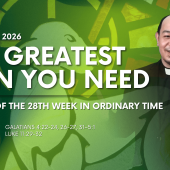
Reflection Date: September 23, 2026 | Memorial of Saint Pius of Pietrelcina, Priest
Daily Readings: Proverbs 30:5-9; Luke 9:1-6
Children of God:
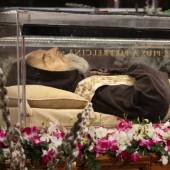
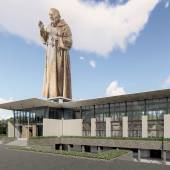
September 23 is the feast day of Saint Padre Pio.
His original Christian name is Francesco Forgione.
He was born on May 25, 1887, in Italy, into a humble Catholic family.
From his childhood, he developed a deep love for prayer and showed a strong attraction to a life dedicated to God.
At sixteen, he made a decisive step by entering the Capuchin novitiate at Morcone on January 6, 1903.
On January 22 of that same year, he received the Franciscan habit and took the name Brother Pio.
He completed his novitiate, made his first religious profession, and eventually made his solemn profession in 1907.
He was ordained a priest on August 10, 1910, but his poor health forced him to remain with his family for several years before he returned fully to community life.
In September 1916, he was assigned to the Capuchin friary in San Giovanni Rotondo, where he remained for the rest of his life.
There, his vocation took a very particular shape through prayer, the celebration of the Eucharist, spiritual direction, and the sacrament of reconciliation, as countless people came to seek his counsel and prayers.
Despite his growing reputation, Padre Pio described himself simply as “a poor friar who prays,” showing that he understood his vocation as a life given to God and to people.
In the gospel story of Jesus sending the Twelve, He gave them authority and sent them out to proclaim the Kingdom of God and to heal.
He instructed them to travel simply, without depending on excessive provisions or possessions, and to remain with those who welcomed them.
Jesus told them, “Take nothing for the journey” (Luke 9:3).
The instruction was striking because Jesus did not send them with elaborate equipment, impressive credentials, or guarantees of success.
He sent them with what they already received from Him.
What, then, can Padre Pio and the sending of the Twelve teach us about our own calling?
First, our vocation begins the moment we become willing to give God the direction of our lives.
Padre Pio did not simply choose a career when he entered the Capuchins.
He made a decision to give his life to a particular way of following Christ.
At sixteen, he left behind the familiar world of his family and entered a life of formation, prayer, community, discipline, and service.
His vocation continued to develop through the years, including periods of illness and uncertainty.
That is an important distinction for us.
A vocation is not always a dramatic moment when everything suddenly becomes clear.
Sometimes it develops gradually through small decisions, repeated commitments, unexpected difficulties, and the people whom God places in our path.
We too must remember that we do not all receive the same vocation.
Some are called to marriage, some to religious life, some to priesthood, and others to professions or forms of service in the world.
But every person can ask the same question: “What is God asking me to do with the life I have received?”
Our vocation begins the moment we become willing to give God the direction of our lives.
Second, we become more useful to others when we learn to travel light.
Jesus sent the Twelve without allowing them to depend on an accumulation of possessions.
“Take nothing for the journey” (Luke 9:3).
His instruction was not simply about having fewer things; it was about learning where their security came from.
Their mission depended on their trust in God and their willingness to serve the people they encountered.
Padre Pio's life also showed this spirit of simplicity.
Even when thousands of people sought him, he did not present himself as a celebrity or build his identity around popularity.
He continued to identify himself as a poor friar who prayed.
His ministry centered on the Eucharist, confession, spiritual direction, prayer, and service to those who came to him.
We can ask ourselves what we carry that prevents us from becoming available to others.
Sometimes it is not money or possessions but our need for recognition, our desire to control everything, our fear of failure, or our attachment to being appreciated.
Jesus invites us to travel lighter, because people who are less occupied with protecting themselves become more available to serve others.
We become more useful to others when we learn to travel light.
As we reflect, we ask ourselves: What is God asking me to do with the life and gifts that I have received?
What am I carrying that makes it difficult for me to become fully available to the people who need me? Where is Jesus sending me today, and am I willing to trust Him even when I do not have everything figured out?
Children of God:
Padre Pio's vocation was not free from illness, difficulties, obedience, and sacrifice.
Yet he continued to respond to the call he believed God placed before him.
Jesus also sent the Twelve and asked them to trust the One who sent them.
Like Padre Pio and the apostles, we can discover that a simple life given faithfully can touch countless lives.
And perhaps our greatest vocation is simply to become available when God says, “Go.”
Radio Veritas Asia (RVA), a media platform of the Catholic Church, aims to share Christ. RVA started in 1969 as a continental Catholic radio station to serve Asian countries in their respective local language, thus earning the tag “the Voice of Asian Christianity.” Responding to the emerging context, RVA embraced media platforms to connect with the global Asian audience via its 21 language websites and various social media platforms.
Latest News