Reflection Date: April 04, 2026 | Holy Saturday
Daily Readings: Genesis 1:1—2:2; Genesis 22:1-18; Exodus 14:15—15:1; Isaiah 54:5-14; Isaiah 55:1-11; Baruch 3:9-15, 32-4:4; Ezekiel 36:16-17a, 18-28; Matthew 28:1-10
Children of God:
Between Good Friday and Easter Sunday lies a day that many Christians call Black Saturday.
It is the day when the world seemed to pause in grief after the death of Jesus.
The word “black” does not only describe darkness but also deep mourning.
In many cultures, black is the color worn when people grieve for someone they love.
After the crucifixion, the disciples felt fear, confusion, and sadness.
Their teacher was gone, and the future looked uncertain.
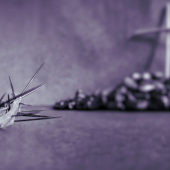
The tomb was sealed, and the stone stood as a symbol of finality.
No miracles were happening, no crowds were gathering, and no hopeful speeches were heard.
It was a quiet and heavy day, filled with waiting and unanswered questions.
That is why Christians remember it as Black Saturday, the dark pause between tragedy and triumph.
Yet the story did not end in black-ness.
In the gospel story of the resurrection, the quiet of the tomb was suddenly broken by something unexpected.
The earth shook, the stone was rolled away, and the message of Jesus rising again was announced.
What are our inspirations for today?
First, God works even when everything seems silent.
Black Saturday teaches us about waiting.
After Jesus died, the disciples believed everything was finished.
The cross looked like the end of the story.
But while the world remained quiet, God was already preparing something greater than anyone imagined.
In the gospel of Matthew, an angel appeared and rolled back the stone while the guards trembled in fear.
The angel told the women that Jesus had risen from the dead.
Just when people thought nothing was happening, God was already turning sorrow into victory.
Many moments in life feel like Black Saturday.
We experience days when prayers seem unanswered and when problems remain unresolved.
But the message of the resurrection reminds us that God never stops working.
Even in silence, grace is quietly moving.
Second, the message of the risen Christ begins with courage.
When the women came to the tomb early in the morning, they expected to mourn.
Instead, they encountered the greatest surprise in history. Fear and joy filled their hearts at the same time.
The angel told them not to be afraid and asked them to go and share the news with the disciples.
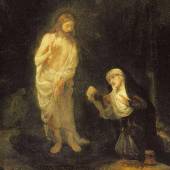
As they hurried away, the risen Jesus met them along the road.
The resurrection story reminds us that courage is part of faith.
Even when life feels uncertain, the call of Christ is to keep moving forward and to share hope with others.
Faith does not remove fear immediately, but it gives us the strength to continue walking.
We can pause and ask ourselves a few questions for reflection. Do I recognize the “Black Saturday” moments in my life when God seems silent but is actually working? When fear enters my heart, do I allow the words of Jesus, “Do not be afraid,” to guide my decisions? And in the ordinary paths of my daily life, am I willing to share hope the way the women shared the news of the resurrection?
Children of God:
Black Saturday reminds us that the darkest day is not the final chapter of the story.
The silence of the tomb was only temporary.
In the same way, the difficult moments in our lives can become the doorway to unexpected grace.
God often writes His greatest miracles in the quiet spaces between despair and hope.
And so we continue walking in faith, knowing that after every Black Saturday, the light of resurrection always comes.
Radio Veritas Asia (RVA), a media platform of the Catholic Church, aims to share Christ. RVA started in 1969 as a continental Catholic radio station to serve Asian countries in their respective local language, thus earning the tag “the Voice of Asian Christianity.” Responding to the emerging context, RVA embraced media platforms to connect with the global Asian audience via its 21 language websites and various social media platforms.
Latest News