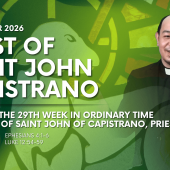
Reflection Date: June 24, 2026 | Solemnity of the Nativity of Saint John the Baptist
Daily Readings: Isaiah 49:1-6; Acts 13:22-26; Luke 1:57-66, 80
Children of God:
In Jewish culture during biblical times, names carried deep meaning and importance.
Parents often named children after relatives, especially respected fathers or grandfathers, to honor family lineage and preserve memory.
A name reflects identity, character, and belonging.
People believed that names connected a person to family history and community expectations.
During celebrations surrounding a child’s birth, relatives and neighbors often assumed what the child’s name would be.
It was common for the firstborn son to receive a familiar family name.
This is why many people around Zechariah and Elizabeth expected the child to be named after his father.
But God gave a different instruction through the angel before the child was born.
The child would not continue a family tradition because he carried a special mission from God.
The name “John” meant “God is gracious,” and that name revealed the purpose of his life even before he began preaching.
In the gospel story of Luke, relatives wanted to call the child Zechariah after his father.
But Elizabeth insisted, “He will be called John.”
When Zechariah confirmed the name by writing it down, his speech returned, and the people became amazed.
God interrupted human expectations because this child was chosen for a unique mission.
What can inspire us today?
First, God sees possibilities that people cannot yet see.
The people around Zechariah expected the child to follow tradition.
They assumed they already knew what the child’s future should look like.
But God had different plans.
John’s identity did not depend on public opinion or family expectations.
His life belonged first to God.
Many people today also feel pressured by expectations.
Some are pushed toward careers they do not truly desire.
Others feel trapped by comparisons, family demands, or society’s standards of success.
Sometimes people become afraid to follow God’s calling because they worry about disappointing others.
The story of John reminds us that God’s plan for a person may look different from what the world expects.
John eventually became a prophet who prepared the way for the Messiah.
At the beginning, however, he was only a child surrounded by confused relatives.
We may not fully understand God’s direction immediately, but faith teaches us to trust His wisdom more than public expectations.
God sees possibilities that people cannot yet see.
Second, every person carries a purpose known by God.
The name “John” already revealed something about his mission because it meant “God is gracious.”
Before John spoke to crowds or baptized people in the Jordan River, God already knew his purpose.
His life was not random.
God prepared him carefully for the work ahead.
The same truth applies to us today.
Many people struggle with feelings of worthlessness or confusion about their future.
Some wonder if their lives truly matter.
But the gospel reminds us that every person is known by God personally and lovingly.
We are not accidents in history.
Each person carries gifts, responsibilities, and opportunities to bring goodness into the world.
Every person carries a purpose known by God
As we reflect today, we ask ourselves: Am I allowing God to guide my life beyond the expectations of others?
Do I believe that my life carries meaning and purpose before God? How can I use my gifts to prepare the way for goodness and hope in the lives of others?
Children of God:
The birth of John the Baptist reminded people that God works in unexpected ways.
The child whom others tried to define according to tradition carried a mission prepared by heaven itself.
God still calls people today beyond fear, comparison, and public expectations.
Like John the Baptist, we are invited to prepare the way for Christ through our words and actions.
The world needs people who trust God more than popularity or pressure.
Radio Veritas Asia (RVA), a media platform of the Catholic Church, aims to share Christ. RVA started in 1969 as a continental Catholic radio station to serve Asian countries in their respective local language, thus earning the tag “the Voice of Asian Christianity.” Responding to the emerging context, RVA embraced media platforms to connect with the global Asian audience via its 21 language websites and various social media platforms.
Latest News