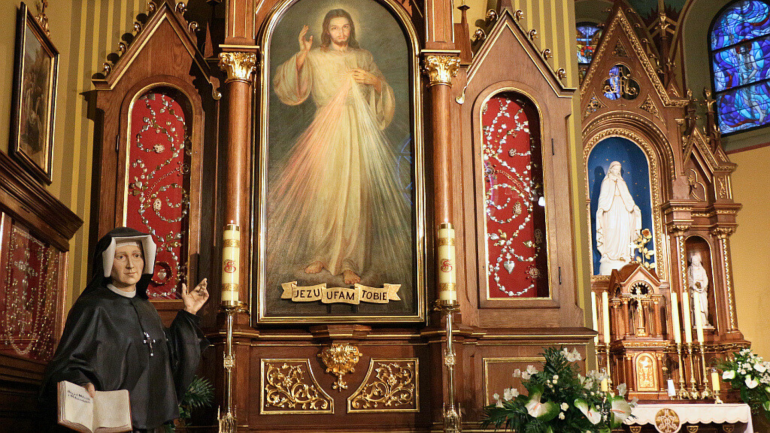
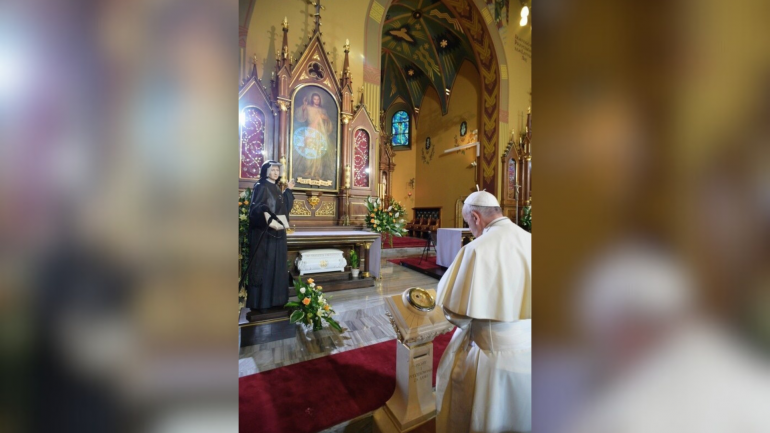
In 2017, I took my octogenarian father to the Divine Mercy Sanctuary in Kraków, Poland. He had long been devoted to the Divine Mercy devotion, and although the visit was not planned, it meant a great deal to him. As we sat in an Uber taxi making our way through the city towards the sanctuary, he turned to me and asked a question that caught me slightly off guard.
“Is our God truly that merciful that every sin can be forgiven?”
For sure, my father had heard this before, but my answer came quickly, almost automatically, like predictive texting. Of course, I said yes. God loves us immensely. He forgives. He is full of mercy.
Yet something about the question lingered. Saying the words was easy; believing them deeply was not. Understanding mercy in theory is one thing, but trusting it fully and living it is something else entirely.
That moment raised a deeper question: Is mercy actually easy to live?
When Mercy Feels Difficult
In theory, mercy is beautiful. In practice, it is far more difficult.
This becomes clear at every level of life. On a wider scale, nations are torn by war, refugees flee famine and violence, and children grow up knowing fear instead of peace. Closer to home, families carry their own wounds, sometimes for years, even decades, without reconciliation.
In society, this struggle is further intensified by deep divisions. Political labels often become identities rather than viewpoints.
The same pattern appears in everyday life. At work, credit is sometimes taken or denied unfairly, or colleagues snap under pressure. On social media, conversations quickly escalate into outrage. Even within the Church, disagreements over the teachings of the Magisterium, parish decisions, gossip, and past scandals have left wounds that are slow to heal.
All of these point to an uncomfortable truth: mercy is easy to admire, but hard to live. Forgiving someone who has wronged us is never simple.
And yet, this is exactly what the Christian life calls for.
Mercy Revealed in Christ
If mercy is central to the Christian life, its meaning is found not in theory but in Christ Himself. On the evening of the first Easter, the Risen Jesus appeared to His fearful disciples and greeted them with, “Peace be with you” (John 20:19). He did not reproach them for their failures but offered peace, and only then entrusted them with their mission.
The parable of the Prodigal Son echoes this truth. The son expects judgment but encounters a father who runs to embrace him and restore his dignity. Mercy does more than forgive; it renews relationships.
At Calvary, the Good Thief turns to Jesus in his final moments and is promised paradise (Luke 23:42–43). With no time to make amends, he receives mercy through a sincere turning of heart.
In Christ, mercy meets people where they are, restoring, healing, and sending them forth in hope.
Mercy and Justice
Mercy does not ignore justice or deny wrongdoing. Instead, it goes deeper, recognising that every person still carries dignity and the possibility of renewal. The Cross reveals that mercy and justice are not opposed. They are not competing forces, but part of the same truth. Mercy does not set aside justice; it fulfils and transforms it.
As St. Thomas Aquinas reminds us, every act of God involves both justice and mercy. Even our existence is not owed to us but given. In the same way, forgiveness is never limited to what is deserved; it is something greater.
Pope Francis captured this well when he write: “Mercy is the fullness of justice and the most radiant manifestation of God's truth.”
Living Mercy in Daily Life
If mercy is a gift we receive, it is also something we are called to live.
- Within the Church, it means choosing patience over judgment and reconciliation over division. No community is free from disagreement, but mercy shapes how those disagreements are lived.
- In society, mercy often looks like restraint, the decision to listen before reacting, to understand rather than dismiss, to treat others as people rather than opponents.
- Within families, mercy is both the most necessary and the most difficult. Old wounds can run deep, and pride can be hard to set aside. Yet it is often a simple act, a word, an apology, a willingness to begin again, that opens the door to healing.
- And then there is the quiet struggle within us. Many carry guilt, regret, or a sense of failure long after forgiveness has been offered. Learning to let go and to accept mercy personally is part of the same journey.
Returning to the Question
Looking back, my father’s question still lingers: Is our God truly that merciful that every sin can be forgiven?
The answer, at least in faith, is a resounding yes.
But that answer carries a challenge. The mercy we receive is not meant to remain abstract. It is meant to shape how we live, how we respond, and how we see others. Mercy is difficult to practice. Yet when it is lived, quietly, patiently, day after day, it has the power to change everything.
In the end, mercy is not proven in what we say about it, but in how we choose to live when it is hardest.