


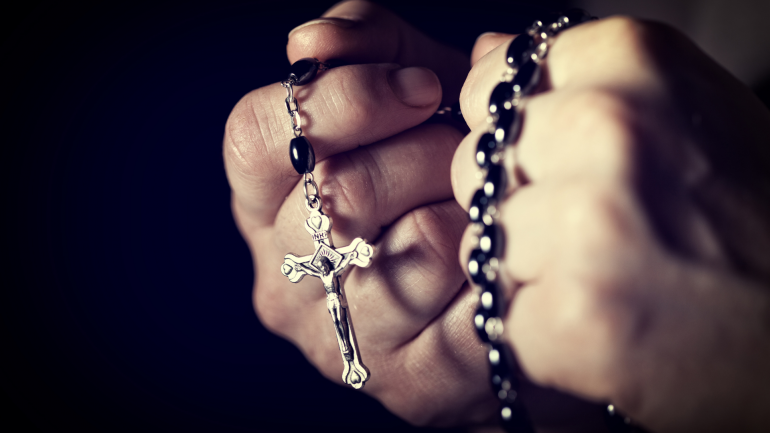
Across Asia, faith is often counted on a string of beads. From the Catholic rosary to the Hindu japa mala, the Muslim misbaha, the Buddhist prayer beads, and the Taoist niànzhū, these devotional objects move quietly through the fingers of believers, marking prayer through repetition and rhythm.
In homes, temples, churches, and mosques, on buses, trains, airplanes, and beside hospital beds, the practice remains familiar: repeated prayers, whispered invocations, and a search for focus and consolation through touch.
Though rooted in different traditions, the instinct is similar: to remember, to meditate, and to draw closer to the divine one bead at a time.
For Catholics, the rosary holds a central place in personal devotion, especially during May and October, months traditionally dedicated to Marian prayer. In many Catholic households, however, the rosary is prayed daily throughout the year.
The rosary has long been associated with both contemplation and crisis. Catholic tradition often recalls the Battle of Lepanto in 1571, when Pope Pius V urged Christians across Europe to pray the rosary as allied naval forces confronted the Ottoman fleet. The subsequent victory became closely linked in popular Catholic memory to those prayers.
Across centuries, the rosary has remained embedded in Catholic spiritual life. St. John Paul II prayed it daily and frequently spoke of its importance in sustaining him during personal and public trials, including the 1981 assassination attempt. Pope Francis has repeatedly encouraged Catholics to return to the rosary as a prayer of peace, while Pope Benedict XVI described it as deeply Christ-centered and contemplative.
Among the saints, the devotion appears with similar consistency. St. Padre Pio prayed the rosary continuously throughout the day. St. Teresa of Calcutta carried it with her while serving the poor. St. Louis de Montfort wrote extensively on its spiritual significance, while St. Dominic is traditionally credited with spreading the devotion widely during periods of religious turmoil.
For many believers, however, the rosary is less theological than deeply personal.
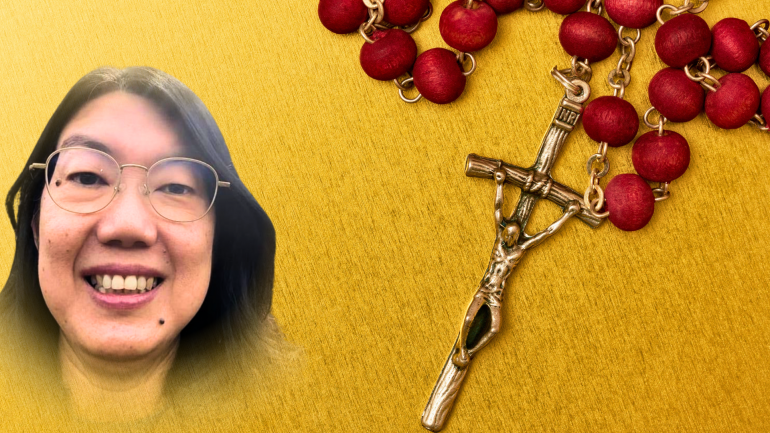
“The Rosary is the most humbling of prayers,” says Ann Teoh, a 60-year-old communications professional. “It is repetitive, yes, but it is also a constant reminder that we are sinners, that we will die, and that we need the intercession of the Blessed Mother.”
Teoh, who converted from a Taoist background more than 35 years ago, describes the rosary as a form of spiritual “risk management.”
“We are asking Mary to pray for us now and at the hour of our death. It is a form of trust, almost a safeguard,” she says.
The repeated reference to death in the Hail Mary prayer continues to strike her.
“In Taoist culture, speaking of death is often avoided. It still amazes me that millions of Catholics willingly pray in a way that repeatedly brings death into focus,” she says.
Teoh carries a rosary with her at all times.
“I keep one in my handbag, sometimes a single-decade amethyst rosary I bought when I was into crystals, and a full rosary made of Job’s tears from Lourdes,” she says. “If anything happens to me, I hope people will know I am Catholic, and call both a doctor and a priest.”
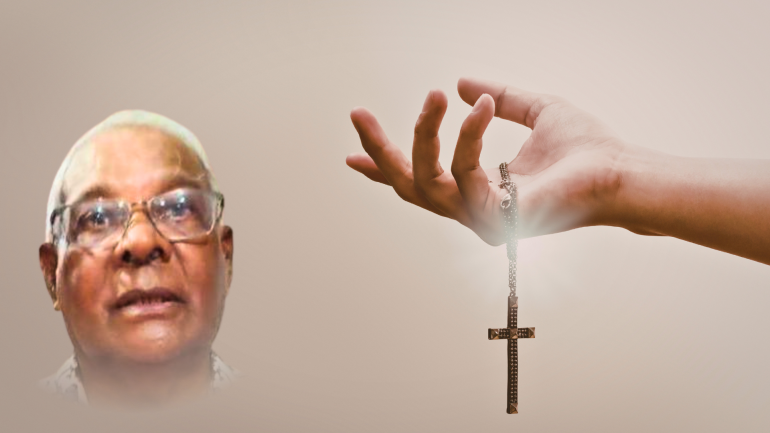
For retired schoolteacher Joachim, 87, the rosary has become closely tied to ordinary moments of daily life.
“Whenever I am in a vehicle, and the driver is going round and round looking for a parking lot, I quietly say a Hail Mary,” he says. “And somehow, an empty parking space will appear before us.”
He laughs gently before adding, “This Hail Mary has never failed me.”
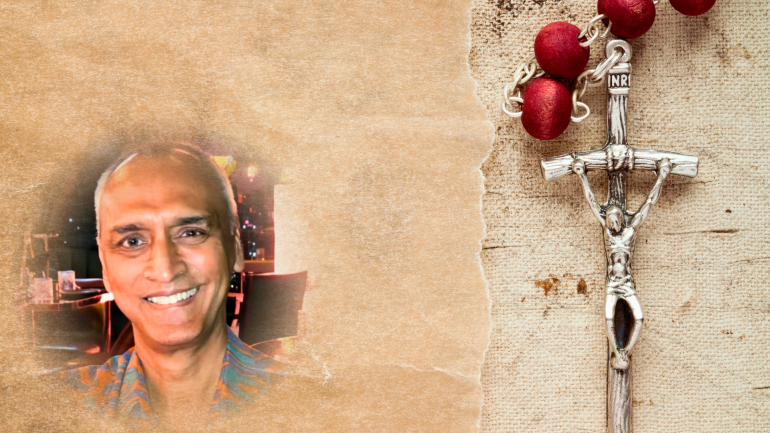
Senior manager Vijay Reddy, 67, says his connection to the rosary has remained steady over the years. He usually prays it once a month, often at night with his spouse when distractions are minimal.
Most of his rosaries were gifts from family and friends, some connected to pilgrimage sites such as Lourdes. They remain at the family altar rather than being carried outside the home.
For Reddy, the rosary offers emotional steadiness rather than ritual complexity.
“It gave me peace when I was confronted with the big C,” he says, referring to cancer.
Among the prayers of the rosary, the Salve Regina resonates most deeply with him.
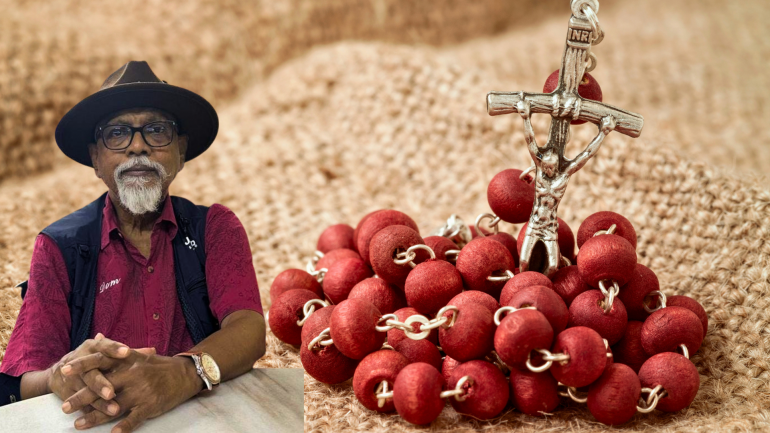
Retired hotelier Dominic Savarimuthu traces his devotion to a near-fatal road accident in 1984 while traveling from Ipoh to Kuala Lumpur.
“It was a bad smash-up,” he recalls. “Firemen had to extricate me from the front passenger seat. I underwent emergency surgery to remove glass splinters from my eyes.”
After that experience, he made a permanent change.
“Thereafter, I always carried a rosary in my pocket and another in my travel bag,” he says. “Most of my formal shirts now have a special pouch on the left sleeve for my rosary.”
Whether placed at a home altar, carried in a pocket, or held quietly in the hand, the rosary continues to function for many believers as both prayer and reassurance, a small physical object woven into the rhythms of ordinary life.