


Playing Like There’s No Tomorrow: A Filipino Father-and-Son Journey of Faith, Music, and Mission

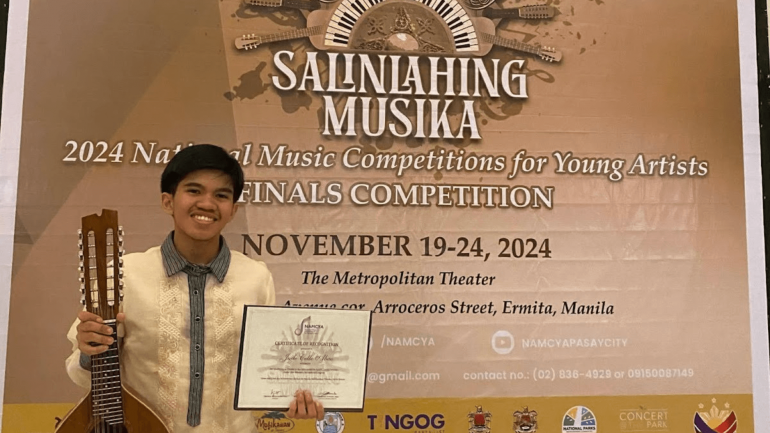
In their home, music is not merely practiced—it is lived. For Jude Abao, music began as a child’s play. For his father, Howard Bong M. Abao, it has long been a vocation rooted in faith and service. Together, their story unfolds as a testament to how culture and calling are passed on, one note at a time.
Jude recalls, ““When I was just four years old, I used to play the drums using a Nido can in front of our TV, drumming along to the movie Drumline.”.” What began as playful imitation soon turned serious when his parents gave him his first drum set. ““That’s where it all began.” he says simply.
Growing up under the guidance of a musician-father meant learning not just technique, but purpose. Jude speaks with deep admiration of his dad, who became his first mentor and greatest inspiration. “He inspired me to grow as a person and as a musician,” Jude shares.
During rondalla practices, one line would echo again and again—a phrase that would shape Jude’s outlook on music and life. “Play like there’s no tomorrow,’” Jude says. “It really sank in. I realized that it actually applies to real life—chase your dreams like you don’t know what tomorrow holds.”
That philosophy carried Jude to some of the most meaningful moments of his young musical life, including performing alongside his father on prestigious stages. One dream, in particular, stands out. “I always feel proud performing with my tatay, especially nung NAMCYA,” he says, referring to the National Music Competitions for Young Artists. “It was his dream and mine as well—and it came true: performing at the NAMCYA National Finals.”
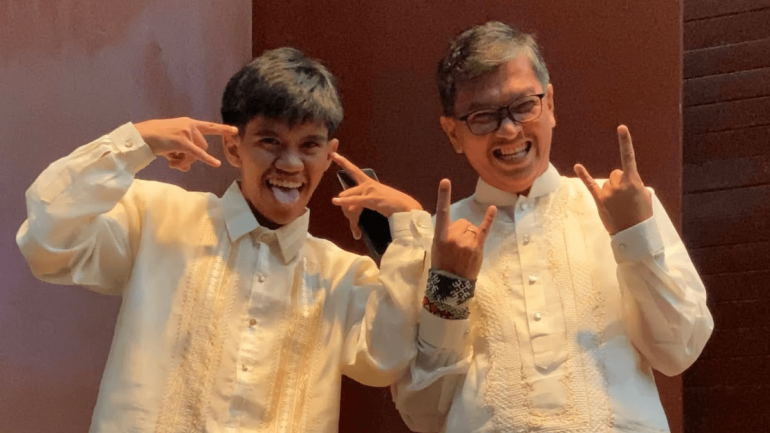
Yet even as accolades have come his way, Jude remains grounded, often deflecting praise with humility. “Whenever people tell me, ‘You’re really good,’ I always reply, ‘Not really—it’s my father who’s better’,” he laughs. “I’m really not good at handling compliments. But seriously, I always say it was my father who taught me.”
Behind the laughter, Jude admits to inner struggles familiar to many young artists. “I constantly struggle with self-doubt. I’m afraid of failure” he confides. “But I’m training myself to accept reality. It is what it is, as they say.”
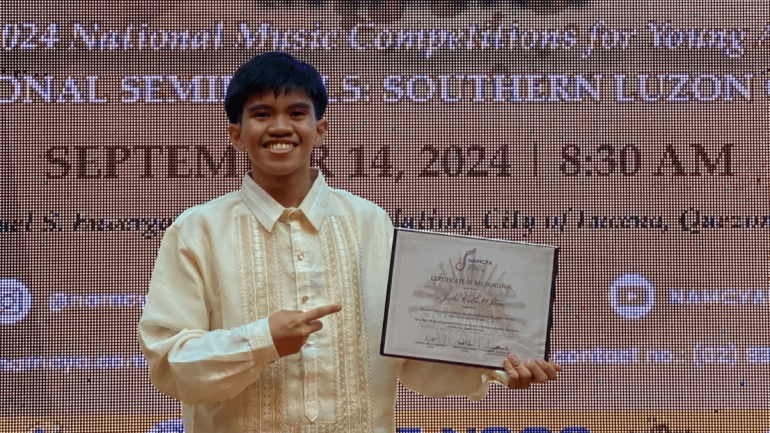
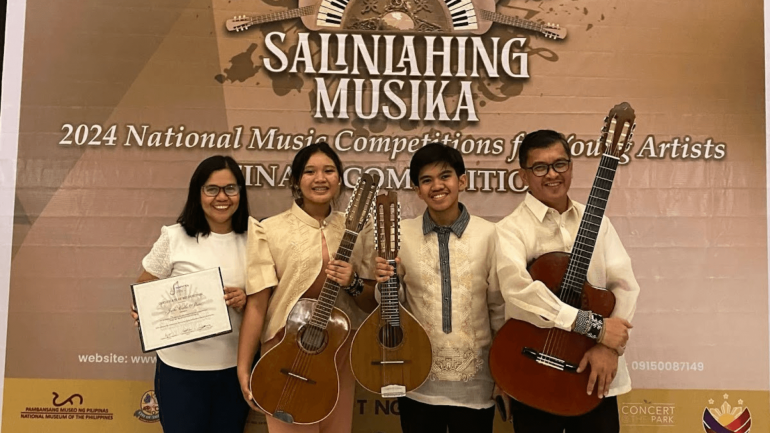
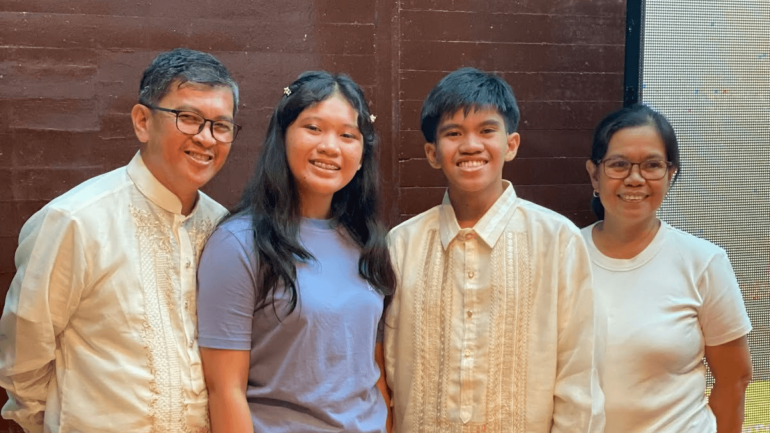
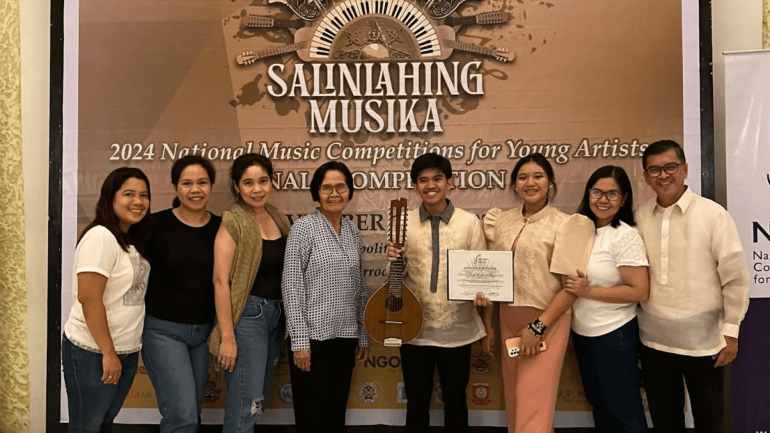
As he prepares to enter college and pursue a conservatory education in music, Jude reflects deeply on the future. “I often ask myself, ‘Where will music take me?’,” he says. Over time, clarity has emerged. “I see myself becoming a teacher. I want to pursue music not only for personal fulfillment, but for my community and my family as well.”
More than personal success, Jude dreams of cultural revival. “I hope to help revive the tradition of rondalla in our province,” he shares. “And to carry it with me wherever I may go—especially to the NAMCYA stage.
Standing quietly but firmly behind both father and son is Jude’s mother, whose support is constant and practical. “My mother has always been our number one supporter,” Jude says with a grin. “She’s always there at our performances. She’s also the one who gives us money whenever we go out,” he laughs.
For Howard Bong M. Abao, seeing his son walk this path is both fulfillment and affirmation of his own life’s mission. His journey into music began in childhood—singing in a parish choir during his First Communion, later joining the drum and lyre corps, and eventually discovering rondalla, a turning point that shaped his lifelong dedication to cultural music.
An equally meaningful chapter of that journey is his involvement with the rondalla of the BNEK Sisters in Salong—the Benedictine Nuns of the Eucharistic King at Our Lady Mary Mother of the Divine Providence Abbey in San Rafael Heights, Calapan. The ensemble was formed upon the encouragement of the late Bishop Warlito Cajandig, who challenged the sisters to establish a rondalla ministry. That challenge was issued eighteen years ago, and a year later the group was formally organized. At the time, Jude had not yet been born—he was still in his mother’s womb—making the rondalla and the child almost the same age, growing side by side.
“I used to bring Jude and Lira with me to rehearsals all the time,” Bong recalls. “Now, the two of them are already helping me take care of the instruments.” That close intertwining of music and family became even more evident recently when Jude—now fondly called Ude—conducted the rondalla during a performance while his father was unable to attend, staying instead at the hospital to care for his own mother. The sisters were overjoyed, saying that their long-held belief had come true—that one day, Ude would become their teacher and musical guide.
Through years as a choir leader, teacher, arranger, and pastoral worker, Mr. Abao has remained steadfast in using music as a form of ministry. Today, he continues to train rondalla groups, conduct choirs, and educate students as a MAPEH teacher at Oriental Mindoro National High School, while pursuing a Master’s degree in Education major in Music Education.
For Bong, moments like these are blessings beyond measure. “For a parent,” he shares, “there is no greater joy than seeing your children already knowing where they are headed.” That joy deepens when the path they walk is the same one once taken by their parents—a shared road that nurtures not only talent, but values. In this way, music becomes more than an art form; it becomes a living legacy of faith, character, and life.
As their music flows from home rehearsals to parish halls and national stages, the Abao story resonates deeply with the mission of Radio Veritas Asia—telling stories where faith, culture, and community meet. In every performance played “like there’s no tomorrow,” father and son remind us that music, when shared in love, becomes a lasting act of hope—for family, for culture, and for God’s people.