


At 90, Indian Archbishop Thomas Menamparampil Continues to Build Bridges of Peace in Northeast India

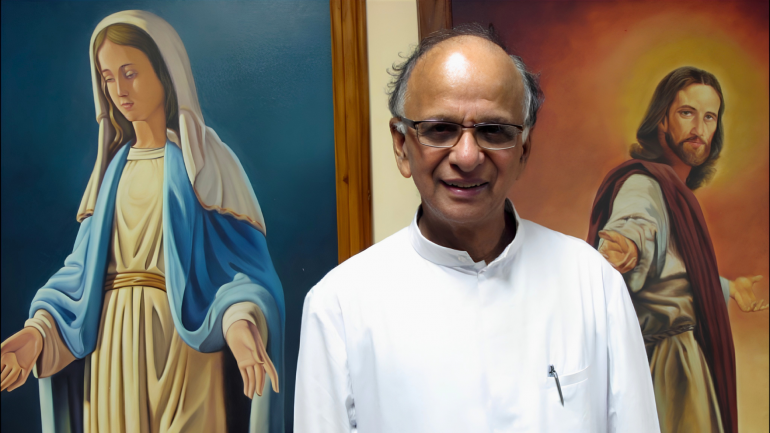
For nearly seven decades, Archbishop Thomas Menamparampil, SDB, has served communities across Northeast India, building schools, accompanying marginalized people and helping mediate ethnic conflicts through patient dialogue and respect for different cultures.
The emeritus archbishop of Guwahati, who turned 90 on October 22, 2026, remains committed to writing, reflection and peacebuilding, drawing on a missionary life shaped by education, interreligious engagement and the conviction that lasting reconciliation begins with listening.
Born on Oct. 22, 1936, in Pala, Kerala, in southwestern India, Archbishop Menamparampil felt called as a young man to missionary work in Assam, a state in northeastern India. He joined the Salesians of Don Bosco, made his first profession in 1955 and was ordained a priest in 1965.
After studies in philosophy and theology and a master's degree in history and English, he served as vice-provincial of the Salesian Guwahati Province and rector of Don Bosco Technical School in Shillong, Meghalaya.
In 1981, Pope John Paul II appointed him bishop of Dibrugarh, Assam. In 1992, he became the first bishop of the newly established Diocese of Guwahati and was elevated to archbishop in 1995. He led the Archdiocese of Guwahati until his retirement in 2012.
Building institutions, nurturing communities
Archbishop Menamparampil's missionary work extended well beyond church structures. In Dibrugarh and Guwahati, he helped establish schools, hostels, training centers, institutions for people with disabilities and hospitals, with particular attention to marginalized communities.
His approach to evangelization emphasized respect for local cultures and dialogue rather than confrontation. He chaired the Catholic Bishops' Conference of India's Commission for Education and Culture and served the Federation of Asian Bishops' Conferences' Office for Evangelization.
His vision of communicating the Gospel sensitively across Asia was captured in the expression “whispering the Gospel to the soul of Asia.”
An educator, philosopher and writer, Archbishop Menamparampil has published more than 180 articles and numerous books exploring culture, spirituality, evangelization and reconciliation. His works include Jesus in the Villages, The Challenge of Cultures, Thoughts on Evangelization and Cultures in the Context of Sharing the Gospel.
He also prepared the Way of the Cross meditations for Pope Benedict XVI, reflecting his continuing engagement with spirituality and the moral challenges facing society.
Listening across ethnic divides
One of his most widely recognized contributions has been peacebuilding in Northeast India, a region marked by ethnic diversity and recurring tensions involving communities, land and identity.
During the ethnic violence in Kokrajhar in 1996, which displaced hundreds of thousands of people, Archbishop Menamparampil became involved in mediation efforts. He helped establish the Joint Ecumenical Peace Team, also known as the Joint Peace Mission, which facilitated dialogue in conflict-affected areas.
His approach emphasized listening to grievances, understanding different perspectives and avoiding humiliation of any party. Rather than imposing solutions, he sought to create space for communities to speak, rebuild trust and explore peaceful ways forward.
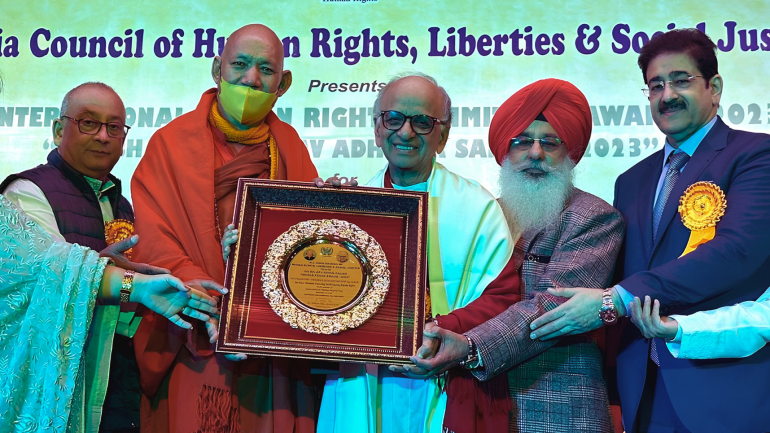
His peace efforts earned international recognition. He was nominated for the Nobel Peace Prize in 2011 and received the Ambassador for Peace Award and the Dr. APJ Abdul Kalam World Peace Award in 2023.
Retirement did not end his commitment to reconciliation. He continued writing, speaking and encouraging dialogue among communities.
A missionary's continuing witness
Archbishop Menamparampil's episcopal motto, “At your word I will let down the net,” reflects a life of faith, perseverance and service.
At 90, his missionary legacy lies not only in the institutions he helped establish or the writings he produced, but also in his efforts to bring people together across cultural, ethnic and religious differences.
For the Church in Northeast India and beyond, his life offers a reminder that mission involves more than proclaiming faith. It also means accompanying people, respecting their dignity and working patiently for peace.