At the Crossroads of Prayer and Protest: The Benedictine Abbey of Montserrat in Manila

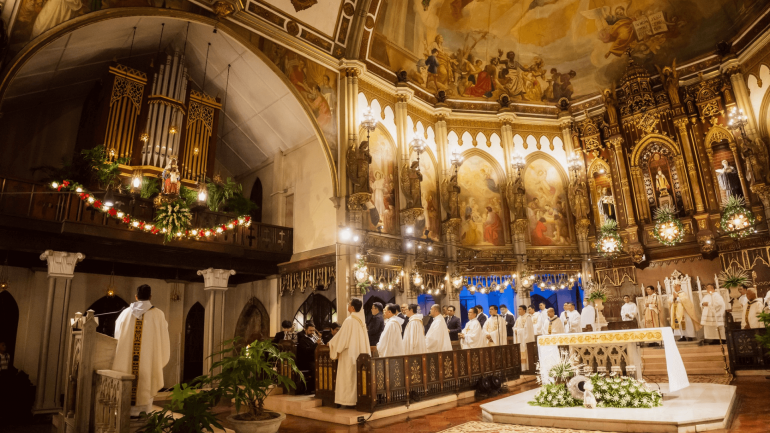
Standing near the seat of power, along Mendiola Street and within sight of Malacañang Palace, the Benedictine Abbey of Our Lady of Montserrat has quietly witnessed both prayer and protest for more than a century. Its stone walls and constant rhythm of monastic life have endured amid shifting governments, social unrest, and the persistent search for justice that has marked Philippine history.
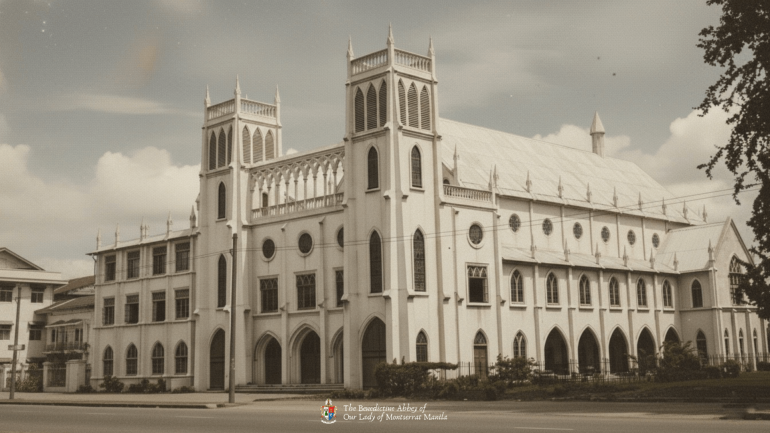
For many, the abbey has stood as a silent witness to the Philippines’ unfolding national story.
This year, that story gained renewed attention with the centennial celebration of the Abbey Church, commemorating its dedication on January 13, 1926. The milestone marks a century since the sacred building was completed and consecrated along Mendiola. The Abbey as a monastic community, meanwhile, marked its 130th anniversary of foundation in September 2025, having been elevated from a priory to an abbey in 1924.
The abbey traces its roots to the late Spanish colonial period, when Benedictine monks from the historic Abbey of Montserrat in Catalonia, Spain, sought to establish a mission beyond Europe. In 1895, a small group led by Abbot José Deas y Villar, OSB, arrived in the Philippines, laying the foundations of Benedictine life anchored in prayer, work, and community.
Initially engaged in parish and missionary work, the monks soon faced upheaval following the Spanish-American War and the shift to American rule. With traditional support structures disrupted, the Benedictines discerned education as a way to sustain both their monastic life and their mission. In 1901, they founded San Beda College, which would later grow into San Beda University.
As the institution expanded, the monks transferred their monastery and school to Mendiola Street in San Miguel, Manila—just steps away from Malacañang Palace, the seat of executive power.
Over time, this short stretch of road became a national stage for dissent. Because of its location, the abbey has stood for generations at the fault line between prayer and protest, bearing witness to what many Filipinos consider the longest shadow cast along Mendiola: the student demonstrations during Martial Law, followed by the violence of the Mendiola Massacre in 1987, and, decades later, renewed anti-corruption protests that again brought citizens close to the palace gates.
Through these moments of upheaval, the monastery remained—its quiet rhythm of prayer unfolding alongside the nation’s recurring struggles for justice and accountability.
Reflecting on this history, the abbey explained that Benedictine life is rooted in stability, a value drawn from the Rule of St. Benedict. The Rule teaches monks to remain faithful even in difficult and unfavorable circumstances, noting that humility includes quietly embracing hardship and enduring it without weakening or seeking escape (RB 7:35–36).
For the Benedictines, the abbey said, stability is lived through prayer, which is their primary occupation. In a society marked by restlessness, their unchanging rhythm of silence and communal prayer is understood as an antidote to constant motion and distraction. This steady pattern of life, the abbey noted, stands in quiet contrast to the noise and urgency of the world surrounding them.
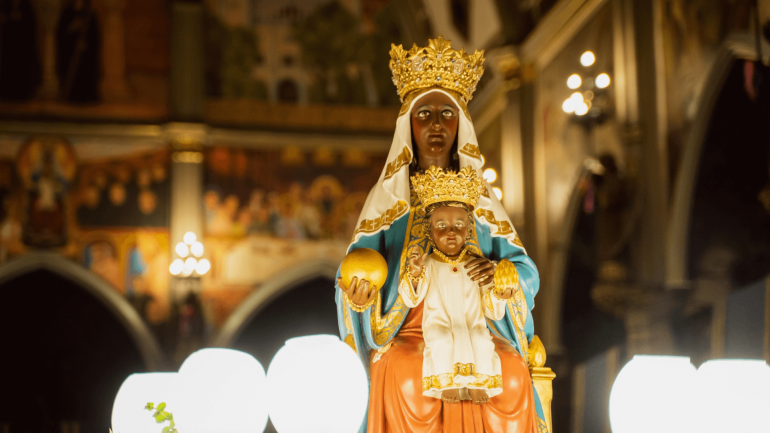
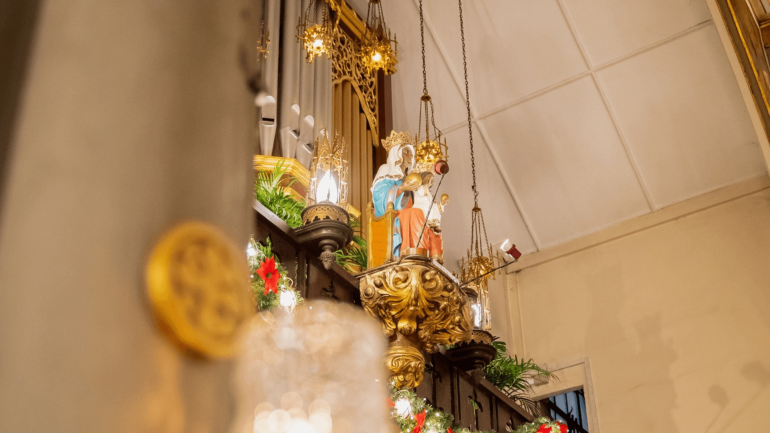
The monastery was raised to the status of an abbey in 1924, and the following year the monks began constructing the abbey church, which was completed and dedicated in 1926. Dedicated to Our Lady of Montserrat, the Black Madonna venerated in Catalonia, the church symbolizes continuity with the mother abbey in Spain and the Benedictine vow of stability.
Now marking its centennial, the abbey said the church stands as a testament to a way of life that remains constant amid a fast-changing world—offering an oasis where people may find peace and solitude, even briefly, amid the pressures of daily life.
One observer reflected that while an earlier era many remembered as more peaceful has passed, the church remains—linking the nation to its past and carrying that memory into the future.
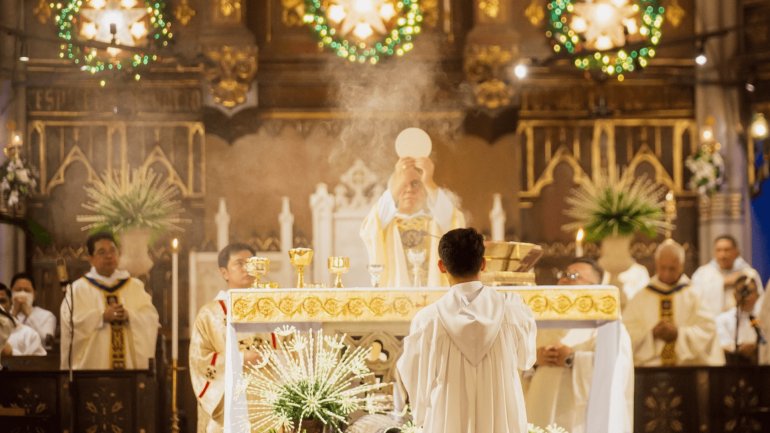
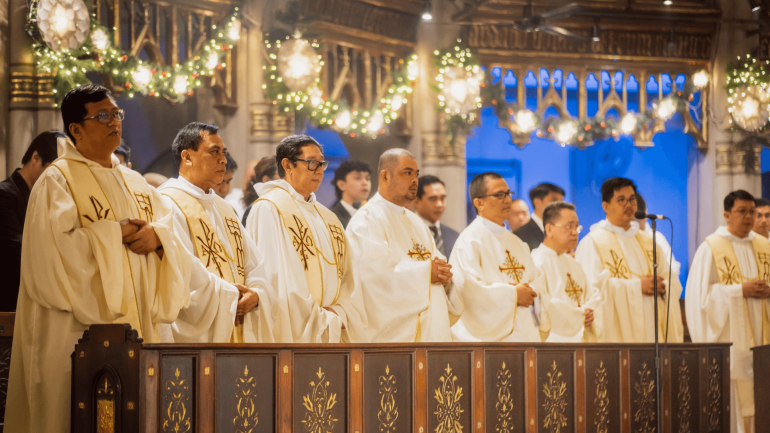
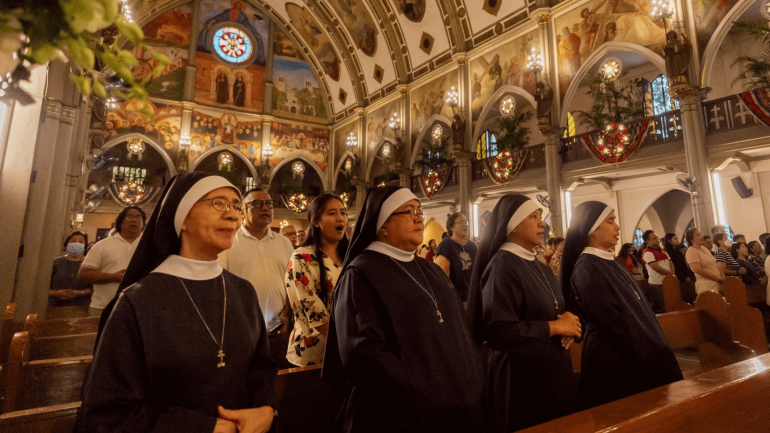
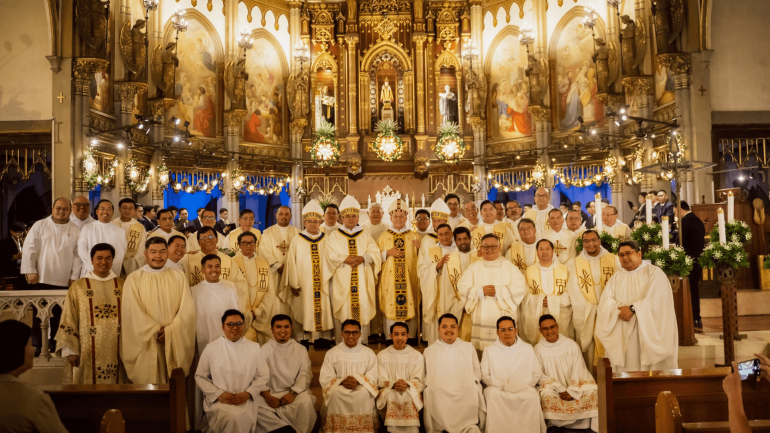
The centenary Mass also marked the first celebration at the abbey church presided over by Abbot President Ignasi Fossas of the Subiaco Cassinese Congregation.
In his homily, Fossas reflected that “Christian churches have both a practical and a symbolic dimension.”
Practically, he said, churches gather communities to celebrate the liturgy, pray, hear Scripture, and receive God’s Word.
Symbolically, he added, they remind believers that “the foundation of the disciples’ lives is Christ—Jesus Christ, and only Christ.”
Fossas also reminded the congregation that believers are part of “a long chain” of disciples.
“For this reason,” he said, “today we thank the Lord for those who 100 years ago preceded us in faith.”
Looking back on the past century, the abbey reflected that the church bears witness to God’s abiding presence.
Amid a world of constant change and fleeting concerns, it said, God remains the unchanging One, inviting people to bring their joys, sorrows, and aspirations before Him.
To enter the abbey church, it added, is to respond to that invitation—to step into a sacred space that calls people into communion with a merciful and loving God.
As the abbey marked the 100th anniversary of its church this January 13, it did so not with spectacle, but with the same Benedictine rhythm of prayer and presence that has sustained it for a century—quietly faithful at the crossroads of prayer and protest.