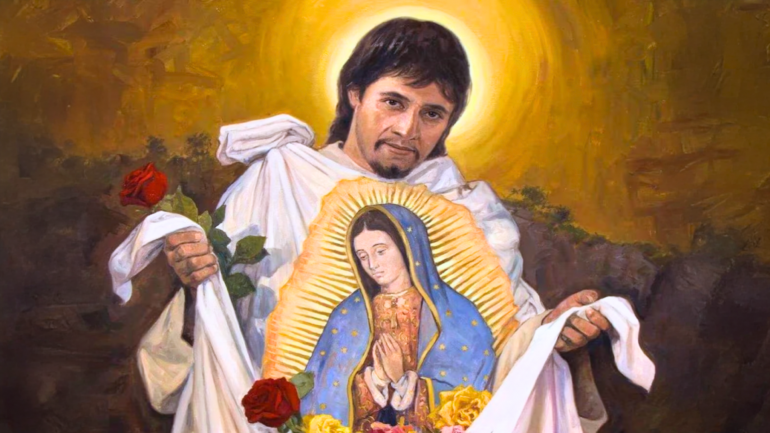
On a cold December morning in 1531, a Nahua widower named Juan Diego Cuauhtlatoatzin set out toward Tlatelolco for catechism and prayer. He walked steadily, the way a man who has survived grief and upheaval learns to move, with patience, resolve, and faith.
History remembers him as the humble visionary who carried roses in his tilma (a coarse, cloak-like garment worn by indigenous peoples in Mexico). But beneath the miracle lies a more important, often overlooked truth: Juan Diego was a reconciler, a bridge-builder who helped heal a land torn apart by trauma.
A Man Living Between Two Worlds
Ten years after the fall of Tenochtitlán, Mexico was a society in shock. Entire communities were displaced; epidemics ravaged villages; relationships between indigenous peoples and the colonial Church were strained by suspicion and fear.
Juan Diego, a recent convert, lived in this fracture. Yet early Franciscan sources describe him as unusually gentle, a man capable of “speaking in the two ways,” interpreting both Indigenous and Spanish mindsets. Missionaries trusted him because he embraced the faith sincerely. His people trusted him because he never abandoned their language, their pain, or their dignity.
He was not educated, powerful, or influential. But he possessed the rare grace of empathy, and this made him ready for the mission Our Lady would entrust to him.
The Morning on Tepeyac
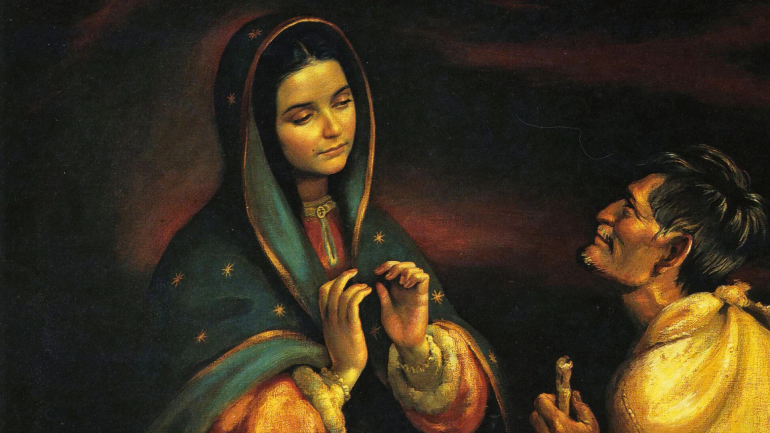
On December 9, 1531, the ordinary path of this ordinary man became extraordinary. At Tepeyac, he heard unearthly birdsong and found himself before a radiant Lady who spoke his language with tenderness and familiarity. She asked him to go to Bishop Juan de Zumárraga with a request: build a church where she could show compassion to all people of the land.
Juan Diego’s reaction reveals his heart. “I am a nobody,” he told her. “Choose someone important, respected.”
These words are not just humility, they reveal the deep collective humiliation of a people defeated, displaced, and marginalised. Yet Our Lady insisted. The message must come through him. Her choice would become the hinge of the evangelisation of the Americas.
Pope Francis, speaking in Mexico in 2016, captured this beautifully: “Juan Diego became the most trusted of messengers because he never sought himself, but only peace for his people.”
A Miracle of Roses — and of Trust
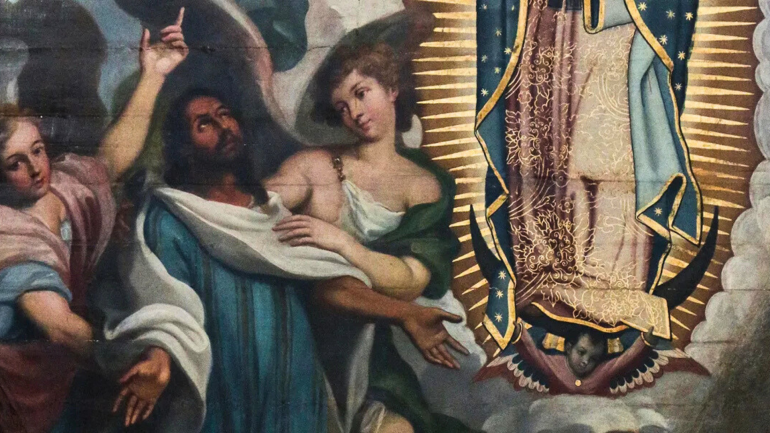
Much has been written about the roses and the miraculous image on the tilma. Yet the deeper miracle is the one often missed: an Indigenous man and a Spanish bishop found trust across an impossible social divide.
The Guadalupe event softened what conquest had hardened. It shifted the Church’s presence in the New World from fear to tenderness. Pope St. John Paul II would later say in his Canonisation Homily: “In Juan Diego, the Gospel entered this land as reconciliation, not as conquest.
The miracle was not just the flowers; it was the healing that followed.
The Hidden Years at Tepeyac
Many Catholics know that Juan Diego retired near the shrine. Few know what he actually did there. For nearly 17 years, he lived a quiet, powerful ministry that helped rebuild spiritual and cultural trust.
He welcomed Indigenous pilgrims who were afraid of Spanish clergy. People approached him first because he understood their wounds.
He told the story of Tepeyac in poetic Nahuatl.
He used the imagery of dawn, flowers, and warmth, familiar symbols of Indigenous spirituality.
He accompanied the sick during epidemics.
Some called him a “grandfather of consolation,” a title of affection rarely mentioned in modern catechesis.
He served as a lay catechist.
He bridged misunderstandings, eased tensions, and helped the friars understand indigenous sensitivities.
This hidden ministry may be Juan Diego’s greatest legacy. He transformed Marian devotion into pastoral healing.
Small Stories with Deep Meaning
The Visit He Tried to Avoid
The Nican Mopohua recounts the touching moment when Juan Diego, rushing to find a priest for his dying uncle, tries to avoid seeing Our Lady because he feels ashamed for delaying her mission. Her response is the heart of the Guadalupe message: “Am I not here, I who am your Mother?”
Her words comforted not just him, but a wounded civilisation.
Carrying Roses Like Fire
Indigenous customs held that sacred objects must not touch the earth. Juan Diego walked to the bishop with unbending arms, determined that none of the miraculous roses would fall. Eyewitnesses said he moved “like a man carrying fire.”
This reverence still lives today in the vibrant flowers, dances, and processions of Indigenous Guadalupan devotion.
The Relevance for Today’s Church
Nearly 500 years later, Juan Diego’s mission speaks to modern wounds and challenges. The Church today stands in places where cultures collide, trust erodes, and history weighs heavily.
1. Evangelisation must heal before it teaches.
People trusted Juan Diego because he embodied safety and tenderness. This remains the Church’s greatest need today: pastors who listen before they instruct.
2. Inculturation must be done with affection, not strategy.
The Guadalupe miracle itself is a masterclass in divine inculturation, Mary appearing in Indigenous symbols, speaking a familiar language, addressing real wounds.
3. The Church’s future depends on humble lay witnesses.
Juan Diego reminds us that the most transformative evangelisers are often the poor, the marginal, the overlooked. They carry credibility because they carry lived truth.
4. Reconciliation requires bridge-builders.
From Indigenous rights in the Amazon and Canada to multicultural tensions in Asia and Africa, the Church needs people who can stand calmly between worlds. Juan Diego is their patron.
Why His Story Still Matters
St. Juan Diego’s life is not only about a tilma or roses. It is the story of a people devastated by history, a Church searching for its heart, and a man whose faithful “yes” helped transform both.
His legacy challenges the Church to rediscover humility, tenderness, and cultural sensitivity, the same qualities that made him a trustworthy messenger in 1531. He shows us that holiness can be quiet. That reconciliation often begins with listening.
That healing sometimes comes through people who think they have nothing to offer.
And he shows that God often chooses the small so that the great may be transformed.
As the Church honours him today, his message echoes with renewed urgency: Reconciliation begins not with institutions, but with people who can hold two worlds in one heart.