From Volunteer to Guardian: How Jana Palomique Became a Protector of Children

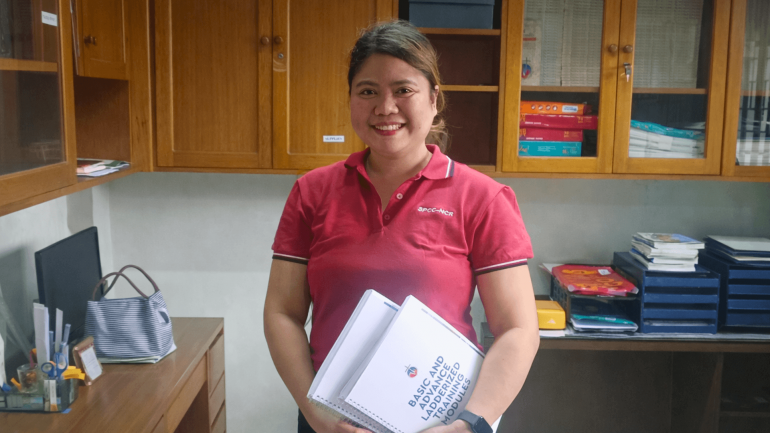
At 12 years old, Jana Palomique was already doing work most adults find unbearable: listening to stories of abuse and helping other children seek help.
She did not yet have the language of social work or child-rights law. What she had was proximity. She grew up in an economically challenged community where neglect, violence, and silence often lived inside homes. By early adolescence, she was already leading a children’s association in her parish in Novaliches, Metro Manila—and quietly referring abused children she knew personally.
“I saw it early,” Palomique said. “When a community is struggling economically, the risk of abuse is higher, especially inside the home.”
Her involvement began in 2001, when a Church-backed program conducted a preliminary social investigation in her parish, asking uncomfortable questions about abuse in the community.
The following year, the Salvatorian Pastoral Care for Children (SPCC), a program of the Sisters of the Divine Savior, formally partnered with Parokya ng Mabuting Pastol in Quezon City. Palomique—then a youth volunteer active in parish youth work—was invited to attend SPCC training on child protection.
Those training changed the direction of her life.
After Parokya ng Mabuting Pastol, she volunteered for the program in San Jose, Ang Tagapagtanggol Parish, then in St. Peter Parish, all in Quezon City, as it expanded.
In the process, she learned about children’s rights, personal safety, protective behavior, and laws related to abuse. She also became a peer counselor—listening to classmates and friends, most of them girls, who experienced physical or sexual abuse. At an age when many children are just learning to speak up, Palomique was already helping others find their voice.
“From the moment a child is born, their rights can already be violated,” she said.
She pointed out that children who are not registered early are often unable to enroll in school, leaving many out of the education system from the very start.
Before SPCC, she had dreamed of becoming a teacher. She was even offered a full scholarship for a computer-related course. But when SPCC and the Sisters asked if she would consider becoming their scholar instead—and study social work—she said yes.
“It felt like God’s will,” she said. “It felt like a calling.”
Raised by a single mother after her father died when she was in Grade 3, Palomique understood vulnerability from the inside.
She graduated with a degree in social work and was hired by SPCC in 2010, even before the results of her board exam were released. Her work focused on forming children themselves as child-rights advocates.
The approach was simple: train children to become the eyes and ears of their own communities.
“They are our most effective partners because they are present in their communities 24/7,” Palomique said.
SPCC worked parish by parish, training young advocates to recognize abuse, speak up, and refer cases.
But the work was not without limits. SPCC made clear it was not a shelter or enforcement agency. It handled referrals, linking abused children to child-caring institutions and partner organizations equipped to respond.
Barely a year into her work, Palomique was given a major assignment: to test a new model.
Instead of focusing on one parish at a time, she began experimenting with multi-parish engagement—learning through trial and error, refining what worked, and carrying lessons forward to the next community.
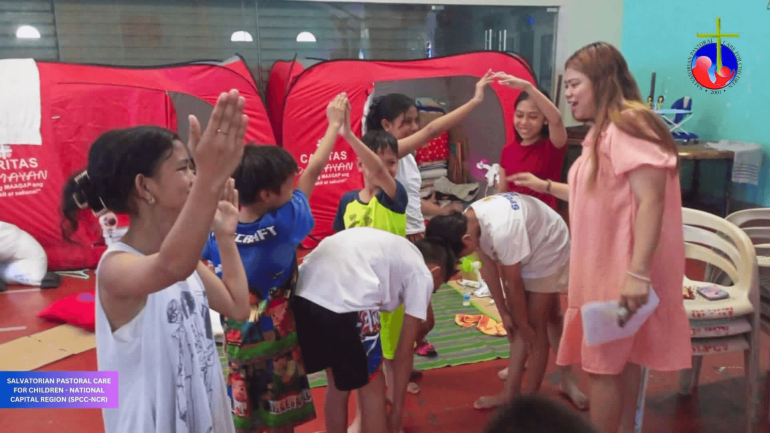
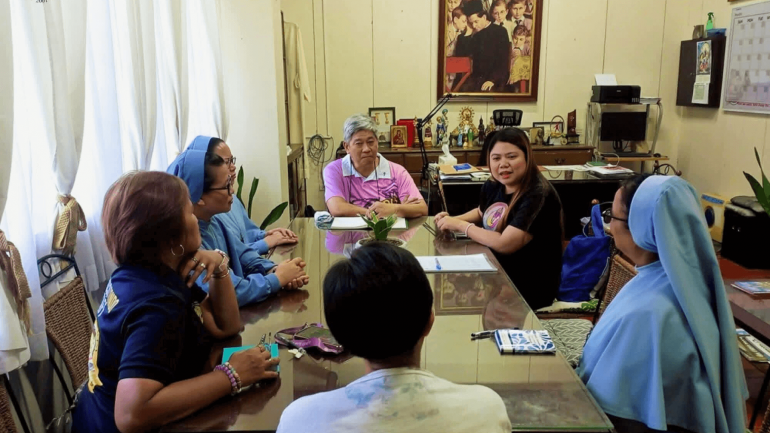
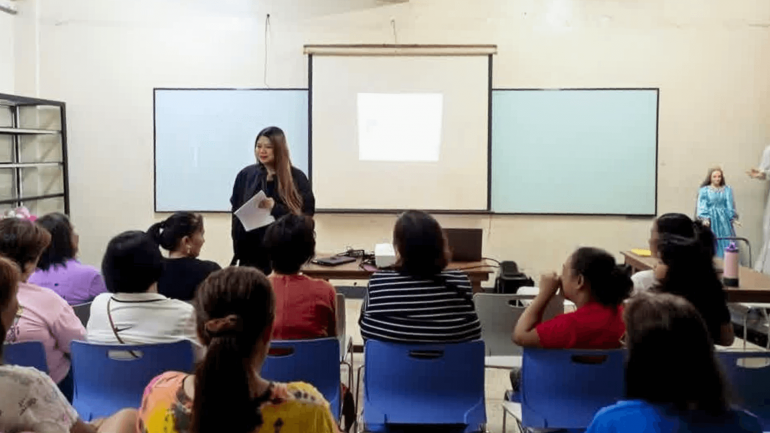
The shift mattered. In the Diocese of Novaliches, SPCC partnered with six parishes before transitioning responsibility to the diocese itself.
In 2018, a diocesan child-protection program was established. Today, that number has grown to 20 parishes—and continues to expand.
Not all contexts were as stable. In the Archdiocese of Manila, the program continued but was disrupted by repeated changes in leadership.
Elsewhere, progress was slowed by limited awareness, especially at the barangay level, where officials are often the first responders but remain ill-equipped to handle child-protection cases.
“The laws are good,” Palomique said. “The problem is implementation.”
In November 2024, she took on her most challenging role yet: becoming the first lay program director of SPCC in Metro Manila.
For more than two decades, the program had been led by religious sisters. The transition required adjustments on all sides—especially in supervising a team that included sisters themselves.
“It wasn’t easy,” she admitted. “For them and for me.”
But in terms of program operations, the work continued.
For Palomique, commitment to child rights is not measured by scale or visibility.
Impact, she believes, is often quiet. Some child advocates no longer remain active. They grow up, form families, and move on. But what stays with them is formation.
“They become protective parents who apply what they learned within their own families,” she said.
Today, SPCC has helped form thousands of child-rights advocates.
Yet Palomique remains clear-eyed about the work ahead.
One of the hardest challenges, she said, is convincing parish priests to become champions of child protection. Many see it as costly, complex, or burdensome.
Still, she keeps going—guided by a modest but unwavering measure of success.
“If we have 50 participants and even one life is touched, that is already enough for us,” she said.
For Palomique, faith is not introduced through preaching but through protection. Children may never see God directly, she said—but they can encounter God through people who defend their dignity.
“Even if they never see God directly,” she said, “they will encounter Him through the way we protect them.”