

A young Singapore priest, his parents, and the fear of being an "unfilial son"

When Marcus Dominic Chew entered the seminary at 22, his mother sold his bed and bought an automatic mahjong table. His old room became the family's entertainment room.
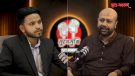
The story drew laughs in a 14-minute video interview released in October by AsiaOne, a secular Singapore news site, which introduced Chew as Singapore's youngest Catholic priest at 31. But behind it lay a struggle familiar to many Asian families: how a son answers a call to the priesthood without turning his back on his parents.
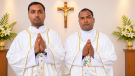
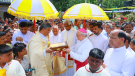
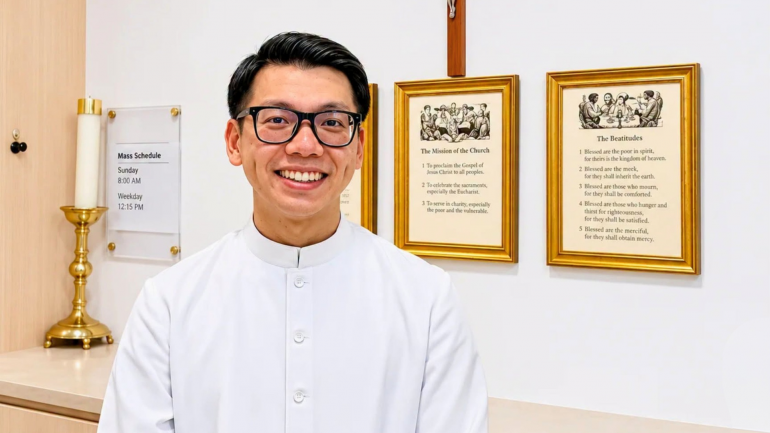
Chew was one of four men ordained priests for the Archdiocese of Singapore on June 1. He now serves as assistant parish priest at the Church of the Holy Spirit.
"I'm the oldest son"
His parents were not supportive at first. Chew says in the video that he understood why: he had been "a bit lazy sometimes," a boy who needed "to be nagged at" to study. "Is he like trying to run away from life's responsibilities?" he imagined them asking.
The hardest moment came when his father lost his eyesight. "I'm the oldest son, don't I need to look after him?" Chew recalls asking himself. He had a university place and an offer to sign on as a regular during his National Service. At an evening Mass, he prayed: "What if I am an unfilial son? What if I'm running away from my family's responsibilities in choosing this?"
The Gospel that evening was Jesus' reply to a man who asked first to bury his father: "Leave the dead to bury the dead." Chew says he cried and took it as a sign to persevere.
Weeks later, as he waited at the ferry terminal to return to Pulau Tekong, where he served as a driver, his father phoned him in tears. A social worker had taken him to Mass on Vocation Sunday. "If this is what God wants you to do, you go," his father told him.
"Mothers know their sons best"
His mother took longer. When Chew told the bishop he had never really asked her how she felt, the bishop told him to ask, because "mothers know their sons best."
So on Mother's Day, he took her to lunch and asked. She gave him three reasons for her unease: a priest's life is difficult; it seemed "a bit of a waste"; and she feared he would regret spending his 20s in the seminary while others were "enjoying life."
Then he asked whether anything in his character would keep him from being a good priest. "Actually no," she said. "You're my son and I think you will make a good priest."
She has been supportive since, he says, though she still jokes that he might "find a girl" and leave.
How does such a story land with Singaporeans who do not share his faith?
RP Singh, 47, a director who is Sikh, was struck by the words Chew heard at that evening Mass, "Leave the dead to bury the dead," which he took to mean "we should not hold on to the past." "To me, this wasn't a religious story," he said. "It was a personal story of how someone chose to be religious."
Sam Ho, 43, who works in communications and has no religion, found Chew "a very grounded person who has clarity in his purpose. He is also very Singaporean, which makes him relatable." The story made him think about "how we reframe what we think are sacrifices," he said.
Tang Song Hee, 49, a pilot who attended a Catholic school as a teenager, was less moved. "I explored religion when I was younger. Nothing happened," he said.
"Nothing else but you"
On his door, Fr. Chew keeps a Latin motto given by a friend: Non nisi te, Domine, "Nothing else but you, Lord." He calls it "a reminder for me."
The video ends on his ordination day, as people arrive to celebrate with him. "Even before ordination tears were already shed," he says, "to see the people love God and love the church."