


(The RVA Central Office in Quezon City, Philippines, has been blessed by visits from three saints of the Catholic Church — St. Paul VI, St. John Paul II, and St. Teresa of Calcutta. Their presence remains a lasting inspiration for RVA’s mission to proclaim the Gospel across Asia. As we prepare to rename our chapel the Three Saints Chapel in their honour, RVA launches a special series reflecting on their lives, their contribution to the Church’s mission in Asia, and their memorable visits to our broadcast centre. Their witness continues to guide our work of faith and communication. – Editor)
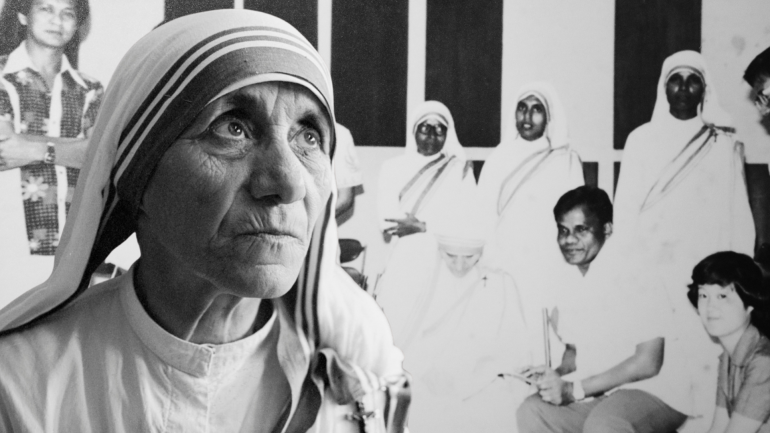
Few figures in the modern Church have touched the conscience of the world as deeply as Mother Teresa. Known for her tireless service to the poorest of the poor, she became a living witness of the Gospel, proclaiming the love of Christ not only through words but, above all, through acts of compassion.
Her life was a powerful reminder that the message of the Gospel must reach every person, especially those who are forgotten, abandoned, or suffering. Through her humility, simplicity, and unwavering faith, Mother Teresa showed that the most convincing proclamation of the Good News is a life lived in love.
A Mission Rooted in the Gospel
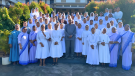
Mother Teresa was born Anjezë Gonxhe Bojaxhiu in 1910 in Skopje. From a young age, she felt called to dedicate her life to God and to missionary service. After joining the Sisters of Loreto, she traveled to India, where she would eventually found the Missionaries of Charity in 1950.
Her mission was clear and radical: to serve Christ in the poorest of the poor, the hungry, the sick, the dying, and the abandoned. For Mother Teresa, caring for those in need was not merely humanitarian work; it was a profound expression of the Gospel itself.
She often explained her spirituality as the “Gospel on five fingers,” inspired by the words of Jesus in Matthew 25:40:
“Whatever you did for one of the least of these brothers and sisters of mine, you did for me.”
Through small acts of mercy, washing wounds, comforting the dying, feeding the hungry, she proclaimed the presence of Christ among the most vulnerable. As she once said:
“We preach the Gospel with our hands before we speak it with our lips.”
Compassion That Reached the World
Although Mother Teresa lived a life marked by prayer, silence, and simplicity, her witness soon attracted global attention. What began as a humble mission in the streets of Kolkata gradually became a powerful sign of hope recognized throughout the world.
Paradoxically, this quiet nun became one of the most photographed and recorded women of the twentieth century. Yet she did not seek the spotlight. Instead, she accepted it as an opportunity to awaken the conscience of humanity to the suffering of the poor.
Mother Teresa understood that while she could personally touch the lives of individuals in the slums of Kolkata, modern communication could carry the message of compassion to millions. Cameras, microphones, and interviews became instruments through which the voices of the forgotten could be heard around the globe.
For her, media attention was never about personal recognition. Rather, it was a means of drawing attention to the dignity of every human person and the urgent call to love and solidarity.
Mother Teresa and the Mission of Communication
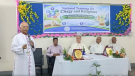
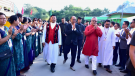
The visit of Mother Teresa to Radio Veritas Asia in Manila remains a meaningful moment in the history of the station. Known as the “Voice of Asian Christianity,” Radio Veritas Asia has long been committed to sharing the message of faith, hope, and compassion across the diverse cultures and languages of the continent.
For Mother Teresa, radio represented a unique missionary opportunity. Through its broadcasts, the message of hope could reach places far beyond the reach of physical missionaries, crossing borders, mountains, and political barriers.
Her presence affirmed that communication ministries are a vital part of the Church’s mission of evangelization. Through the simple yet powerful medium of radio, the love of Christ can reach homes, villages, and hearts throughout Asia.
The Heart of the Message: Love
Mother Teresa insisted that the greatest poverty in the world was not only material deprivation but the feeling of being unwanted, unloved, and forgotten. Her mission sought to respond to this deeper poverty by restoring human dignity through compassion.
Her life reminds communicators that the most powerful message is not technology itself but the love that inspires it. Authentic communication begins with a heart that seeks truth, serves others, and uplifts the dignity of every person.
This spirit resonates deeply with the mission of Radio Veritas Asia. Through its broadcasts and digital outreach, the station continues to share messages of faith, dialogue, and hope with communities across Asia.
Just as Mother Teresa’s hands served the poor in the streets, the voices transmitted through the airwaves continue to serve listeners seeking spiritual encouragement and guidance.
A Witness for Our Time
Today, in an increasingly interconnected world, the example of Mother Teresa remains profoundly relevant. Her life teaches that the proclamation of the Gospel must always be rooted in humility, compassion, and authentic love.
For those engaged in communication ministries, her witness offers a clear inspiration: technology and media must always serve a deeper purpose, the dignity of the human person and the sharing of God’s love with the world.
In this way, the message embodied by Mother Teresa continues to echo far beyond the streets of Kolkata, reaching across the airwaves, into homes, and into hearts throughout Asia and beyond.