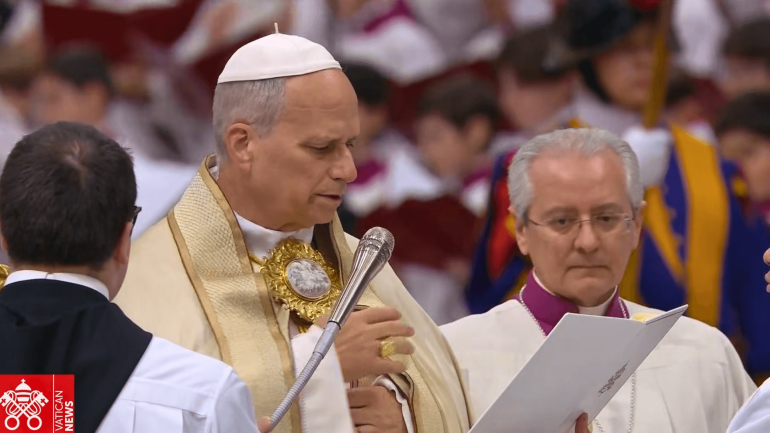
Pope Leo XIV called on Christians to make their unity visible through a shared witness to the Gospel as he presided over the Celebration of Second Vespers on 25 January, the Feast of the Conversion of Saint Paul, marking the conclusion of the Week of Prayer for Christian Unity.
The ecumenical service was held at the Basilica of Saint Paul Outside the Walls in Rome, where the Apostle to the Gentiles is buried. Each year, the Week of Prayer for Christian Unity is observed from January 18 to 25 in the northern hemisphere.
Reflecting on the conversion of Saint Paul—from persecutor of the Church to tireless missionary—the Pope said that every genuine encounter with the risen Christ is transformative and gives new direction to Christian life and mission.
“Paul’s mission is the mission of all Christians today: to proclaim Christ and invite all people to place their trust in Him,” he said.
Unity rooted in shared faith
Drawing on the theme of this year’s Week of Prayer, taken from the Letter to the Ephesians, Pope Leo highlighted the repeated emphasis on “one”: one body, one Spirit, one hope, one Lord, one faith, one baptism, and one God. These words, he said, express a reality Christians already share.
“We are one. We already are,” the Pope said. “Let us recognize it, experience it, and make it visible.”
While acknowledging the persistence of divisions among Christians, he noted that these do not extinguish the light of Christ but can obscure its witness to the world. The annual Week of Prayer, he added, is an invitation to renew a common commitment to the Gospel.
Ecumenism, synodality, and Nicaea
The Pope recalled the ecumenical commemoration of the 1700th anniversary of the Council of Nicaea, celebrated two months earlier in İznik, Türkiye, at the invitation of Ecumenical Patriarch Bartholomew. Reciting the Nicene Creed together at its place of origin, he said, was a powerful and unforgettable sign of unity in Christ.
Looking ahead to the 2000th anniversary of the Passion, Death, and Resurrection of Jesus Christ in 2033, Pope Leo urged Churches to deepen ecumenical synodal practices and to grow in mutual understanding.
Echoing Pope Francis, he reiterated that the synodal journey of the Catholic Church is intrinsically ecumenical, just as the ecumenical journey is synodal.
Witness of the Armenian Churches
Pope Leo also drew attention to the Armenian Churches, which prepared this year’s materials for the Week of Prayer. He expressed gratitude for the steadfast Christian witness of the Armenian people, marked throughout history by suffering and martyrdom.
Recalling Saint Nersès Šnorhali, the 12th-century Catholicos who worked tirelessly for Church unity, the Pope stressed that ecumenism is not a matter of strategy or politics but is essential for the credibility of the Gospel. He also noted Armenia’s tradition as the first Christian nation, following the baptism of King Tiridates by Saint Gregory the Illuminator in 301.
Ecumenical presence
The celebration was attended by numerous leaders and representatives of Christian Churches and communities, including Metropolitan Polykarpos of the Ecumenical Patriarchate of Constantinople, Archbishop Khajag Barsamian of the Armenian Apostolic Church, and Bishop Anthony Ball of the Anglican Communion.
Cardinal Kurt Koch, Prefect of the Dicastery for Promoting Christian Unity, was also present, along with members of theological dialogues, ecumenical groups, students, and pilgrims.
Concluding the service, Pope Leo prayed that the seeds of the Gospel may continue to bear fruit in unity, justice, and holiness, for the sake of peace among peoples and nations throughout the world.