


Vatican introduces AI translations at St. Peter’s, opening wider access for Asian pilgrims

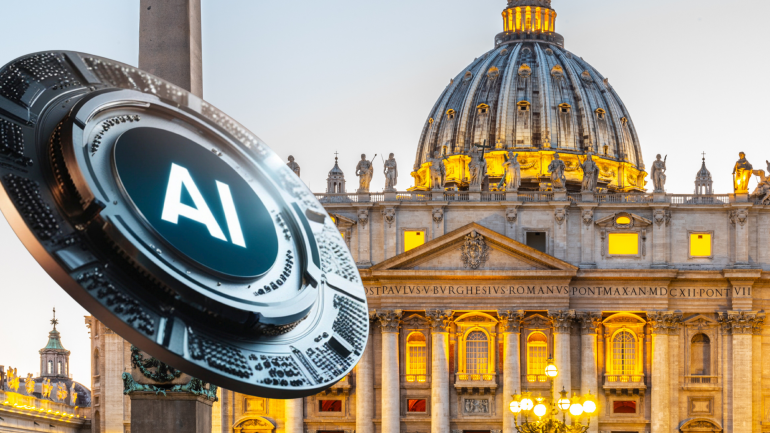
The Vatican will launch this spring an artificial intelligence-assisted translation system enabling pilgrims to follow liturgical celebrations at St. Peter’s Basilica in up to 60 languages in real time.
Through a simple QR code placed inside the basilica, worshippers will be able to access live translations of the readings, prayers, and chants directly from their smartphone browsers, without downloading any application. The service will provide both audio and text formats, allowing greater understanding and participation during Mass.
The initiative is expected to particularly benefit pilgrims from Asia, where linguistic diversity is vast and vibrant. Faithful people from countries such as the Philippines, India, Indonesia, Vietnam, South Korea, and Myanmar regularly attend papal liturgies in Rome but often face language barriers.
Serving the Church’s universal mission
The project is spearheaded by the Fabric of St. Peter in collaboration with the Dicastery for Communication and the technology company Translated, using an AI-powered interpretation system known as “Lara,” developed with Carnegie-AI LLC. Tests are already underway ahead of its official rollout.
Cardinal Mauro Gambetti, Archpriest of St. Peter’s Basilica, said the initiative reflects the Church’s universal vocation.
“St. Peter’s Basilica has welcomed the faithful of all nations and languages for centuries. By making available a tool that helps many understand the words of the liturgy, we want to serve the mission that defines the heart of the Catholic Church, universal by its very vocation,” he said during the presentation on February 16.
Technology at the service of communion
In a recent address on evangelization in the digital age, Pope Leo underscored the responsible use of new technologies in the Church’s mission.
“Technology must never replace the human heart, but when guided by wisdom and ethical responsibility, it can become an instrument of encounter and unity among peoples,” the Pope said. “The Church cannot remain indifferent to the digital culture shaping our world; rather, she must illuminate it with the light of the Gospel.”
The translation system embodies this vision by seeking not technological novelty, but deeper liturgical participation and communion.
For Asian Catholics, whose faith communities flourish amid cultural and linguistic plurality, the development carries special meaning. It affirms that their languages and traditions are part of the living fabric of the universal Church.
Preserving heritage, embracing innovation
The new service comes nearly four centuries after the basilica was consecrated in 1626 by Pope Urban VIII.
Alongside the translation system, the Vatican has introduced other digital initiatives to enhance pilgrim experience and protect the historic site. A visitor management platform known as SmartPass aims to regulate the daily flow of tourists, while a structural monitoring project titled “Beyond the Visible,” supported by the Italian energy company Eni, uses high-precision sensors to track even minute movements in the basilica’s foundations and dome.
Together, these efforts reflect a Church attentive both to its rich heritage and to the possibilities of modern technology.
As pilgrims continue to gather in Rome from every continent, the new translation system highlights how innovation can serve faith — helping believers not only to hear the words of the liturgy, but to enter more fully into the mystery it celebrates.