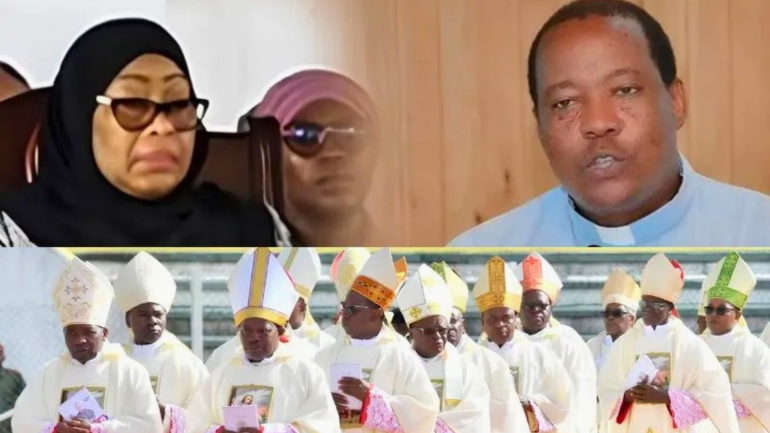
Catholic priests in Nigeria have opposed the federal government’s plan to include Benue State in a pilot national ranching program, warning that the initiative could threaten ancestral lands and worsen tensions between farming communities and pastoralists.
Benue, in central Nigeria, is one of the country’s major agricultural regions and has experienced years of deadly violence between farmers and herders over land, grazing rights and access to farmland. The conflict has displaced thousands of people and destroyed homes, farms and other property.
The Nigeria Catholic Diocesan Priests’ Association (NCDPA) in the Diocese of Makurdi issued the warning in a statement titled “Our Land Is Not for Sale!” on August 13.
Fr. Joseph Terfa Beba, NCDPA chairman for Makurdi Diocese, said the priests’ opposition to the proposed ranching program was “strong and unequivocal.”
The federal government is initially implementing the ranching initiative at Wase Grazing Reserve in neighboring Plateau State, while Benue has been included in the proposed pilot program.
The priests said they fear that the policy could lead to the acquisition of ancestral land and the permanent settlement or displacement of indigenous communities.
Fr. Beba questioned the level of consultation with the Benue State Government, traditional rulers and local communities, saying policies affecting land and livelihoods must involve the people directly affected.
“We cannot allow the ancestral land of the Benue people to become a subject of negotiations that undermine their rights, dignity and security,” the priests said.
The NCDPA also urged the federal government to address insecurity and facilitate the safe return of displaced communities before implementing major ranching arrangements.
Thousands of people in Benue have been displaced by attacks linked to farmer-herder conflicts. The priests argued that restoring security and enabling displaced families to return home should take priority.
Fr. Beba also warned that ranching must not become a means of land grabbing, forced occupation or permanent displacement.
The priests expressed support for Bishop Wilfred Chikpa Anagbe, CMF, bishop of Makurdi, who has repeatedly raised concerns about insecurity and threats to the ancestral lands of communities in Benue.
The NCDPA stressed that Benue is predominantly an agricultural state, with much of its population dependent on farming for their livelihoods. It therefore questioned whether large-scale ranching arrangements could compete with agricultural land and further undermine rural livelihoods.
The priests called for transparent dialogue among the federal and state governments, traditional authorities and affected communities before the ranching policy is implemented in Benue.
They said any livestock-management policy should promote peaceful coexistence between farmers and pastoralists while protecting land rights, livelihoods and human dignity.
The dispute reflects a broader challenge in Nigeria, where the government is seeking long-term solutions to recurring farmer-herder conflicts while communities remain concerned about land ownership, security and displacement.
For the Catholic priests in Makurdi Diocese, resolving the crisis requires more than relocating or settling pastoralists. They are calling for security, dialogue and protection of communities whose livelihoods depend on their ancestral land.
Radio Veritas Asia (RVA), a media platform of the Catholic Church, aims to share Christ. RVA started in 1969 as a continental Catholic radio station to serve Asian countries in their respective local language, thus earning the tag “the Voice of Asian Christianity.” Responding to the emerging context, RVA embraced media platforms to connect with the global Asian audience via its 21 language websites and various social media platforms.
Latest News