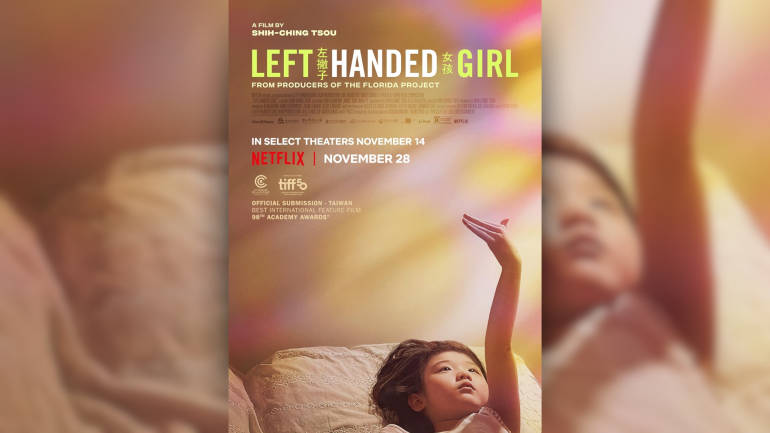
"Left-Handed Girl" drifts in with the kind of softness that sneaks up on you. It follows Shu-Fen, a young mother trying to stitch together a new life in Taipei with her two daughters. Their days unspool through night-market noise, old grudges that cling like humidity, and the tiny everyday miracles only children seem to notice. Five-year-old I-Jing becomes convinced her left hand is “possessed” because her grandfather planted that idea in her head. It sounds whimsical at first yet the film uses that superstition to open a story packed with warmth, humour, and the kind of quiet heartbreak that lands only as the movie winds up.
This is Shih-Ching Tsou’s first solo feature and she teams again with Sean Baker who co-writes and edits. The movie thumps with the pulse of Taipei. It was shot entirely on iPhones so the whole thing feels raw and oddly intimate. Nothing looks polished yet everything feels alive. Electric greens flash past scooters that zip in and out like sparrows. Neon pinks spill across wet pavement. Even the garbage-truck jingles drift through scenes which might puzzle anyone who has never stepped foot in Taiwan because that sound is just part of the air there.
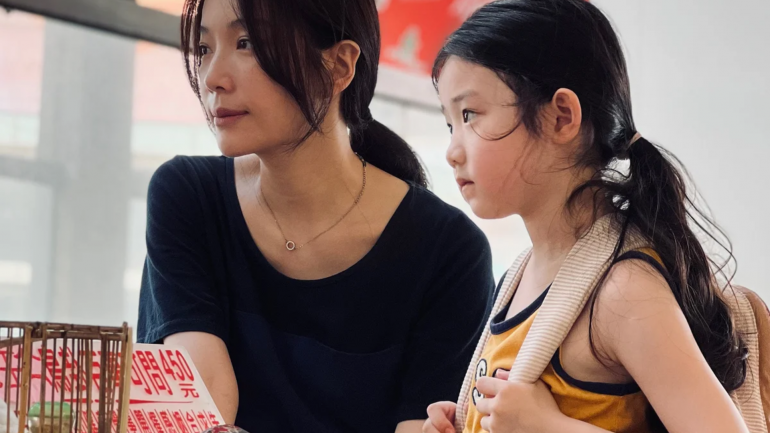
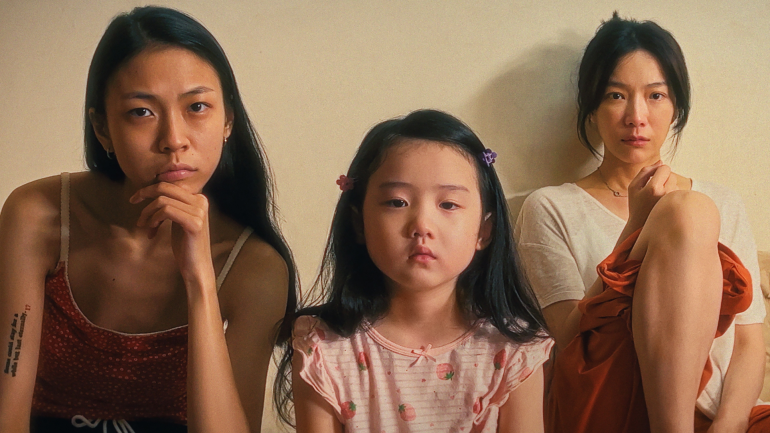
Nina Ye who plays I-Jing steals the film without trying. She can switch from mischief to wide-eyed wonder so naturally that you almost start believing her left hand has its own attitude. Janel Tsai’s take on Shu-Fen feels measured in the best way because she carries pride, shame, and stubborn hope all at once. Then there is Shih-Yuan Ma as I-Ann. She lands every note of teenage restlessness. She looks fearless one moment then cracks open in the next showing the loneliness she tries to keep buried.
The film premiered at the Critics’ Week section of Cannes 2025 and became Taiwan’s official entry for the 2026 Oscars. It found warm reception among critics, appreciated for its raw energy, tender family dynamics, and unapologetic look at gender expectations in Taiwanese culture. There was mild buzz around the melodramatic climax, a family banquet scene of “peak losing face”, but many felt it only added to the film’s cultural texture.
And yes, people at the actual night market genuinely queued up at the fake noodle stall during filming, thinking it was real. A miracle of cinema… or a miracle of hungry shoppers.
The single theological thread running through this reflection is from Psalm 139: “I praise you, for I am fearfully and wonderfully made.” This biblical truth becomes a gentle counterpoint to every label, superstition, and wound the characters carry.
1. The Left Hand That Isn’t “Devilish”
I-Jing’s grandfather tells her the left hand is from “the devil.” For a child barely tall enough to reach the table, this becomes a heavy identity to bear. She begins treating her left hand as a mischievous creature, blaming it for mistakes and secret desires.
But Scripture whispers a different truth: God knit every part of us, even our left hands, with intention.
This simple exegesis pushes us to reflect: How often do we inherit labels, superstitions, prejudices, cultural judgments, and mistake them for truth? How often do we treat parts of ourselves as shameful, unworthy, or “broken,” forgetting that God’s imprint rests even there?
There is something heart-piercing when I-Jing, staring at her hand, asks softly, “Why are you like this?” It sounds almost like a tiny prayer of confusion, a child wrestling with identity. And isn’t that deeply human?
2. The Kaleidoscope: A Theology of Broken Pieces
The movie begins and ends with a kaleidoscope, a tube that transforms scattered, broken bits of glass into breathtaking patterns.
This becomes the most profoundly Christian image in the film. In God’s hands, the fractured turns beautiful. Shame becomes testimony. Failures become new beginnings. Wounds become windows for grace.
Just as I-Jing rotates the kaleidoscope and watches new patterns appear, the film subtly reminds us: Transformation rarely changes the pieces, only how the light falls on them.
This echoes the Gospel truth that God’s grace does not erase our past but reframes it.
3. Poverty, Duty, and the Messy Holiness of Ordinary Life
The family struggles with debt, gender bias, disappointment, and unspoken hurts. Yet their love, awkward, imperfect, and sometimes shouted across a boiling pot of broth, is real.
In a world that romanticises triumph, Left-Handed Girl shows a holiness that emerges not from “success” but from endurance, humility, and quiet sacrifices.
Jesus often notices people exactly like this, women carrying burdens, children silenced by family rules, the poor trying to hold their dignity together with threadbare hands. The night-market scenes become a modern parable of grit and grace woven together.
4. Communication as Grace
The film hints repeatedly that misunderstanding wounds relationships more than mistakes. In Scripture too, healing often arrives through a word, spoken, heard, forgiven.
A small, funny dialogue between the sisters captures this:
“I didn’t do it!”
“It wasn’t me either!”
“…maybe it was the left hand?”
It makes us smile, yet reflects a deeper truth: Blame is easier than vulnerability. But communication, honest, compassionate, sometimes clumsy, is grace in motion.
"Left Handed Girl" is not a perfect film, but neither are we perfect people. It invites us to look at our own “left hands”, the parts we hide, misjudge, or fear, and see them through God’s gentle eyes. Through a child’s gaze and a mother’s struggle, the film suggests that redemption is rarely dramatic; often, it is simply the slow healing of misunderstood hearts.
What part of yourself, or of someone you love, have you labelled as “wrong,” “broken,” or “not good enough,” and what new pattern might appear if you viewed it through God’s kaleidoscope of compassion?