Guillermo del Toro’s Frankenstein 2025 is not your grandmother’s monster movie. It’s a sprawling, gothic epic that follows the tortured relationship between Victor Frankenstein (Oscar Isaac), a brilliant but prideful scientist, and his Creation (Jacob Elordi), a stitched-together being who yearns for love, purpose, and a father who won’t abandon him. The film hop-scotches across genres, from body horror to tender romance to Arctic adventure, so fluidly that del Toro reportedly told nervous Netflix executives, “Don’t worry, this film changes genre every ten minutes.”
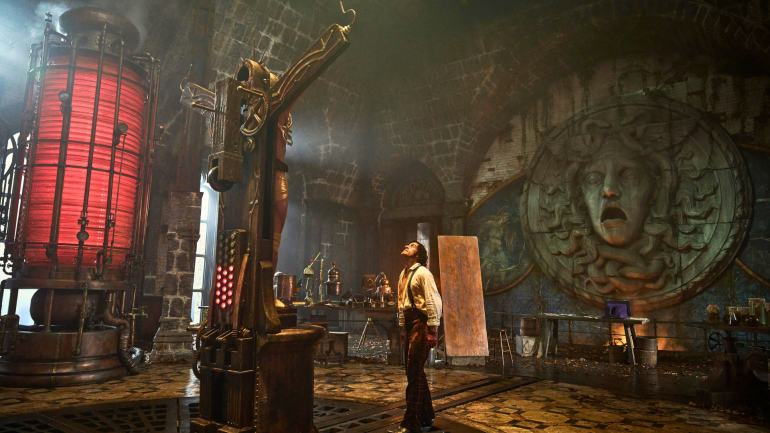
A passion project three decades in the making, this Frankenstein stormed the 2025 Venice Film Festival to critical acclaim. Backed by a $120 million Netflix budget, it boasts del Toro’s signature visual poetry: a palette of blood reds and velvet blacks, a creature whose torso looks like merged tectonic plates, and a score by Alexandre Desplat that feels like a haunting lullaby. Oscar Isaac brings a manic, tragic grandeur to Victor, while Jacob Elordi, buried under ten hours of daily makeup, delivers a performance of profound sensitivity and wounded power. The film’s only real controversy is whether it’s too beautiful for its own gruesome good, with some critics wincing at its more macabre moments. But at its heart, beneath the gore and grandeur, the film is asking a startlingly simple, ancient question: What does a creation owe its creator, and what does a creator owe his creation?
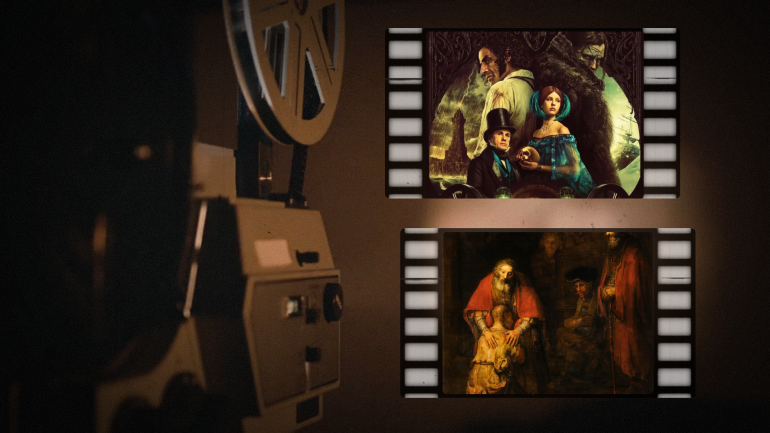
This is where a thoughtful reflection naturally seeps in, much like the cinematic fog in Victor’s laboratory. The biblical theme that echoes through every frame of this film is that of the Prodigal Son. You remember the story: a son demands his inheritance, leaves his father, squanders everything, and hits rock bottom. Yet, when he returns home, ashamed and broken, the father is waiting, not with scorn, but with a joyful embrace.
In Frankenstein 2025, we have a prodigal son who never wanted to leave home, because his home was a dungeon, and his father was a coward. The Creature is the ultimate lost son. In a heartbreaking early scene, Victor gives his newborn creature a coat to ward off the cold, and the Creature looks at him with pure, grateful love. He repeats his creator’s name, “Victor,” like a pleading prayer. But when Victor shackles him, the Creature’s confusion is palpable. This isn’t a son who chose to leave; he was chained up and driven out by a father terrified of what he’d made.
The film is filled with these inverted parables. In one standout scene, the Creature, now literate and soulful, confronts his maker on a frozen ship. He doesn’t demand his share of the estate; he demands an answer. “You may be my creator,” he says, “but from this day forward, I will be your master.” It’s the angry, logical conclusion of a child who has been abused by his parent. The relationship is broken, and the creature, in his pain, seeks not reconciliation but role reversal.
Yet, the most theologically fascinating moment comes not in a clash, but in a quiet plea. Later, a character tells Victor, “And if you have it in your heart, forgive yourself into existence.” It’s a wonderfully profound line. The film suggests that the root of Victor’s sin isn’t just playing God, it’s his inability to receive or give forgiveness, starting with himself. He is so consumed by his own guilt and failure that he cannot perform the one truly divine act available to him: mercy.
The parable of the Prodigal Son is ultimately about the father’s radical, illogical love. Del Toro’s film shows us the nightmare that unfolds when the father’s love is absent. Victor is the anti-father. He doesn’t run to embrace his son; he runs to set him on fire. He doesn’t kill the fatted calf; he kills the chance for reconciliation at every turn.
So, here is a question to ponder as we walk away from this beautiful, bleak masterpiece:
In our own lives, are we playing the part of Victor, creating things, relationships, or even versions of ourselves, only to abandon them when they don’t meet our perfect, prideful expectations?
Are we crafting thrones or forging chains with the trust we've been given? Frankenstein 2025 is a dark mirror, reminding us that the true horror isn’t the monster covered in scars, but the perfect-looking creator who refuses to love his own imperfect creation. And in that, it points us, strangely and beautifully, back to the perfect Father who, despite our own stitched-together souls, is always scanning the horizon, ready to run to us with open arms.