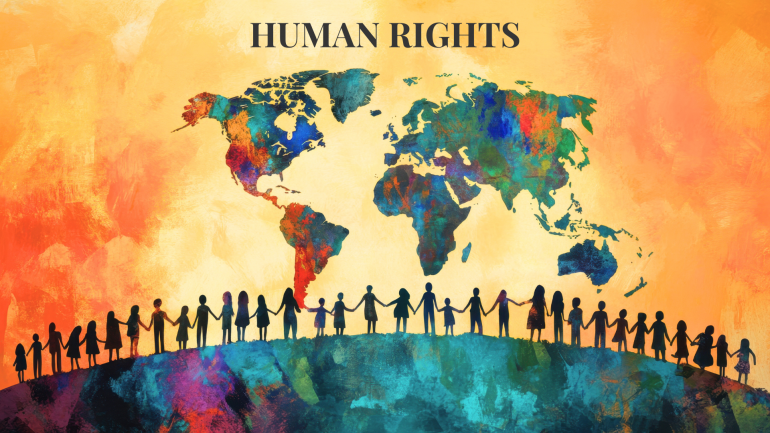
On December 10, 1948, the United Nations adopted the Universal Declaration of Human Rights (UDHR), enshrining a global promise that every human being is entitled to freedoms upholding dignity, justice, and equality. This document establishes thirty fundamental rights, universal, inalienable, and interdependent, ranging from life and liberty to education and cultural participation. Among these lies a critical yet often overlooked guarantee: the right to a nationality. Article 15 states unequivocally, “Everyone has the right to a nationality,” and “No one shall be arbitrarily deprived of his nationality nor denied the right to change his nationality.”
Nationality: The Gateway to All Other Rights
Nationality is more than a passport or bureaucratic identifier; it is the very foundation that allows individuals to claim and enjoy the full range of rights guaranteed under international law. It provides the legal identity necessary to register births, marriages, and deaths, granting official recognition to one’s very existence. This identity enables enrolment in school, access to healthcare, legal employment, property ownership, financial inclusion, and freedom of movement. Most crucially, it ensures protection under the law and the right to participate in the political life of a community.
Conversely, the absence of nationality, statelessness, condemns individuals to a paralysing legal limbo. Stateless persons exist in a shadow world, unable to prove who they are, assert basic claims, or access essential services.
A People Erased: The Rohingya Story
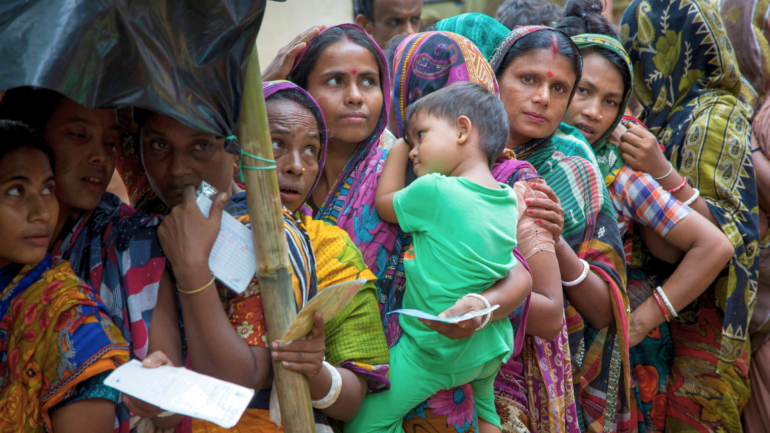
The catastrophic consequences of denied nationality are starkly illustrated by the plight of the Rohingya people in the Rakhine State of Myanmar. After decades of discrimination, their exclusion was cemented by the 1982 Citizenship Law, which grants full citizenship only to members of 135 so-called ‘national races’ deemed indigenous before 1824, a list that pointedly omits the Rohingya despite their longstanding generational roots in the region. The arbitrary and corruption-ridden naturalisation process under the law further ensures that most Rohingya remain stateless, deprived of recognition and protection by the state.
The result is a life marked by suffocating deprivation and relentless persecution. Without legal status, the Rohingya have no claim to state protection, leaving them acutely vulnerable to grave human rights abuses. Their freedoms are systematically stripped away: movement is tightly restricted, higher education is barred, healthcare is scarcely accessible, and livelihoods are stifled by bans on employment and land ownership. Marriage requires official permission, and children inherit only statelessness, a cruel legacy passed from parent to child.
This state-sanctioned exclusion created the conditions for collective atrocity. The brutal military crackdown of 2017, described by the UN as a textbook example of ethnic cleansing, forced over 700,000 Rohingya to flee to Bangladesh. The persecution was made possible precisely because Myanmar had first denied the Rohingya their right to belong, framing them as illegal ‘foreigners’ in their own homeland.
A Global Pattern of Denial and Exclusion
The plight of the Rohingya is not a standalone case. Statelessness is a global humanitarian crisis affecting millions, demonstrating a widespread pattern of exclusion. As per the 2024 UNHCR estimate, at least 4.4 million stateless people live across 101 countries, though the true number is almost certainly far higher due to chronic underreporting.
Across regions and political systems, entire communities have been denied the basic right to belong. Palestinians, for instance, number around 5.9 million registered refugees under UNRWA, many of whom possess no citizenship and depend instead on temporary travel documents. In the Gulf, the Bidoon of Kuwait, roughly 100,000 people whose very name means ‘without nationality’, have lived in the country for generations yet remain excluded from citizenship, deprived of basic rights and recognition. In the Caribbean, Dominicans of Haitian descent were rendered stateless by a 2013 court ruling that retroactively revoked citizenship for those unable to produce pre-1929 birth records, instantly erasing the legal identity of thousands. Meanwhile, over 100,000 Lhotshampas of Bhutan, ethnic Nepalis expelled during the 1990s, continue to live as stateless refugees in Nepal, unable to return or rebuild their lives with secure status.
The causes of statelessness vary, including discriminatory citizenship laws targeting ethnicity, religion, or gender; arbitrary state succession; conflict-related loss of documents; and administrative failures. Yet the consequences are strikingly uniform. The denial of nationality cuts people off from nearly every other human right, restricting education, healthcare, movement, employment, and legal protection. Entire communities are consigned to a permanent underclass, excluded from the very systems meant to safeguard human dignity.
Human Rights Day, observed each year on December 10, commemorates the 1948 Universal Declaration of Human Rights, which affirms in Article 15 that everyone has the right to a nationality and must be protected from arbitrary deprivation. Yet more than 75 years later, the persistence of statelessness, with at least 4.4 million documented cases and many more uncounted, exposes a profound failure to realise this promise.
Belonging as a Moral Necessity
The crises facing the Rohingya and millions of stateless people worldwide make one truth unmistakable: nationality is the bedrock of human dignity. Without it, the most basic rights collapse. The right to education is meaningless without enrolment papers; the right to healthcare evaporates when hospitals refuse treatment; the right to work is unattainable without legal recognition.
Restoring the right to nationality is therefore not a bureaucratic exercise but a moral imperative. It is the crucial step from mere existence to genuine belonging, from survival to a life lived with dignity. Human Rights Day must not be reduced to symbolic observance; it must reignite our commitment to ensuring that the promises of the UDHR shape real lives, not remain lofty aspirations.
The question before the international community is stark and urgent: Will we accept a world where millions are rendered rightless and invisible? Or will we honour the principle that every human being, without exception, has the right to belong?
The answer will decide the credibility of the entire human rights project. For if the right to belong is not universal, then no right can truly be universal.