Religious freedom across Asia came under sharp scrutiny as leaders of the International Religious Freedom (IRF) Summit warned that repression of faith communities continues to expand worldwide.
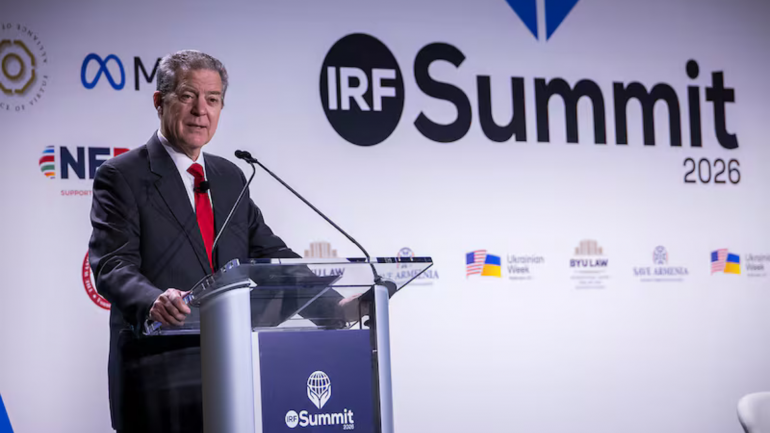
As the sixth annual IRF Summit concluded in Washington, D.C., co-chairs Sam Brownback and Katrina Lantos Swett offered a sobering assessment of global religious liberty, citing China, parts of South Asia, and cases of cross-border intimidation as among the most pressing concerns.
Global Movement, Growing Alarm
Founded in 2021, the IRF Summit has grown into one of the world’s largest platforms advocating freedom of religion or belief, uniting religious leaders, human rights defenders, policymakers, and civil society organisations.
This year’s gathering brought together hundreds of groups representing Christians, Muslims, Buddhists, Hindus, and other religious minorities—many from Asian countries, where legal restrictions, social pressure, and state control continue to limit freedom of conscience.
While acknowledging positive steps such as the appointment of special envoys for religious freedom, Lantos Swett warned that progress is being eclipsed by worsening realities.
“More than 80 percent of the world’s population live in countries with some form of religious repression,” she said, pointing to the rise of transnational repression, where governments target religious communities beyond their own borders.
Asia at the Centre of Concern
Both co-chairs identified China as the most severe violator of religious freedom, citing state interference in religious life and the widespread use of surveillance technologies.
Lantos Swett raised concerns over efforts to control Church structures and religious practice, while Brownback also pointed to South Asia, including parts of the Indian subcontinent, where religious tensions and violence persist.
“Religious freedom is one of the most violated human rights in the world,” Brownback said, noting that technologies developed for domestic repression are now exported to many countries, including across Asia.
Summit leaders also warned about new threats such as disinformation and artificial intelligence, which could either protect or undermine freedom of conscience.
A Call to Solidarity and Action
Despite the challenges, the summit leaders stressed that the movement for religious freedom is gaining momentum and must remain nonpartisan and inclusive.
Brownback urged broader alliances with democracy and security movements, while Lantos Swett emphasised the need to rise above political divisions in defence of a shared human right.
For Churches and faith communities across Asia, where Christians are often minorities and religious identity is deeply intertwined with social and political life, the summit’s warning carries particular urgency.
As restrictions on belief and worship continue to grow, the IRF Summit’s message is clear: defending religious freedom requires vigilance, interfaith solidarity, and sustained advocacy—locally, regionally, and globally.