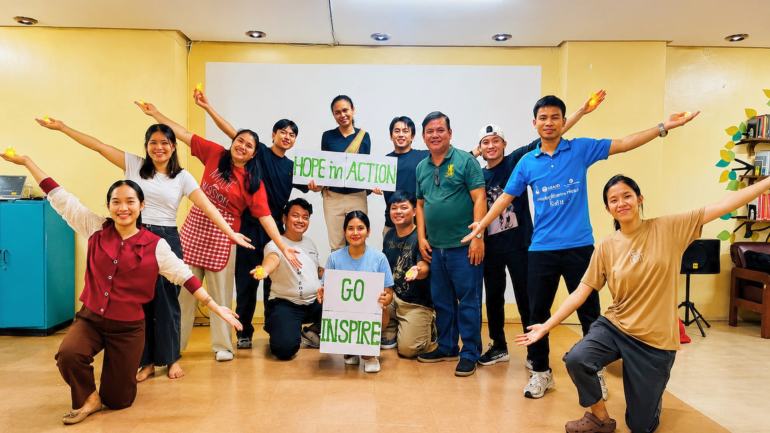
Twelve young Catholic leaders from Timor-Leste, South Korea, Laos, Malaysia, and Myanmar were equipped to respond to migration, refugee movements, and human trafficking during a daylong lecture and workshop on August 4 at the Institute of Formation Fondacio Asia (IFFAsia) in Quezon City, the Philippines, as part of efforts to strengthen the Church’s pastoral response to people on the move.
The session, organized with the Catholic Bishops’ Conference of the Philippines–Episcopal Commission for the Pastoral Care of Migrants and Itinerant People (CBCP-ECMI) Luzon, focused on the realities of migration and displacement across Asia and the risks faced by vulnerable migrants, including trafficking.
Edmund H. Ruga, CBCP-ECMI Luzon Regional Coordinator, served as the resource person for the session, “Understanding Migration, Refugee Movements, and Trafficking in Persons.”
He introduced the participants to migration trends, refugee movements, and human trafficking, highlighting the Church’s responsibility to uphold the dignity and rights of migrants and refugees.
Ruga emphasized the importance of promoting safe and regular migration while accompanying migrants, refugees, and trafficking survivors through pastoral care, advocacy, and collaboration with government agencies and civil society organizations.
The formation is particularly relevant to Asia, where economic disparities, conflict, persecution, natural disasters, and the search for employment and better living conditions continue to drive people to cross borders.
The session also examined migration as an expression of people’s desire for a more humane life and considered this aspiration in the light of international law and Christian ethical traditions.
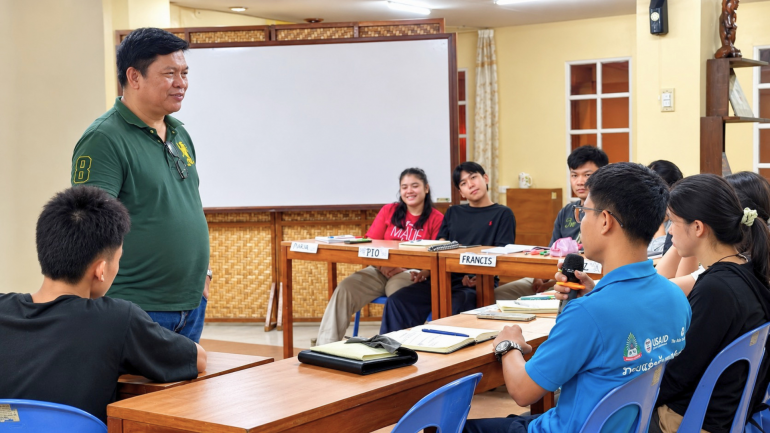
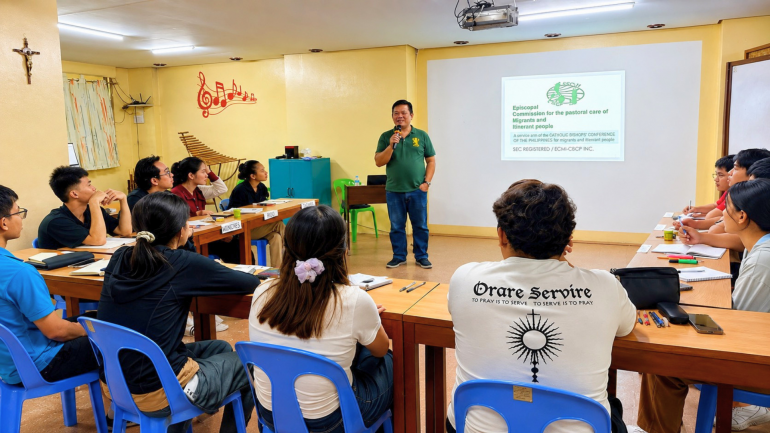
The participants were introduced to the Christian understanding of justice as a foundation for responding to migration with greater respect for human dignity.
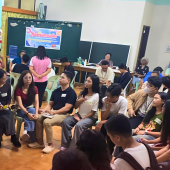
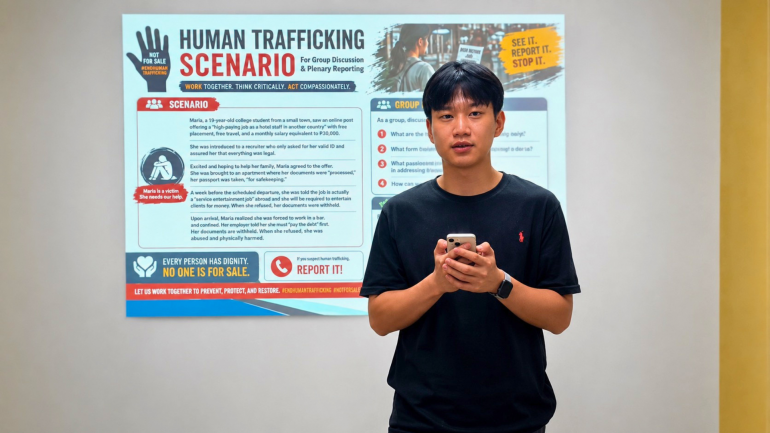
In the afternoon, the participants applied the lessons through case-study workshops. Divided into two groups, they examined scenarios involving migration and human trafficking, identified possible pastoral and practical responses, and presented their recommendations during a plenary discussion.
The exercises emphasized victim-centered responses, appropriate referral mechanisms, and cooperation among the Church, government, and civil society.
Le Thi Tuyet An, Program Coordinator of IFFAsia’s Social-Pastoral Leadership Development Program, thanked CBCP-ECMI Luzon for contributing its expertise to the formation of young Asian leaders.
The session concluded with a commitment by IFFAsia and CBCP-ECMI Luzon to strengthen their collaboration in leadership formation related to migration, refugee protection, and the prevention of human trafficking.
The partnership aims to help young leaders develop not only practical knowledge but also the pastoral sensitivity needed to accompany people whose lives are shaped by migration and displacement.
For IFFAsia, the formation is part of a broader effort to prepare young servant leaders who can contribute to the Church and society in different parts of Asia.
The organizers said the initiative seeks to ensure that future pastoral leaders are better prepared to recognize the vulnerabilities of migrants and refugees and to respond through accompaniment, advocacy, and concrete action.
Radio Veritas Asia (RVA), a media platform of the Catholic Church, aims to share Christ. RVA started in 1969 as a continental Catholic radio station to serve Asian countries in their respective local language, thus earning the tag “the Voice of Asian Christianity.” Responding to the emerging context, RVA embraced media platforms to connect with the global Asian audience via its 21 language websites and various social media platforms.
Latest News