


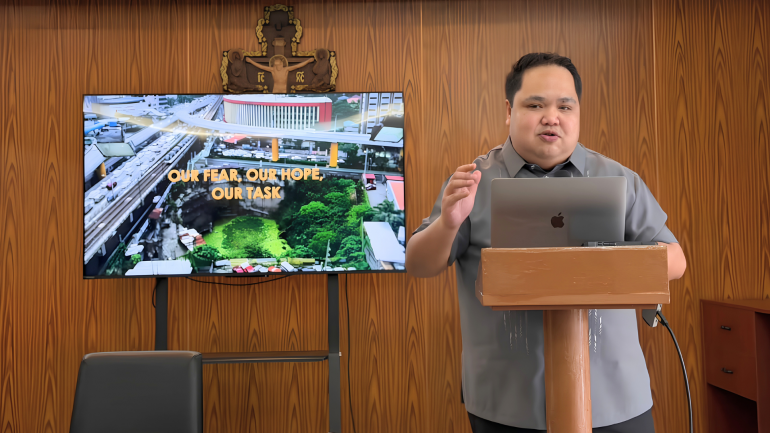
Framing humanity’s technological crossroads through the biblical contrast between the Tower of Babel and the city of Jerusalem, a Filipino theologian called on Asian Church communicators to practice deep moral and spiritual discernment when engaging with artificial intelligence.
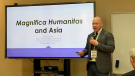
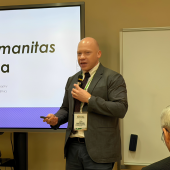
Prof. Leo-Martin Angelo R. Ocampo, a lay Dominican and research associate at the Center for Theology, Religious Studies and Ethics at the Pontifical and Royal University of Santo Tomas in Manila, delivered his address during the afternoon session on October 28 at the conference hall of St. Jose Villa in Macau.
His presentation took place on the second day of the regional assembly organized by the Federation of Asian Bishops’ Conferences Office of Social Communication (FABC-OSC), running from October 27 to 31. The gathering brings together Asian bishops, priests, religious, and lay media delegates under the theme, “Magnifica Humanitas and the Synodal Ways of Evangelization in Asia: Communicating Christ in the Age of Artificial Intelligence.”
Drawing from Pope Leo XIV’s encyclical Magnifica Humanitas and the Ignatian tradition of discernment, Prof. Ocampo challenged participants to examine whether their adoption of technology builds a self-serving "Tower of Babel" or contributes to "rebuilding Jerusalem."
“The Tower of Babel represents a project conceived without reference to God, built on pride, self-sufficiency, and control that reduces the human person to data points and performance,” Prof. Ocampo explained. “Rebuilding Jerusalem, as seen in the Book of Nehemiah, is a shared communal effort that rebuilds human relationships first, ensuring everyone has a place.”
Prof. Ocampo emphasized that while AI technology is not inherently evil, it is never neutral in practice because every algorithm reflects the priorities, values, and power structures of its developers. He cautioned against confusing technical efficiency with moral goodness, pointing out that efficient systems can easily amplify bias or exclude the vulnerable.
Highlighting personal and pastoral applications, the lay Dominican noted that while digital tools can reduce research friction for ministers, they can never replace the human heart, authentic presence, conscience, or personal witness.
“AI will not be ethical on its own; the ethics must come from the users,” Prof. Ocampo said. “A priest must never outsource his friendship with Christ, his study of the Word, or his love for his people to an algorithm.”
Connecting his reflection to the Asian Church’s commitment to synodality, Prof. Ocampo urged Catholic leaders to practice communal listening. By giving voice to those affected by technological shifts, especially marginalized communities, the Church can help ensure that artificial intelligence serves fraternity, human dignity, and the common good.
Radio Veritas Asia (RVA), a media platform of the Catholic Church, aims to share Christ. RVA started in 1969 as a continental Catholic radio station to serve Asian countries in their respective local language, thus earning the tag “the Voice of Asian Christianity.” Responding to the emerging context, RVA embraced media platforms to connect with the global Asian audience via its 21 language websites and various social media platforms.
Latest News