A series of disruptions and cancellations of concerts, film screenings and cultural events across Bangladesh has raised concerns among artists, academics and civil society groups, who fear increasing pressure from conservative religious groups on the country’s cultural space.
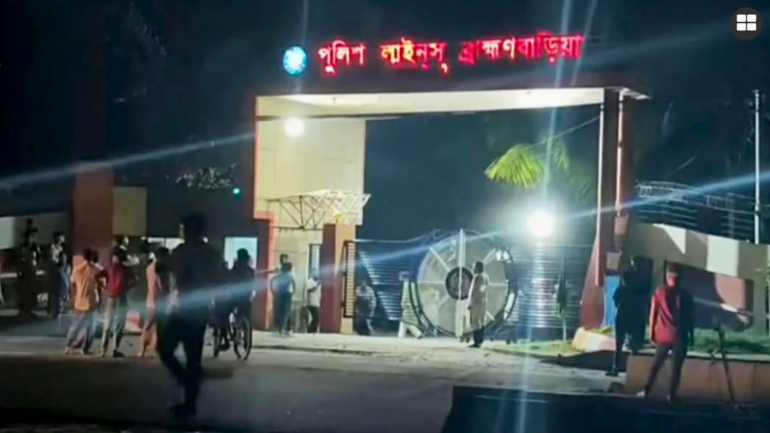
The latest incident occurred on August 18 in Brahmanbaria, about 100 kilometers east of the capital Dhaka, where a cultural program organized by district police was canceled after an overnight clash involving students from a nearby madrasa.
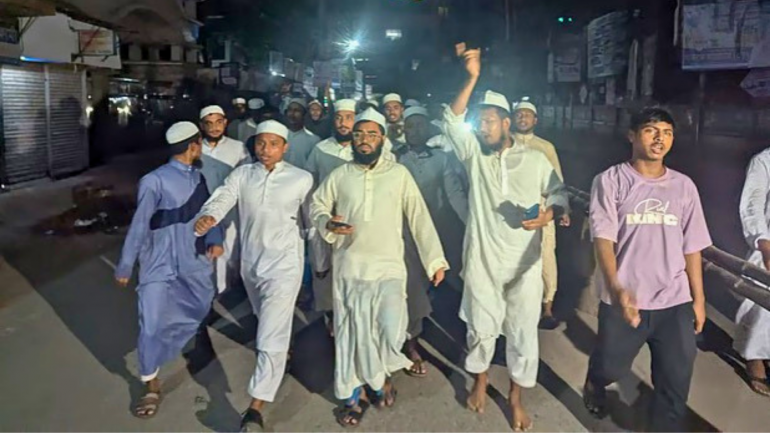
According to police and local sources, students from Darul Arkam Islamia Madrasa, located next to the police lines, approached the venue around 11:30 p.m. to protest loud music. An argument reportedly escalated into clashes between police and madrasa students, leaving more than 30 people, including seven police officers, injured.
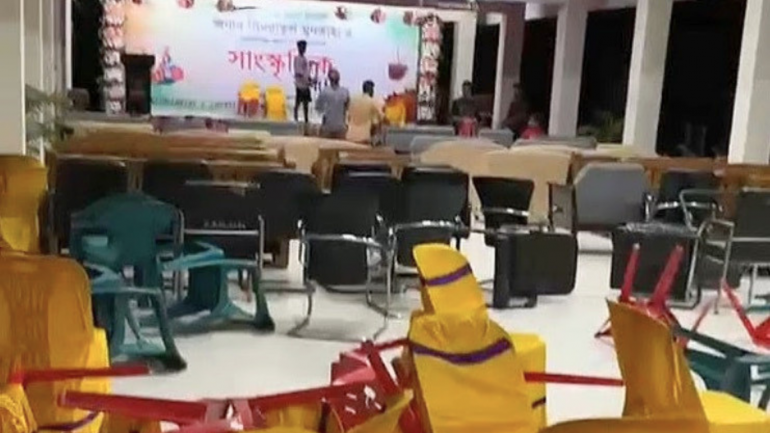
Witnesses said some students entered the police compound and damaged chairs and other equipment. Police used batons to disperse the crowd, while protesters reportedly threw bricks. The unrest continued into the early hours as students demonstrated on city roads, demanding accountability and the closure of the concert.
Local authorities later brought representatives of both sides together for discussions. Political leader Sirajul Islam said those responsible would be identified after reviewing CCTV footage. He added that madrasa students reiterated their opposition to open-air concerts, while police pledged measures to prevent further violence.
The Brahmanbaria incident followed another dispute in neighboring Kishoreganj District, in central Bangladesh. On the same day, the Sadar Upazila Imam-Ulama Parishad described a scheduled band concert as “anti-Sharia” and demanded its cancellation. Organizers subsequently called off the event following announced protests.
Earlier this year, a planned screening of Banolata Express by the Brahmanbaria Film Society was halted after an online campaign led by members of Qawmi Chhatra Oikya Parishad. The group argued that public film screenings were incompatible with the city’s religious identity.

Some of the campaigns have been associated with groups identifying themselves as “Tawhidi Janata,” a term used by activists emphasizing Islamic unity and religious values. Their opposition to concerts, films and other cultural activities has intensified debate over the place of arts and culture in Bangladesh’s public life.
National Award-winning Muslim singer Asif Akbar recently criticized what he described as growing restrictions on cultural activities. He called on the government to clarify whether music and artistic expression are permitted under the Constitution, warning that continued uncertainty could push artists to seek opportunities abroad.
Catholic musician Rahul Gomes told RVA News that the trend poses a serious challenge to Bangladesh’s cultural heritage.
“We are people who grew up with music and cultural activities. We have never learned to attack others,” Gomes said, expressing concern over growing polarization and intolerance.
He pointed to the enduring influence of Bengali cultural figures such as Rabindranath Tagore and Kazi Nazrul Islam, whose literature and music have shaped generations.
“Art and culture help expand people’s minds and deepen understanding,” Gomes said. “If we want to build the country, education and cultural values must go hand in hand.”
Bangladesh, a Muslim-majority South Asian nation with a strong Bengali cultural heritage, has long combined religious traditions with music, literature and the arts. The recent disputes have renewed concerns about whether the country’s diverse cultural expressions can continue to flourish amid growing tensions over public life and religious identity.
Radio Veritas Asia (RVA), a media platform of the Catholic Church, aims to share Christ. RVA started in 1969 as a continental Catholic radio station to serve Asian countries in their respective local language, thus earning the tag “the Voice of Asian Christianity.” Responding to the emerging context, RVA embraced media platforms to connect with the global Asian audience via its 21 language websites and various social media platforms.
Latest News