

Bangladesh Humanitarian Runa Khan wins Ramon Magsaysay Award for Bringing Dignity to Remote Communities

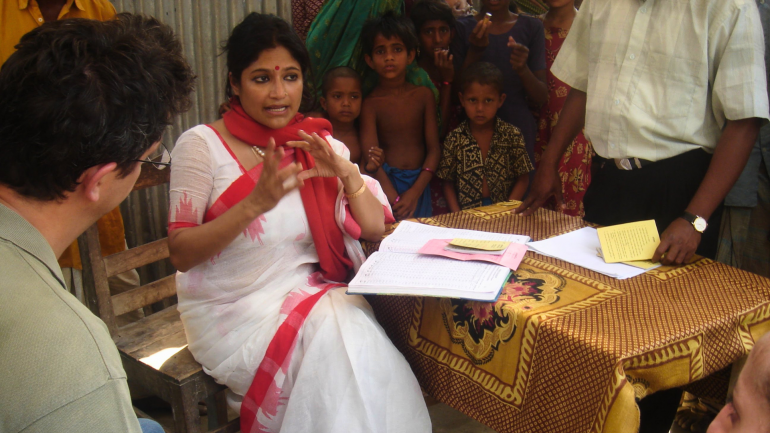
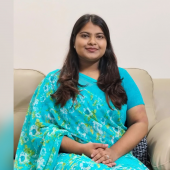
Bangladeshi humanitarian Runa Khan, who turned a floating hospital serving remote river communities into a wide-ranging movement for health, education, livelihoods and climate resilience, has been named one of the three recipients of the 2026 Ramon Magsaysay Award.
The Ramon Magsaysay Award Foundation announced Khan’s selection on August 31, recognizing her “profound empathy for the poorest of the poor” and her courage, vision and perseverance in building and leading Friendship, a Bangladesh-based organization serving communities beyond the reach of conventional development programs.
The foundation said Khan’s work reflects a transformation in which “privilege became not an entitlement, but a responsibility,” highlighting her decision to use the advantages of her upbringing in service of people living on the margins.
Khan was born in 1958 into one of Bangladesh’s privileged families. Her life took a different direction in 1997 when she visited a char, one of the temporary islands and sandbars formed by the shifting rivers of Bangladesh.
There she encountered communities facing poverty, isolation, recurrent flooding and river erosion, with limited access to healthcare and other basic services.
Five years later, Khan founded Friendship and began with a hospital ship bringing medical care to people living in some of the country’s most inaccessible areas.
The work soon expanded after Khan recognized that healthcare alone could not address the interconnected challenges facing char communities.
Friendship subsequently developed programs in education, livelihoods, disaster preparedness, climate adaptation and social inclusion. Its work now extends beyond riverine communities to coastal populations and Rohingya refugees displaced from Myanmar.
The organization operates seven hospital ships, two land-based hospitals and hundreds of mobile clinics, while also training community health workers. Its education programs include schools designed to be dismantled and rebuilt when river erosion forces communities to relocate.
Friendship has also developed Community Initiated Disaster Risk Reduction, placing local communities at the center of disaster preparation and response. Its climate initiatives include solar villages, mangrove restoration and training for volunteers in rescue and relief.
For Khan, however, development is not simply about delivering services.
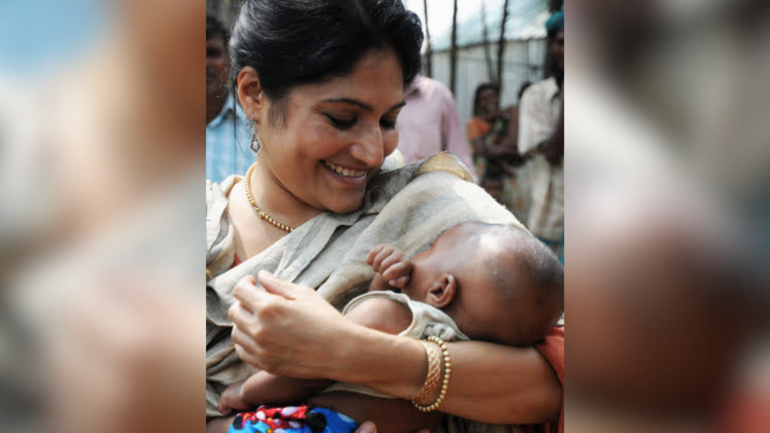
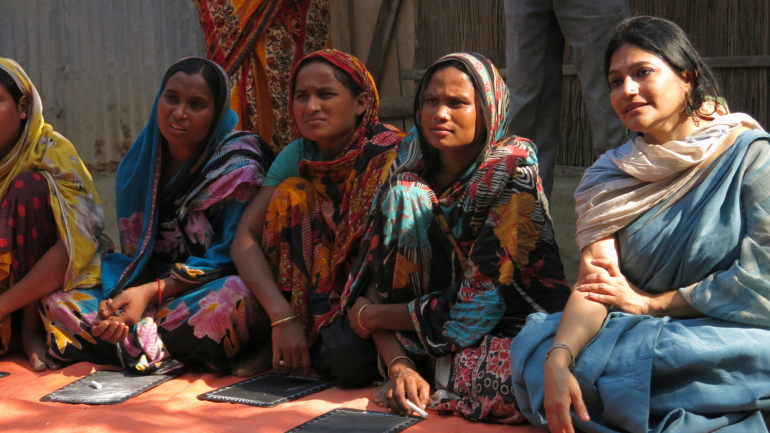
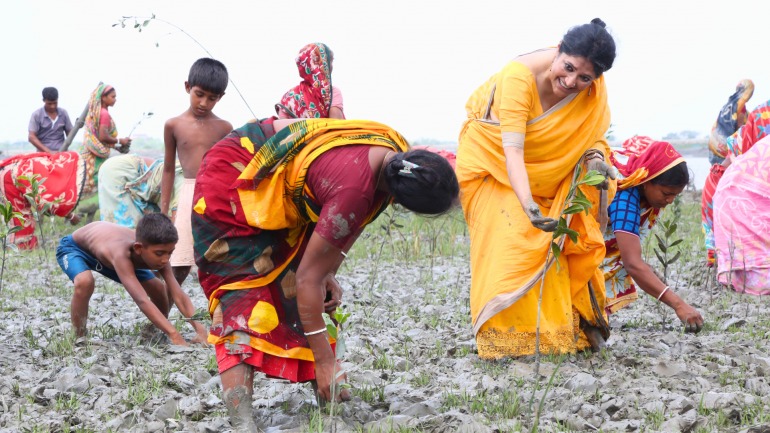
She emphasizes helping people gain the knowledge, skills and confidence to become less dependent on outside assistance. Her approach is rooted in the conviction that those receiving support must be treated as people with dignity, knowledge and the capacity to contribute.
Her philosophy is often expressed through the idea of starting small and sustaining change.
A single person teaching one child, she has argued, can eventually create a chain of learning as that child goes on to help others. What begins as a small intervention can grow into a community-led movement.
That approach has shaped Friendship’s evolution from a single hospital ship into an organization employing more than 7,500 people, many of them drawn from the communities it serves.
The foundation’s recognition also places Khan’s work within wider Asian challenges. Across the region, communities facing climate change, displacement, poverty and geographical isolation are increasingly vulnerable to disasters and disruptions in access to basic services.
Bangladesh, formed by the delta of the Ganges, Brahmaputra and Meghna rivers, is particularly exposed to flooding, river erosion and rising sea levels. The char communities Khan first encountered remain among the country’s most vulnerable populations.
The 2026 Ramon Magsaysay Award recognizes Khan alongside Singaporean diplomat and legal scholar Tommy Koh and Myanmar human rights advocate Bo Kyi. The three were announced as this year’s awardees on August 31, the birth anniversary of former Philippine President Ramon Magsaysay, whose ideals inspired the award.
Established in 1957, the Ramon Magsaysay Award is regarded as Asia’s premier prize and highest honor for transformative leadership and selfless service. Since 1958, it has recognized individuals and organizations whose work has contributed to addressing major challenges across the region.
Khan and the other 2026 awardees will formally receive their Ramon Magsaysay Award certificates and medallions at the annual presentation ceremony in Manila later this year. The award traditionally includes a formal presentation in the Philippine capital, where recipients are honored for their contributions to the peoples of Asia.
For Khan, the recognition affirms a model of development that begins not with grand solutions but with attention to the needs and capacities of people too often left beyond the reach of mainstream services.
Her journey from privilege to service has ultimately centered on a simple principle: lasting development is not merely about what is given to vulnerable communities, but about restoring their ability to shape their own future with dignity and hope.
Radio Veritas Asia (RVA), a media platform of the Catholic Church, aims to share Christ. RVA started in 1969 as a continental Catholic radio station to serve Asian countries in their respective local language, thus earning the tag “the Voice of Asian Christianity.” Responding to the emerging context, RVA embraced media platforms to connect with the global Asian audience via its 21 language websites and various social media platforms.
Latest News