Catholic Educators Urge Unity as India's English Language Debate Reaches Supreme Court

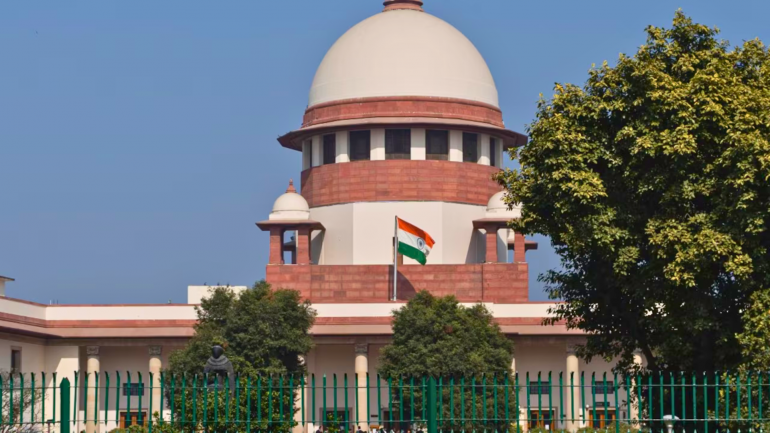
A debate over the place of English in India's multilingual society has intensified after the Supreme Court questioned whether the language, used in the country for more than three centuries, should still be regarded as "non-native."
The discussion emerged during a hearing in New Delhi on July 16 over petitions challenging the Central Board of Secondary Education's (CBSE) implementation of the three-language policy under India's National Education Policy (NEP) 2020.
During the hearing, a bench comprising Chief Justice Surya Kant and Justice Joymalya Bagchi questioned the CBSE's classification of English as a "non-native" language. The judges noted that the Constitution refers to "mother tongue," "regional language," and "Indian language," but does not define "native language." They have sought responses from both the Union Government and the CBSE.
The case has sparked nationwide discussion about language, identity, and education.
Reflecting on the debate, Fr. Saraj Kumar Nayak, head of the Department of Spoken English at Our Lady of Charity Church in Raikia, Kandhamal District, in the eastern Indian state of Odisha, said language should promote unity rather than division.
"Language is ultimately a gift meant to build communion, not division," he said.
"English came to India through history, but over generations it has become a language through which millions of Indians pray, study, teach, work, and serve society. It has become part of India's lived experience."
Fr. Nayak said the Church has consistently encouraged people to worship and learn in their mother tongues while also embracing languages that foster dialogue and mutual understanding.
"The question should not be whether one language triumphs over another, but how every Indian child can be rooted in their cultural heritage while being equipped to engage confidently with the wider world," he said.
Sister Jyoti Kumari Nayak of the Daughters of Saint Anne, who serves in Kolkata, the capital of the eastern Indian state of West Bengal, echoed that view.
"Every language deserves respect because every language reflects the dignity of the people who speak it," she said.
While describing English as a valuable tool that opens educational and professional opportunities, she stressed that children should remain deeply rooted in their mother tongue and cultural traditions.
"We hope the ongoing national discussion inspires a balanced and inclusive approach to language education, one that honors India's linguistic diversity while preparing students to contribute to both the nation and the global community," Sr. Jyoti said.
The Supreme Court has not expressed a final opinion on the matter. Its eventual ruling could have significant implications for India's language policy and the education of millions of students.
Radio Veritas Asia (RVA), a media platform of the Catholic Church, aims to share Christ. RVA started in 1969 as a continental Catholic radio station to serve Asian countries in their respective local language, thus earning the tag “the Voice of Asian Christianity.” Responding to the emerging context, RVA embraced media platforms to connect with the global Asian audience via its 21 language websites and various social media platforms.
Latest News