

Catholics, Muslims and Protestants Join Forces to Clean Heroes’ Cemetery in East Java

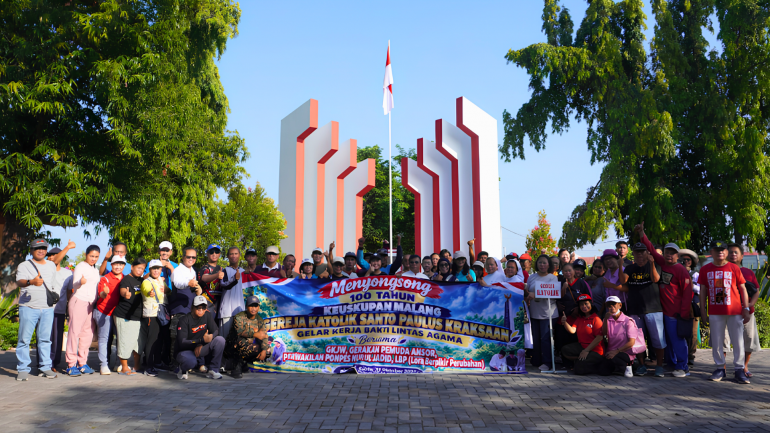
Around 100 Catholics, Muslims, Protestants and members of civic organizations joined an interfaith clean-up activity at Kraksaan Heroes Cemetery in Probolinggo, East Java, Indonesia, on October 31, promoting religious harmony through community service ahead of the country’s National Heroes Day.
The initiative was led by Catholic priest Fr. Damianus Fadjar Tedjo Soekarno and the Death Ministry Section of St. Paul’s Catholic Parish in Kraksaan. It brought together members of the East Javanese Christian Church (GKJW), the Ansor Youth Movement, an Islamic youth organization affiliated with Indonesia’s Nahdlatul Ulama, and other community groups.
Kraksaan, a town in Probolinggo Regency in East Java province, is home to a heroes’ cemetery where 43 Indonesian freedom fighters are buried.
The activity was held ahead of Indonesia’s National Heroes Day on November 10 and the Catholic Church’s Commemoration of All the Faithful Departed on November 2, connecting national remembrance with the Christian tradition of praying for the dead.
Opening the event, Gunawan Napitu, representing the Parish Pastoral Council of St. Paul’s Parish, stressed the importance of maintaining interreligious harmony and preserving the resting place of those who fought for Indonesia’s independence. He also highlighted religious moderation as a way to prevent extremism and protect national unity.
Siti Mariam, secretary of the Probolinggo Regency Social Affairs Office, attended on behalf of the office’s head and praised the initiative as a practical expression of Indonesia’s national philosophy, Pancasila.
“This is the first time I have seen such a remarkable interfaith activity. It reflects the practice of the first and third principles of Pancasila. People of different religions are working together for the good of Probolinggo,” she said.
The first principle affirms belief in one God, while the third emphasizes the unity of Indonesia.
Mariam said the clean-up also helped prepare the cemetery for the Nov. 10 National Heroes Day commemoration, which will include a ceremony at the site.
Service builds interfaith friendship
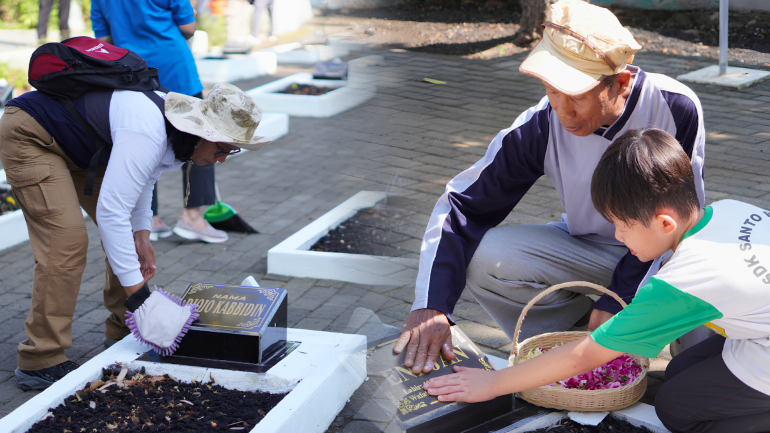
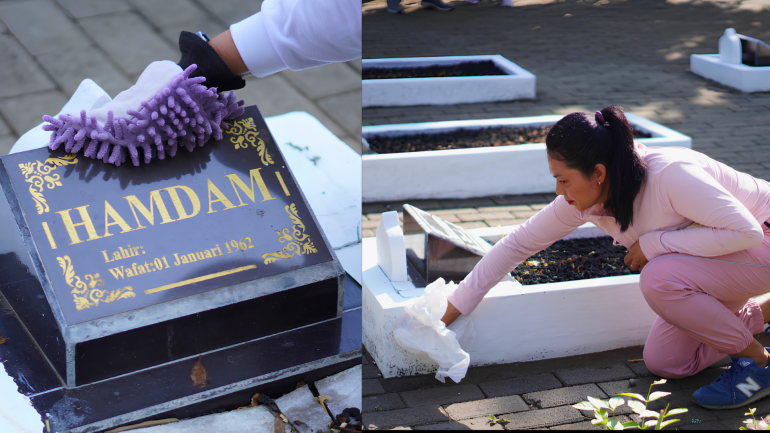
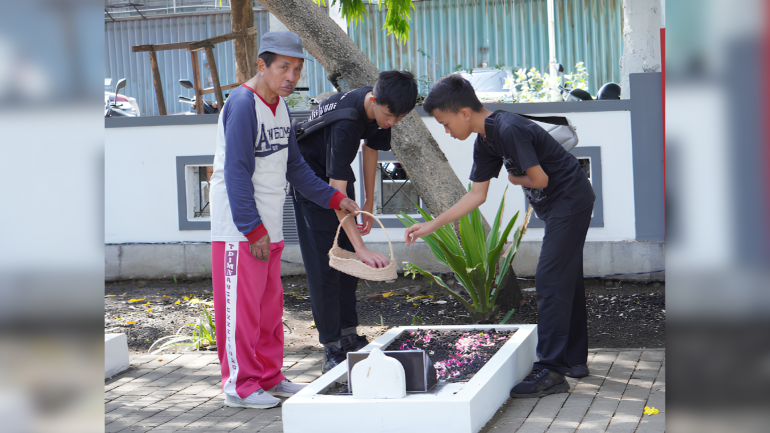
Following the opening ceremony, participants used tools brought from home, including brooms, hoes, sickles and paintbrushes, to sweep the grounds, remove weeds, clean gravestones, repair pathways and repaint cemetery walls.
Students from St. Pius Elementary School and St. Paul Catholic Junior High School also joined, collecting rubbish and helping clean the graves. Their participation offered an opportunity to learn about civic responsibility and respect for the sacrifices made by Indonesia’s independence fighters.
Aris Prasetyo and Misiyani, members of the GKJW congregation in Kraksaan, described the gathering as a joyful experience and said working together across religious differences could help build a peaceful community.
Pastor Josephine Christiana Sutrisno of the same congregation called the initiative “a small act with great love,” saying that simple community activities can make a meaningful contribution to social harmony.
Abdurrahman, representing the Kraksaan branch of the Ansor Youth Movement, said the initiative combined religious solidarity with environmental responsibility.
He expressed hope that the activity would become a regular initiative involving people from different ethnic, racial and religious backgrounds.
The gathering concluded with a flower-laying ceremony. Students, parents, religious leaders and other participants placed flowers on the graves of the 43 freedom fighters as a tribute to their contribution to Indonesia’s independence.
Through the initiative, the participating communities demonstrated how interreligious cooperation can move beyond dialogue into practical action for the common good.
Radio Veritas Asia (RVA), a media platform of the Catholic Church, aims to share Christ. RVA started in 1969 as a continental Catholic radio station to serve Asian countries in their respective local language, thus earning the tag “the Voice of Asian Christianity.” Responding to the emerging context, RVA embraced media platforms to connect with the global Asian audience via its 21 language websites and various social media platforms.
Latest News