

CCBI Official Highlights “Catholic Connect” as Platform Linking Indian Catholics Across Differences


India’s extraordinary linguistic, cultural and regional diversity requires the Catholic Church to develop new digital ways of connecting communities, especially through content in local languages, Fr. Cyril Victor Joseph, a communication expert and national Catholic media official, said.
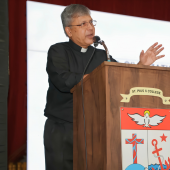
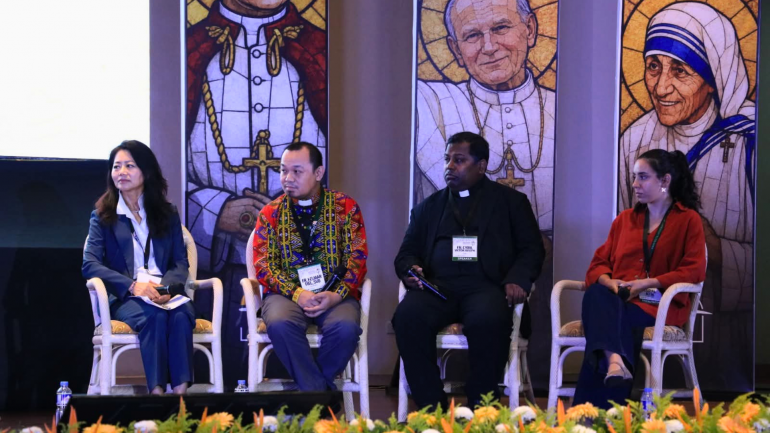
Fr. Cyril, the first National Coordinator for the Media Apostolate of the Conference of Catholic Bishops of India (CCBI), highlighted Catholic Connect, a digital platform designed to connect Catholics across India’s linguistic and cultural boundaries, during a panel discussion on Sept. 11 at the First Asian Catholic Digital Missionary Assembly in Quezon City.
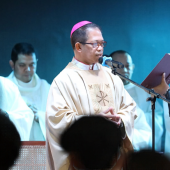
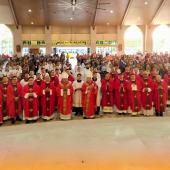
The September 11–13 assembly at the Pope John Paul II Auditorium in Quezon City, brings together Catholic digital missionaries, communicators and content creators from across Asia to examine the Church’s mission in an increasingly digital environment.
Describing India’s complexity, Fr. Cyril called the country a “mini Asia itself,” with its numerous languages, cultures and distinct regional identities.
India has 22 major languages as well as more than 300 tribal languages, he said. This diversity presents a particular challenge for a Church seeking to communicate the Gospel across the country.
“The digital reality within India today is to reach out mainly to a lot of young people, people of other religions, cultures, other languages and traditions,” Fr. Cyril said.
India’s digital landscape also presents a striking contrast. Fr. Cyril said about 70 percent of the population is connected to digital platforms, while the country also has one of the world’s largest disconnected populations because of its enormous overall population.
For the Catholic Church, he said, digital media offers an opportunity to reach people who may have little or no knowledge of Christianity.
In a multi-religious society, Catholic digital evangelization also involves encountering people who may have misconceptions or negative perceptions about Christianity.
Fr. Cyril identified interreligious harmony and peace-building as an important dimension of the Church’s mission in India. It was within this complex national setting that the idea of Catholic Connect emerged.
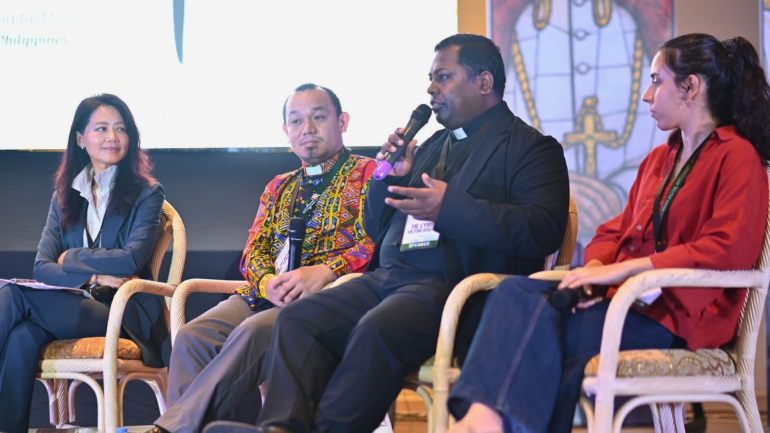

Fr. Cyril explained that conventional media such as television and radio face limitations when trying to reach Catholics across India in a single language.
“Now if it is a TV or radio or any other platform, you know it is so difficult to reach out in one single language,” he said.
Catholic Connect seeks to provide a common digital platform through which Catholics from different regions can remain connected while retaining their own linguistic and cultural identities.
The initiative also reflects the changing nature of Catholic communication in India. Rather than relying only on centralized content, Fr. Cyril sees considerable potential in producing material in the country’s many vernacular languages.
“There is a lot of scope in the vernacular languages to create content, to create information or education videos, spirituality,” he said.
Such content can help the Church reach not only Catholics but also people who have never heard the Christian message or who encounter Christianity from outside the Church.
Fr. Cyril also linked Catholic Connect with the Church’s wider effort to foster dialogue among religions and cultures. Digital communication, he said, can help Catholics remain connected beyond regional boundaries while creating opportunities to encounter people from other religious and cultural communities.
The challenge is therefore both technological and pastoral: how to use digital tools to reach a vast and diverse population without allowing language, geography or cultural differences to fragment the Church’s communication.
For Fr. Cyril, Catholic Connect represents an effort to respond to that reality by using the digital sphere not simply to distribute Catholic information, but to strengthen connections among Catholics across India and create new avenues for evangelization, education, spirituality and dialogue.
Radio Veritas Asia (RVA), a media platform of the Catholic Church, aims to share Christ. RVA started in 1969 as a continental Catholic radio station to serve Asian countries in their respective local language, thus earning the tag “the Voice of Asian Christianity.” Responding to the emerging context, RVA embraced media platforms to connect with the global Asian audience via its 21 language websites and various social media platforms.
Latest News