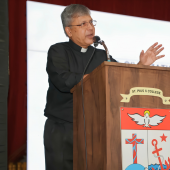
Digital evangelization cannot be reduced to producing content or increasing online engagement; it must help build communion and relationships, according to Dr. Natasha Govekar, Director of the Theological-Pastoral Department within the Vatican Dicastery for Communication.
In an exclusive interview with Radio Veritas Asia, Govekar said the Church’s presence in the digital world must ultimately lead people toward genuine human encounters and community, even as social media platforms can foster isolation, addiction and polarization.
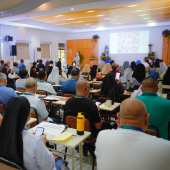
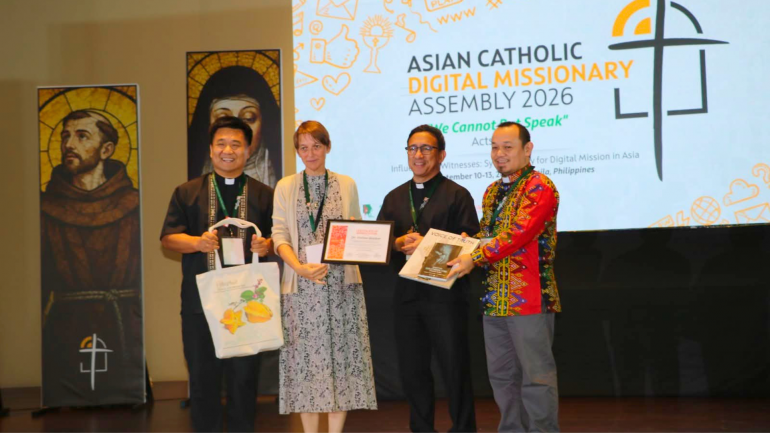
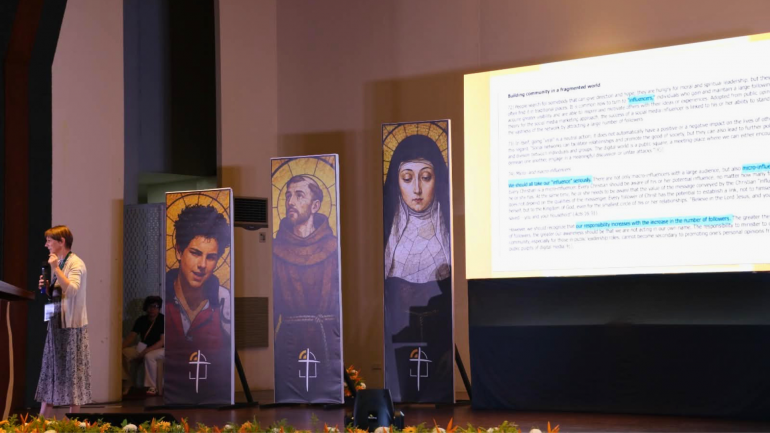
Govekar has played a role in accompanying the First Asian Catholic Digital Missionary Assembly in Quezon City, Metro Manila, Philippines, and has attended its three-day program. She also led a session on the Church’s vision of communication in the digital world.
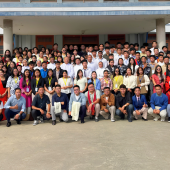
The September 10–13 assembly brings together more than 100 Catholic digital missionaries, communicators, content creators and faith influencers from across Asia. It is organized by the Federation of Asian Bishops’ Conferences Office of Social Communication (FABC-OSC) and Radio Veritas Asia, in partnership with the Vatican Dicastery for Communication through the Fully Present Network.
Govekar said the Church must first recognize the dangers present in what she described as the “digital highways,” pointing to the 2023 pastoral reflection Towards Full Presence, which addresses the opportunities and challenges of digital communication.
Since its publication, she said, concerns about social media have become increasingly evident, including growing awareness of how platform algorithms designed to maximize engagement can contribute to addictive behavior, compulsive scrolling and polarization.
“The Church is not outside of this danger,” Govekar said, noting that polarization fueled by digital platforms can also affect Christian communities.
The challenge, she said, is to develop “a different style” of digital presence, one that promotes genuine encounters that can eventually build real communities and facilitate communion.
Govekar also discussed the Faith Communication in the Digital World program, an initiative that grew as an answer to many requests for guidance on social media and formation.
Initially designed as an experimental program for 16 young professionals selected each year, the initiative brings participants from different countries, backgrounds and areas of expertise together to reflect and work on concrete communication projects for particular ecclesial institutions.
After five years, the program has developed an alumni network known as the Fully Present Network.
The network remains active through online groups and collaborative projects. Alumni have served as trainers, facilitators and contributors to Church communication initiatives. Some have also been invited to work on websites and other projects where their particular expertise can contribute.
For Govekar, however, the most important lesson from the program goes beyond professional skills. She described the need for “discipleship,” emphasizing accompaniment as people grow in their mission.
“It is not just about delivering a content or reproducing a program,” she said. “It is about entering very profoundly an experience” that becomes easier when accompanied by someone who has already gone through a similar journey.
That accompaniment is particularly important in Church communication, she said, because faith formation and professional training should not be separated from accompaniment and communion.
Her message comes as Catholic communities across Asia increasingly turn to digital platforms to engage young people and communicate the faith. For Govekar, the goal is not simply to build larger audiences but to ensure that digital communication leads people toward relationships and belonging.
Radio Veritas Asia (RVA), a media platform of the Catholic Church, aims to share Christ. RVA started in 1969 as a continental Catholic radio station to serve Asian countries in their respective local language, thus earning the tag “the Voice of Asian Christianity.” Responding to the emerging context, RVA embraced media platforms to connect with the global Asian audience via its 21 language websites and various social media platforms.
Latest News