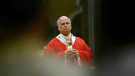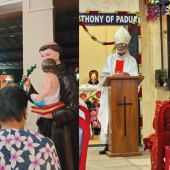
As the fifth Archbishop of Cebu and the 25th bishop to lead the archdiocese, Alberto “Abet” Uy will long remember the days following his installation on September 30, 2025.
Barely twelve hours after his installation, a magnitude 6.9 earthquake struck the central Philippines, marking the strongest earthquake ever recorded in northern Cebu and the deadliest in the country since 2013. Just one month and five days later, Tropical Cyclone Tino (Kalmaegi) battered the central region, particularly Cebu, which was still reeling from the earthquake.
The damage caused by these twin disasters was massive. Although Archbishop Uy initially made light of the timing, remarking that he had faced a similar crisis as Bishop of Tagbilaran in October 2013, it remained uncertain whether he was mentally prepared to confront another emergency of even greater magnitude, bringing widespread devastation within the span of just over a month.
Yet, as the saying goes, “It is what it is.”
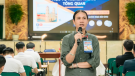
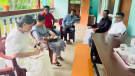
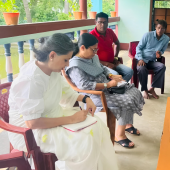
In October, while assessing the destruction of heritage churches and overseeing relief and rehabilitation efforts for disaster victims, Archbishop Uy began a series of consultations with clergy across various parishes. Pastoral concerns reflecting local realities, including programs to strengthen parish life, were discussed. On its official social media page, the Archdiocese of Cebu described these dialogues as a manifestation of the local Church’s “commitment to deeper communion and a more synodal Church.” The consultations continued through November.
Toward the end of November, Archbishop Uy convened the Archdiocesan Vicars General, the Archdiocesan Chancellor, Episcopal Vicars, the Archdiocesan Synodal Team, and officers of Archdiocesan Commissions for a strategic meeting. The gathering focused on finalizing programs related to two historic milestones: the 2000th Anniversary of Redemption in 2033 and the Centennial of Cebu as an Archdiocese in 2034.
The Archdiocese’s nine-year pastoral plan toward 2033 and 2034 was formally launched on the First Sunday of Advent.
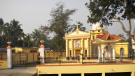
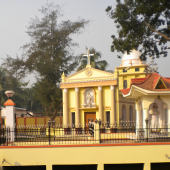
In December, Archbishop Uy chose to hold the traditional Misa de Gallo, the nine-day dawn novena Masses, in northern Cebu, especially in areas hardest hit by the earthquake and Typhoon Tino. The novena concluded at the Archdiocesan Shrine of the Most Sacred Heart of Jesus in Cebu City.
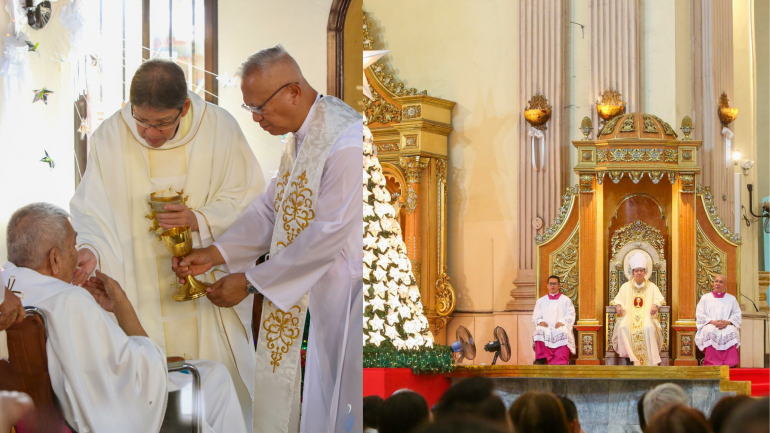
On Christmas Day, Archbishop Uy celebrated Mass for retired and elderly priests at the St. John Paul II Retirement Home for Priests. He was joined by Cebu Archbishop Emeritus Jose Palma, Apostolic Nuncio Emeritus to Korea Archbishop Osvaldo Padilla, Msgr. Vicente Rey Penagunda, Vicar General, and other concelebrating priests.

On Christmas Day, Archbishop Uy celebrated Mass for retired and elderly priests at the St. John Paul II Retirement Home for Priests. He was joined by Cebu Archbishop Emeritus Jose Palma, Apostolic Nuncio Emeritus to Korea Archbishop Osvaldo Padilla, Msgr. Vicente Rey Penagunda, Vicar General, and other concelebrating priests.
Addressing the aging clergy, Archbishop Uy offered a tender reflection: “God is not encountered only in strength and productivity, but also in dependence, slowness, and the quiet grace of waiting.” He added that this is the heart of Christmas, a consoling truth that even as human strength wanes, God’s love never does. “For God,” he affirmed, “never retires from loving His people.”
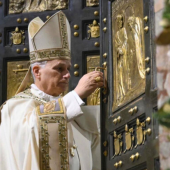
The seemingly nonstop activities following his installation continued until December 28, the closing of the Jubilee Year 2025. Archbishop Uy presided over the early morning Eucharistic celebration at the Cebu Metropolitan Cathedral, coinciding with the Feast of the Holy Family.
In his homily, delivered partly in Cebuano, he reminded the faithful that the closing of the Holy Door did not signify the end of grace or hope.
“It does not mean that God’s grace and mercy have come to a close, or that we lose hope,” he said.
“It is now our mission to share the grace of the Jubilee with others. The Holy Door is closed so that grace may continue through us.”
“The Holy Door can be found in every Christian family. When a family shows mercy to a needy neighbor, a Holy Door opens.”
“When a family visits the sick and does good, a Holy Door opens.”
“Every time a husband and wife forgive each other, a Holy Door opens. Every time parents listen patiently to their children, a Holy Door opens. Every time families choose life over pride, peace over anger, and faith over fear, a Holy Door opens.”
At the close of the Jubilee Year, Archbishop Uy said, the Church entrusts this mission to every family, to become schools of hope, sanctuaries of mercy, and witnesses of God’s love in the ordinariness of daily life.
Radio Veritas Asia (RVA), a media platform of the Catholic Church, aims to share Christ. RVA started in 1969 as a continental Catholic radio station to serve Asian countries in their respective local language, thus earning the tag “the Voice of Asian Christianity.” Responding to the emerging context, RVA embraced media platforms to connect with the global Asian audience via its 21 language websites and various social media platforms.
Latest News