The Jubilee Year of Hope officially concludes on January 6, 2026, with the Feast of the Epiphany. Yet its central message, especially the call for debt cancellation, remains urgent and deeply relevant, particularly for the island nation of Sri Lanka.
Themes of the Jubilee Year
The Jubilee Year was marked by themes of reconciliation, conversion of heart, and the deepening of relationships with God, with one another, and with creation. It also called for greater attention to the poor and migrants, and strongly emphasized the demand for debt cancellation. Among these priorities, the Church identified debt relief as a key instrument in the pursuit of social justice.
Pope Francis repeatedly underlined the biblical foundation of debt forgiveness and its relevance for today’s world. He stressed that genuine social justice cannot be achieved unless the debts of poor nations are cancelled. During the Jubilee Year, the Catholic Church hoped that powerful nations and global institutions would turn their attention to this moral imperative.
There is a clear precedent. During the Jubilee Year 2000, a global campaign for debt cancellation, strongly supported by civil society organizations, achieved notable success, persuading many governments and financial institutions to agree to debt relief measures.
The global debt crisis
Today, many countries in the Global South remain trapped in severe debt crises, burdened by loans from powerful states, international financial institutions, and bond markets. A significant portion of their national income is consumed by debt servicing and interest payments. Across Africa, Asia, and Latin America, this burden continues to undermine development and deepen poverty.
The situation in Sri Lanka
Sri Lanka is deeply entangled in this global debt crisis. Between 2019 and 2024, debt was a major factor behind the country’s severe economic collapse, which culminated in a declaration of bankruptcy in 2022. Although Sri Lanka exited bankruptcy last year, it remains in a precarious position, with debt repayments scheduled to resume in 2027. By 2024, the country’s external debt had reached USD 68 billion.
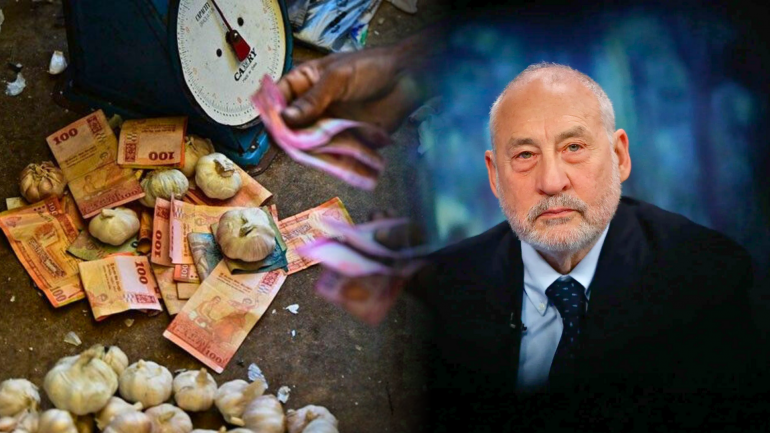
Recent storms in late November and early December further worsened the country’s economic outlook. Against this backdrop, Nobel laureate Joseph Stiglitz and 120 other economists issued a statement on December 21, 2025, calling for debt cancellation for Sri Lanka.
“Sri Lanka is now confronting a severe economic shock triggered by the recent cyclone, extensive flooding, and landslides, which has inflicted extensive damage to infrastructure, livelihoods, and key sectors of the economy… Therefore, we call for immediate suspension of Sri Lanka’s external sovereign debt payments, and a new restructuring that restores debt sustainability under the new circumstances,” the statement said.
Regrettably, during the Jubilee Year, Sri Lankan Catholics did not initiate any significant programme or advocacy effort to highlight the demand for debt cancellation. This was a missed opportunity to bring the issue to the international stage and to seek the solidarity and support of the global Catholic Church.
Looking ahead with hope
The Jubilee Year of 2025 ends without a resolution to the crushing debt faced by poor nations. Yet if the biblical vision of Jubilee is to remain alive, believers must continue to work actively for solutions to the global debt crisis.
Within the Catholic Church, a platform already exists to carry this mission forward: the “Economy of Francesco” initiative. Its recent gathering in Castel Gandolfo, Rome, from November 28 to 30, 2025, brought together hundreds of young economists and change-makers, with debt cancellation as a central theme. This initiative offers a concrete way to integrate Christian commitment to debt justice beyond the Jubilee Year.
The hope of Jubilee, therefore, does not end; it must be sustained and carried forward. If churches in Asia, in Sri Lanka, and across the Global South take concrete steps in the coming year to advance the call for debt cancellation, it can give rise to renewed hope for justice, solidarity, and a more humane global economy.
Radio Veritas Asia (RVA), a media platform of the Catholic Church, aims to share Christ. RVA started in 1969 as a continental Catholic radio station to serve Asian countries in their respective local language, thus earning the tag “the Voice of Asian Christianity.” Responding to the emerging context, RVA embraced media platforms to connect with the global Asian audience via its 21 language websites and various social media platforms.
Latest News