


The Federation of Asian Bishops' Conferences (FABC) approved a comprehensive revision of its Statutes on July 25, marking a significant step in strengthening the Federation's governance and aligning its structures with the synodal vision of the Church in Asia.
The amended Statutes were approved during the 12th FABC Plenary Assembly in Jakarta after extensive discussion and discernment by delegates. The revised text will now be submitted to the Holy See for confirmation before taking effect.
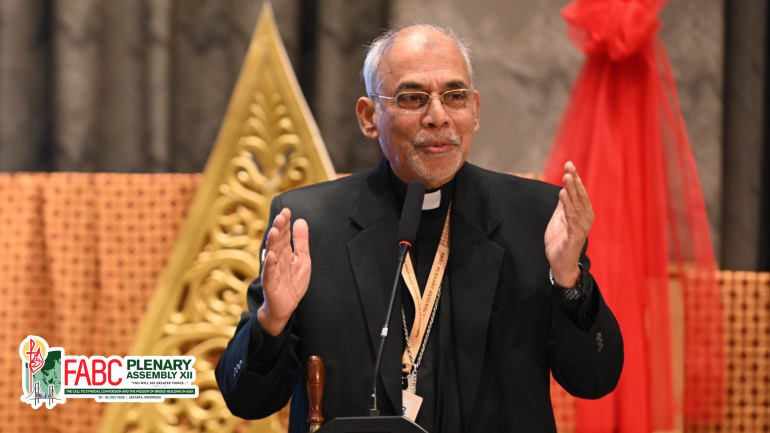
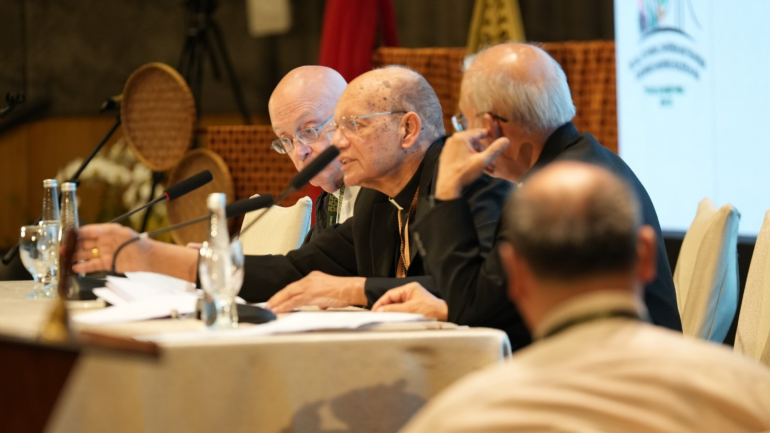
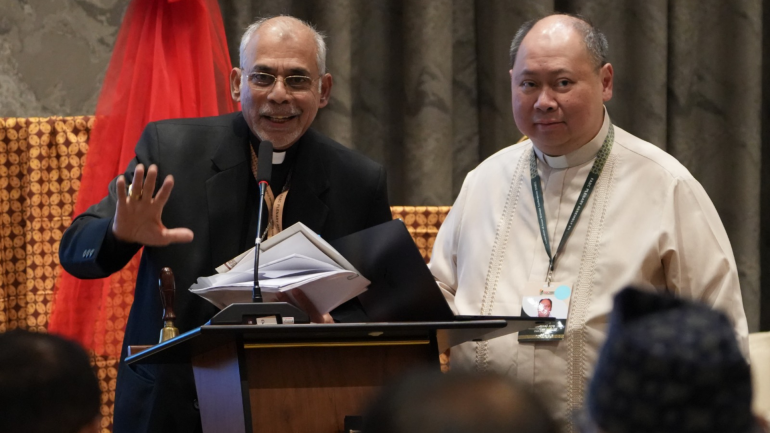
The session at Hotel Mulia's Vanda Room was opened by Cardinal Filipe Neri Ferrão, FABC president. Cardinal Oswald Gracias, papal envoy of Pope Leo XIV, presented the amendments article by article, assisted by Fr. William LaRousse, MM, Assistant Secretary General of the FABC. The revisions followed more than a year of consultation and drafting by the Federation's Central Committee.
Introducing the proposal, Cardinal Ferrão noted that the current Statutes were approved by the Holy See in 2013. Since then, the FABC has undergone significant pastoral and institutional development, particularly through its experience of the Synod on Synodality.
"The revised Statutes bring our governing document into harmony with the reality of the FABC today," he said.
Cardinal Gracias emphasized that the amendments do not change the Federation's identity but formally recognize developments that have gradually taken shape over the past decade.
"We are not proposing anything fundamentally new," Cardinal Gracias told the assembly. "We are simply updating the Statutes to reflect the reality of the FABC today."
Among the key changes is a renewed description of the FABC as "a visible expression of the unity and diversity of the Churches in Asia," underscoring its identity as a communion of local Churches rather than simply a coordinating body.
The revised Statutes also broaden the Federation's mission by explicitly promoting theological and pastoral research, strengthening collaboration among episcopal conferences, enhancing cooperation with Vatican dicasteries and bishops' conferences on other continents, and representing the Church in Asia in ecclesial and international forums.
The amendments introduce important changes to the Federation's governance. While reaffirming the Plenary Assembly as the FABC's highest authority, they replace the former office-bearers structure with an Executive Board composed of the president, vice president, and secretary general.
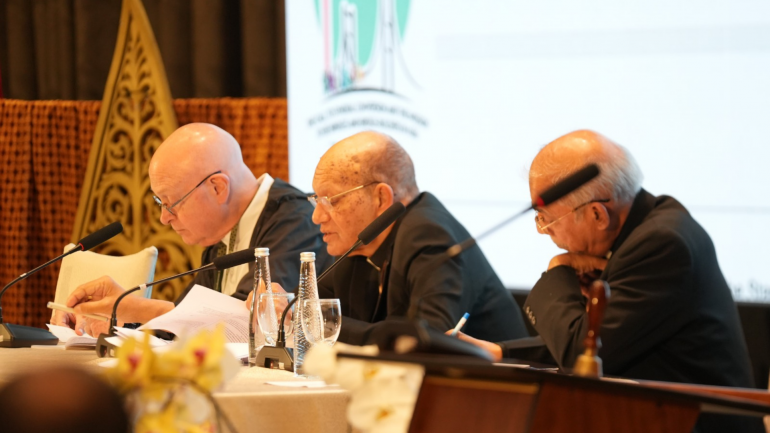
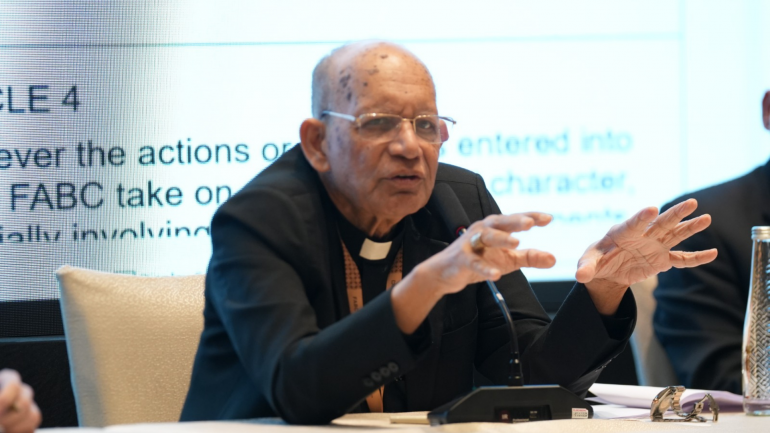
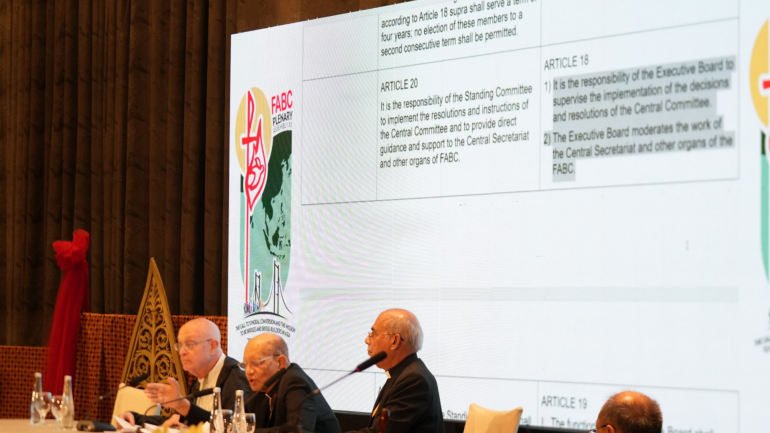
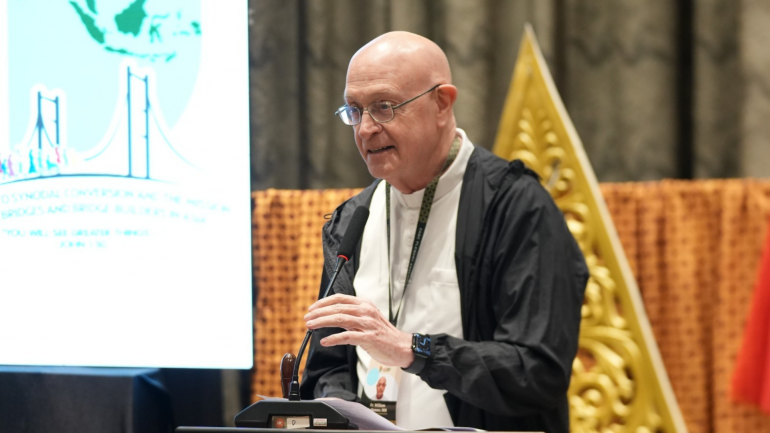
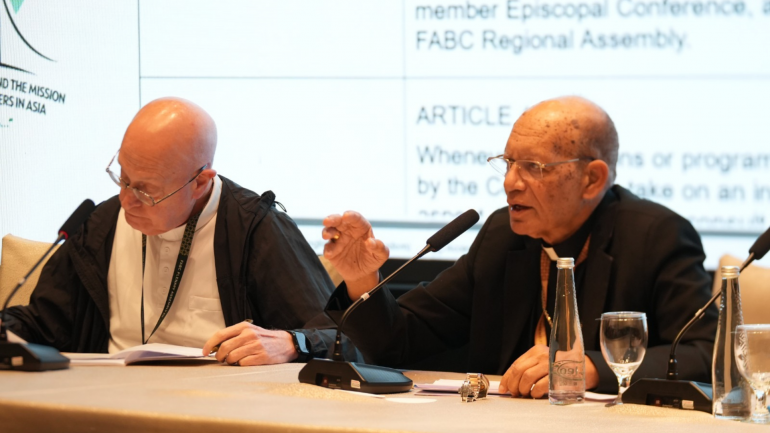
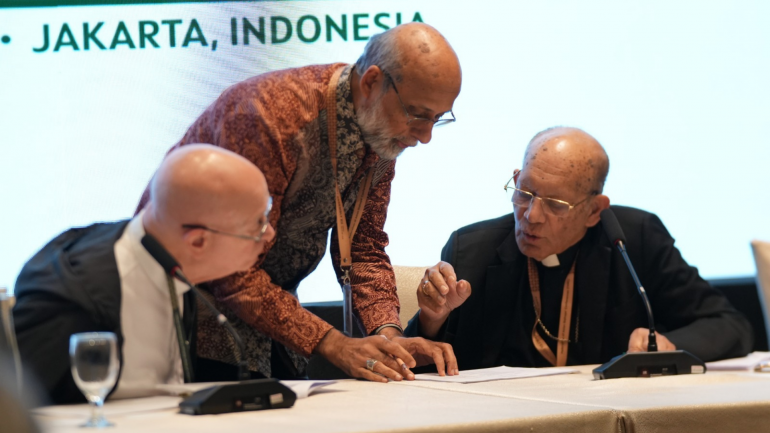
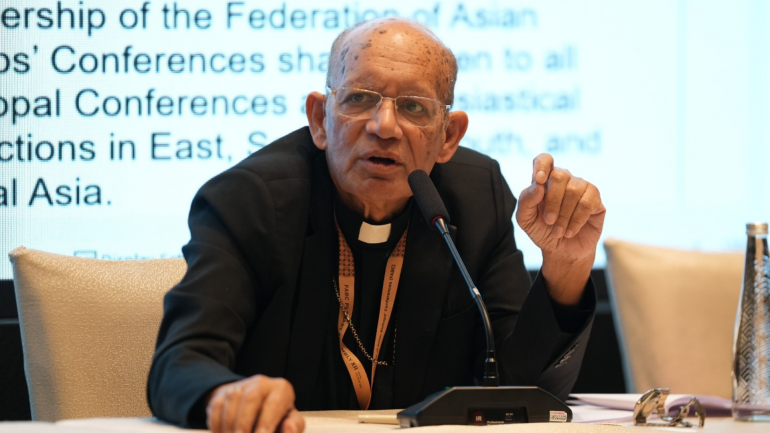
The new structure reflects a more collaborative model of leadership, with the Executive Board responsible for implementing the decisions of the Central Committee and responding more effectively to the Federation's pastoral priorities.
The role of the Central Secretariat has also been expanded beyond administrative coordination to include communication, research, dialogue, and collaboration among the Churches of Asia. The revised Statutes formally recognize the responsibilities of the deputy secretary general and assistant secretaries general, providing greater institutional clarity for the Federation's growing work.
Reflecting the Church's increasing commitment to environmental stewardship, the amended Statutes incorporate care for creation as an integral part of the FABC's mission.
The revisions also distinguish more clearly between ecumenical relations with other Christian Churches and dialogue with followers of other religions, recognizing the distinct nature of each ministry. References to the former Regional Assembly have likewise been replaced with the more flexible concept of "groupings of bishops," reflecting the way regional collaboration has evolved within the Federation.
During the discussions, delegates stressed that greater administrative efficiency must remain rooted in communion, accountability, and shared discernment. Major constitutional decisions will continue to require approval by the Plenary Assembly and confirmation by the Holy See. Participants also discussed the future possibility of introducing electronic voting through implementing regulations.
The approval process itself reflected the synodal approach promoted throughout the Assembly, with bishops discussing and refining individual articles before adopting the revised text.
Once confirmed by the Holy See, the amended Statutes are expected to guide the FABC as it continues to strengthen collegial leadership, deepen synodal governance, and support the mission of the Church across Asia.
Radio Veritas Asia (RVA), a media platform of the Catholic Church, aims to share Christ. RVA started in 1969 as a continental Catholic radio station to serve Asian countries in their respective local language, thus earning the tag “the Voice of Asian Christianity.” Responding to the emerging context, RVA embraced media platforms to connect with the global Asian audience via its 21 language websites and various social media platforms.
Latest News