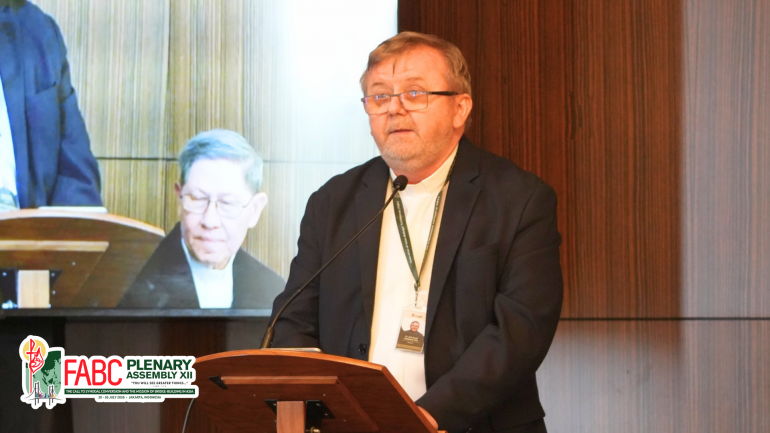
The Church's synodal renewal in Asia must begin not with new structures or pastoral programs but with a deeper encounter with the Word of God, according to Fr. Jan J. Stefanów, SVD, Secretary General of the Catholic Biblical Federation (CBF).
Addressing delegates at the 12th Plenary Assembly of the Federation of Asian Bishops' Conferences (FABC) on July 22, Fr. Stefanów said the Church's mission of becoming a bridge-builder in Asia can only succeed if it is rooted in Scripture.
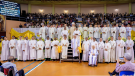
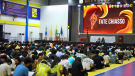
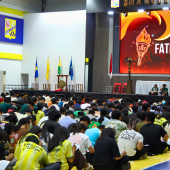
The assembly, being held at Hotel Mulia in Jakarta, has brought together cardinals, bishops, priests, religious, and lay delegates from across the continent under the theme, "Synodal Conversion and the Mission to Be Bridges and Bridge-Builders in Asia."
Fr. Stefanów said every bridge the Church seeks to build with peoples, cultures, and religions rests on a more fundamental bridge established by God.
"Sacred Scripture is the first bridge God has stretched between heaven and earth. Every bridge that the Church subsequently builds—with peoples, cultures, and religions—stands upon that first bridge, which is the Word of God itself," he said.
He emphasized that synodality should not be understood simply as a new way of organizing the Church or making decisions. Rather, it begins with listening to God speaking through Sacred Scripture.
Quoting the Final Document of the Synod on Synodality, Fr. Stefanów said listening to the Word of God is "both the starting point and the criterion for the Church's entire process of discernment."
"If synodality does not begin with the Word of God, it loses its foundation. There is no synodality without listening, and there is no Church that truly listens unless it first listens to the Word of God," he said.
Fr. Stefanów noted that God continues to speak through the liturgy, the Church's living tradition, prayerful reflection on Scripture, popular piety, the cries of the poor, historical events, creation, and the human conscience. Yet, he said, all these ways of listening are ultimately rooted in the Word of God.
He also urged Asia's bishops to renew the biblical apostolate, recalling that the FABC had long regarded Scripture as central to its pastoral vision.
That commitment led to the establishment of the Bishops' Institute for the Biblical Apostolate (BIBA), which has collaborated with the Catholic Biblical Federation for decades to strengthen biblical formation across Asia.
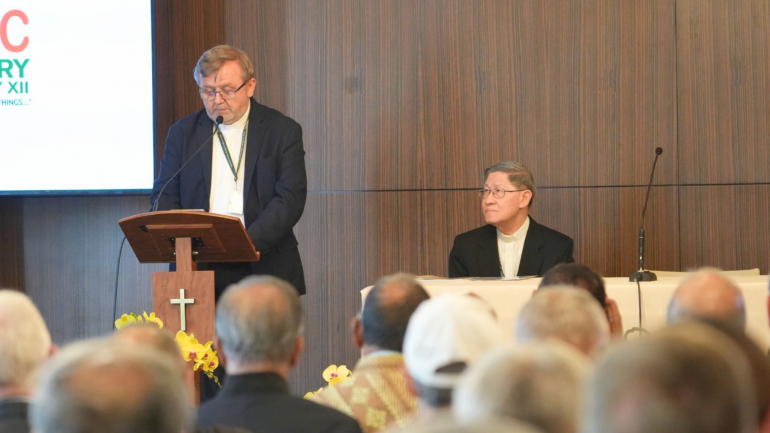
Fr. Stefanów pointed to BIBA II, held in Malaysia in 1999, as one of the continent's most comprehensive biblical formation initiatives, followed by BIBA III in 2010 and BIBA IV in 2013.
While acknowledging that the momentum of the biblical apostolate has slowed over the past decade, he expressed confidence that the FABC Plenary Assembly offers an opportunity to renew that commitment.
"Nothing has really been lost. That rich heritage is still there. But the vibrant dynamism that once existed now seems to be waiting to be rekindled," he said.
Fr. Stefanów stressed that his proposal was not to introduce another pastoral program but to ensure that Scripture becomes the inspiration for every aspect of the Church's mission, echoing the teaching of Pope Benedict XVI's apostolic exhortation Verbum Domini.
"Sacred Scripture must become the source of inspiration for the Church's entire pastoral life," he said.
He added that the Churches of Asia need more women and men who are formed to read Scripture, listen with open hearts, and discern together, describing such formation as essential for sustaining synodal conversion.
The Catholic Biblical Federation, he said, stands ready to support the Churches of Asia through its international network, formation resources, and collaboration.
Fr. Stefanów concluded that the renewal sought by the Church will ultimately be measured not by organizational reform but by hearts transformed through God's Word.
From that foundation, he said, the Church can discern God's will, walk together in faith, and fulfill its mission of becoming a bridge of hope across Asia.
Radio Veritas Asia (RVA), a media platform of the Catholic Church, aims to share Christ. RVA started in 1969 as a continental Catholic radio station to serve Asian countries in their respective local language, thus earning the tag “the Voice of Asian Christianity.” Responding to the emerging context, RVA embraced media platforms to connect with the global Asian audience via its 21 language websites and various social media platforms.
Latest News