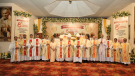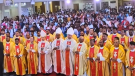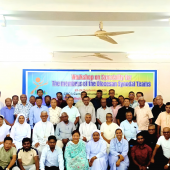



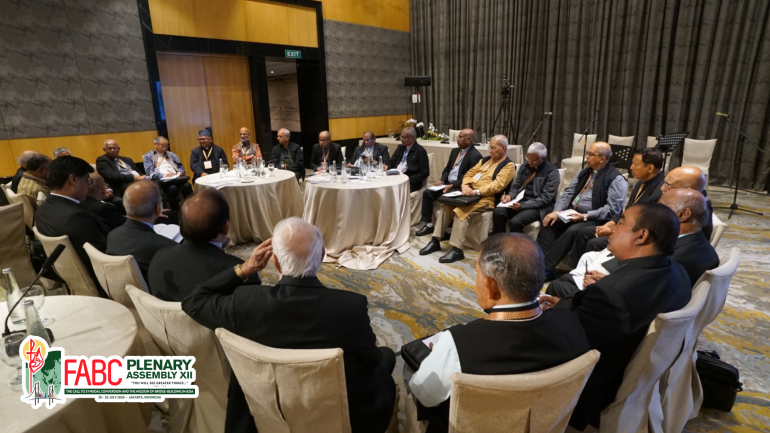
Bishops and delegates at the 12th Plenary Assembly of the Federation of Asian Bishops' Conferences (FABC) turned their attention to strengthening regional ties on July 25, as they explored how local Churches across Asia can deepen their relationships and advance the Church's synodal mission together.
The regional discussions followed the Assembly's morning session on drafting a Vademecum for Synodality in Asia, shifting the focus from continent-wide reflection to the pastoral realities of Asia's different regions.
Presiding Officer Archbishop Bejoy N. D'Cruze, OMI, guided the session, inviting participants to move from theological reflection to practical cooperation. Delegates were divided into three regional groups—Central and East Asia, South Asia, and Southeast Asia—to discuss the opportunities and challenges facing their local Churches.
Unlike the plenary sessions, the regional gatherings enabled bishops to reflect on shared pastoral, cultural, and social contexts while identifying practical ways to deepen collaboration within their regions.
Each group considered the same guiding question: How can relationships among the local Churches in our region be strengthened, meaningful synodal bridges be built, and collaboration in our common mission be enhanced?
The question echoed the Assembly's overarching theme of becoming a Church that builds bridges in Asia's diverse societies. Rather than focusing solely on internal Church structures, participants reflected on how local Churches could accompany one another more effectively across diocesan, national, and cultural boundaries.
The discussions followed the Conversation in the Spirit methodology that has shaped the Plenary Assembly throughout the week. Instead of debates or open exchanges aimed at reaching quick conclusions, participants engaged in a structured process of prayerful listening and communal discernment.
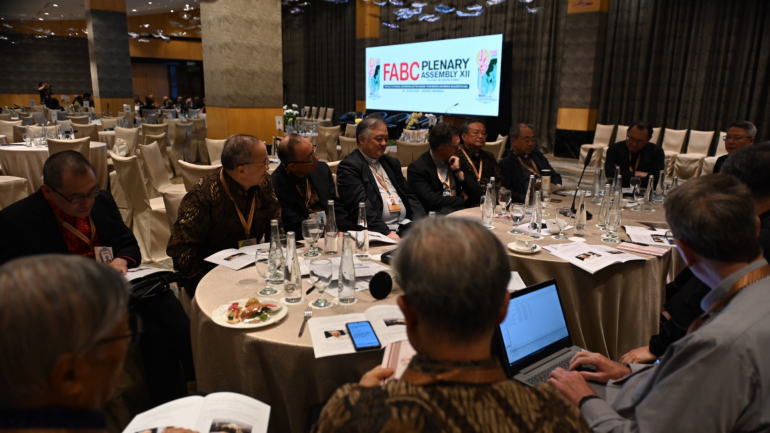
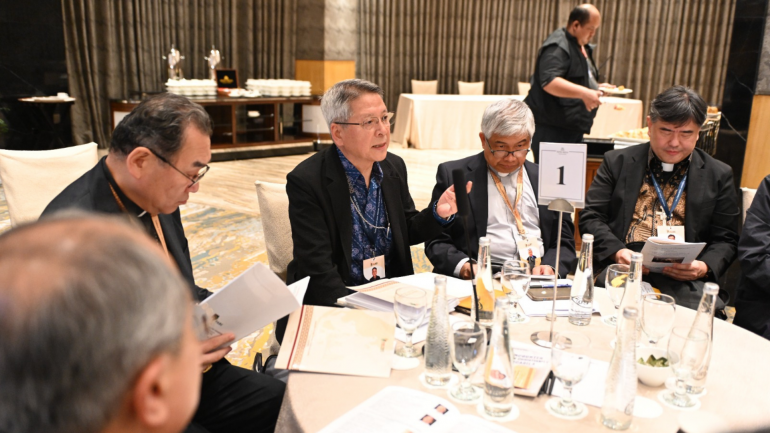
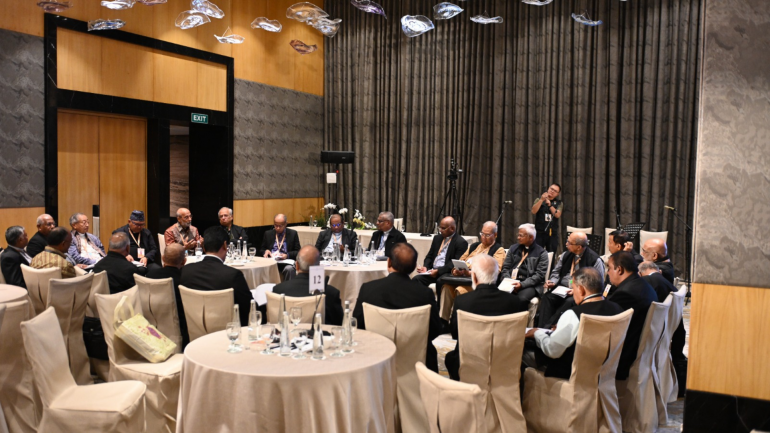
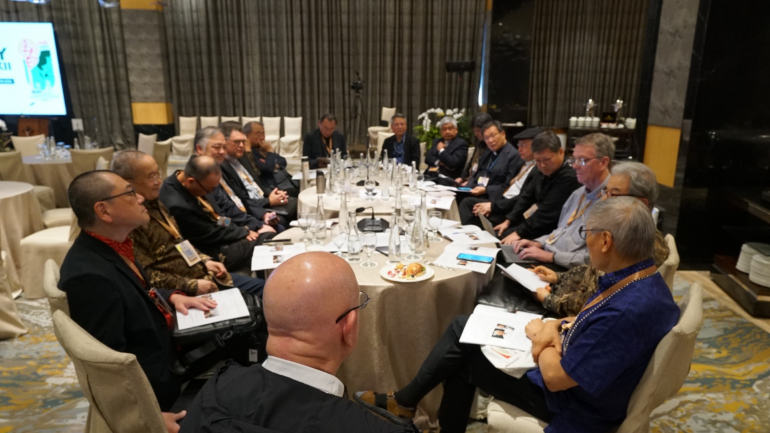
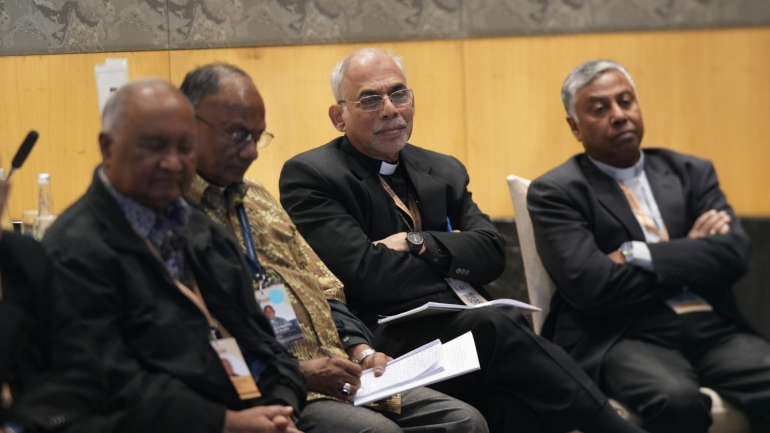
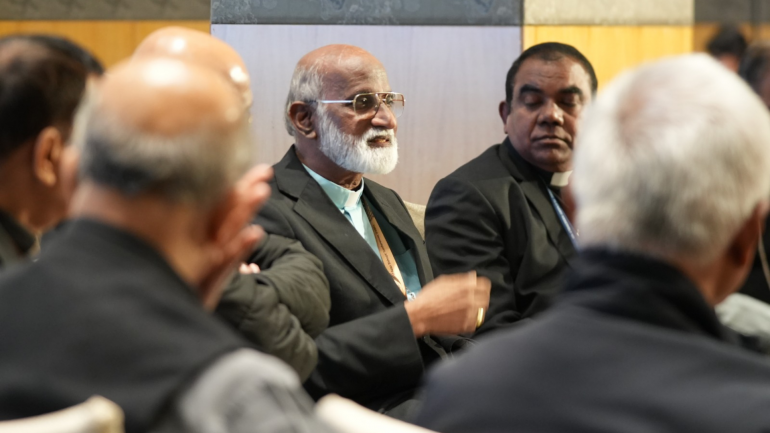
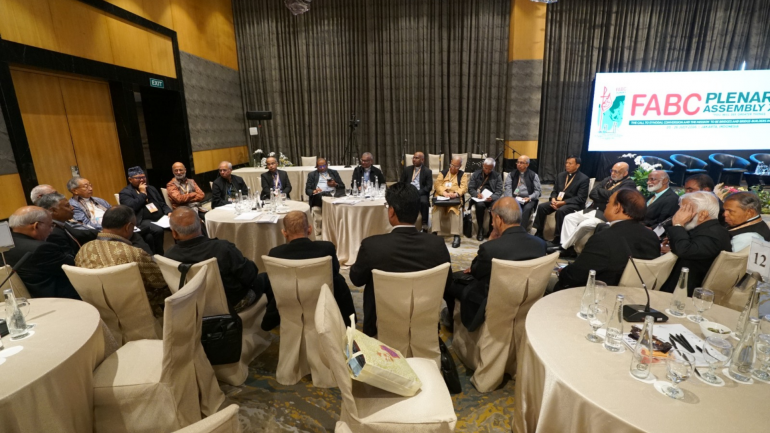
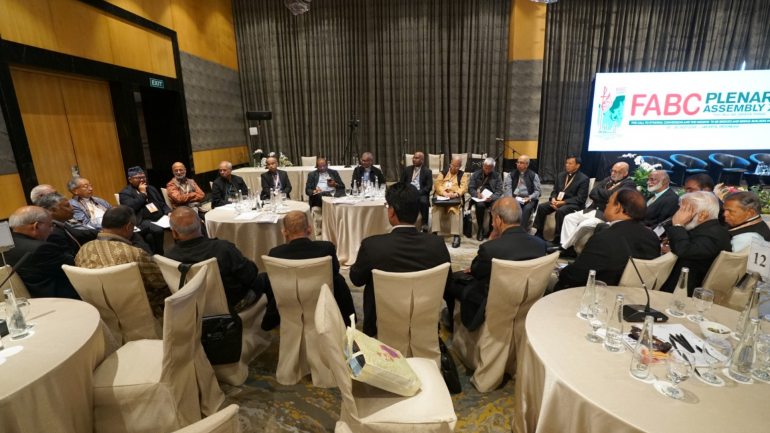
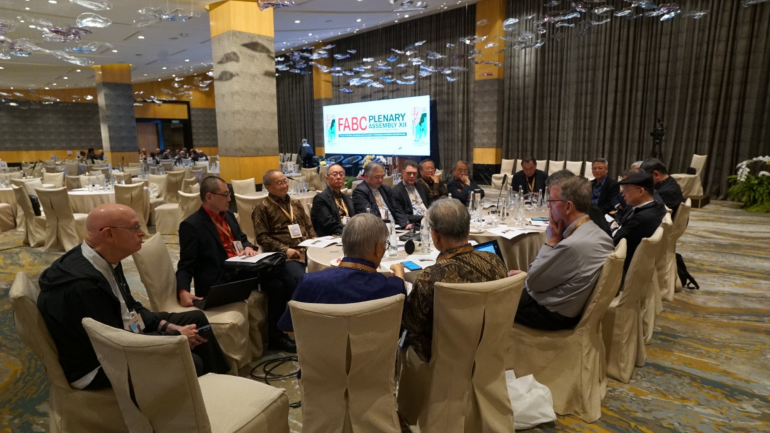
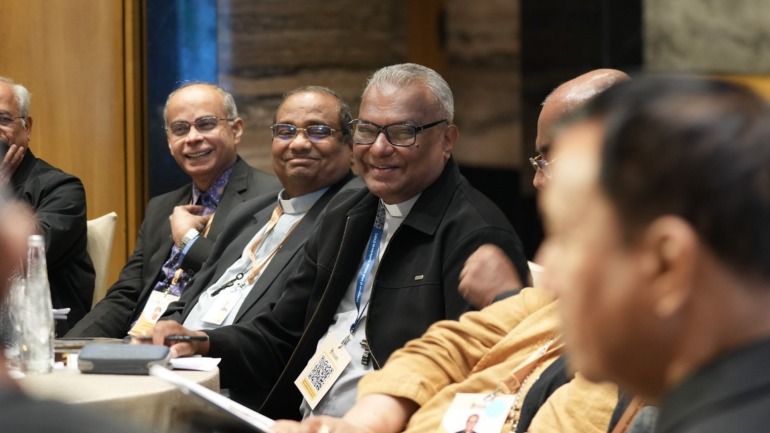
Each regional group was accompanied by a moderator who ensured that every participant had an equal opportunity to speak, while a secretary recorded the discussion and prepared a written summary. The summaries, together with the discussion notes, were uploaded to a shared online platform so that delegates could benefit from one another's reflections.
A defining feature of the methodology remained the practice of silence after each participant spoke. Rather than serving as a simple pause, the moments of silence gave participants time to prayerfully reflect on what they had heard before the next person shared.
The approach reflects the Synod's conviction that authentic discernment begins with listening. Instead of seeking to defend opinions or persuade others, participants were encouraged to recognize the movement of the Holy Spirit through the experiences and insights shared within the group.
Organizing the conversations by region also acknowledged the diversity of the Church in Asia. The pastoral realities of Central and East Asia, South Asia, and Southeast Asia differ significantly because of their distinct cultural, political, religious, and social contexts.
By listening to one another within these regional settings, participants sought to identify common pastoral priorities while exploring new opportunities for cooperation, mutual support, and shared missionary initiatives.
The discussions demonstrated that synodality extends beyond theological reflection into the practical life of the Church. Building a synodal Church, delegates recognized, also means strengthening relationships among neighboring Churches and creating networks of collaboration rooted in trust, dialogue, and shared responsibility.
As the Assembly continued, the regional conversations reinforced one of its central themes: the Church in Asia will become a more effective bridge-builder when its local Churches journey together, learn from one another, and discern the Holy Spirit's guidance in communion rather than in isolation.
Radio Veritas Asia (RVA), a media platform of the Catholic Church, aims to share Christ. RVA started in 1969 as a continental Catholic radio station to serve Asian countries in their respective local language, thus earning the tag “the Voice of Asian Christianity.” Responding to the emerging context, RVA embraced media platforms to connect with the global Asian audience via its 21 language websites and various social media platforms.
Latest News