FABC Office of Laity and the Family Highlights Lay Leadership as the Foundation of a Synodal Church

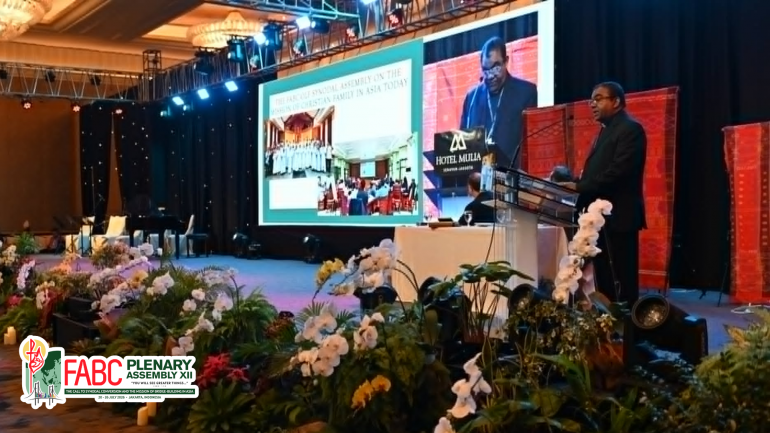
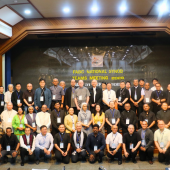
The Federation of Asian Bishops' Conferences (FABC) Office of Laity and the Family (OLF) called for greater participation of families, women, youth, and lay faithful in the Church's mission during its report to the 12th FABC Plenary Assembly on July 21 at Hotel Mulia in Jakarta.
The presentation underscored that the future of the Church in Asia depends not only on bishops, priests, and religious but also on the active witness of lay Catholics in their homes, parishes, and communities.
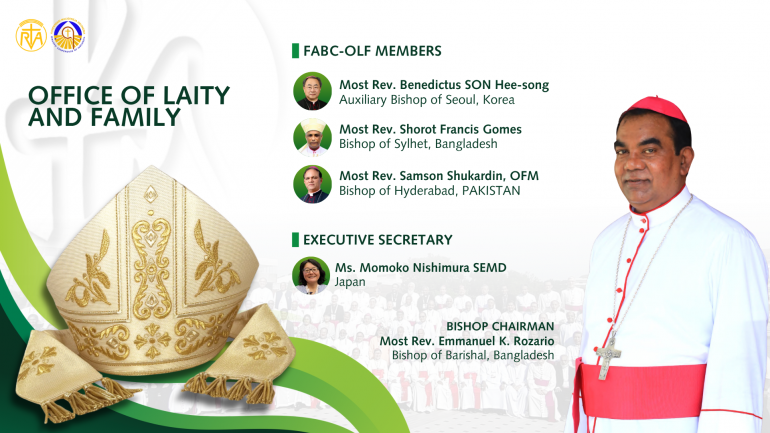
Presenting the report, Bishop Emmanuel K. Rozario of Barishal, Bangladesh, chairman of the office, and Momoko Nishimura, SEMD, executive secretary, outlined pastoral initiatives that promote synodality by strengthening families and encouraging lay leadership across the continent.
Their report reflected one of the Assembly's central themes—that synodal conversion begins not with structures but with people walking together in faith.
The office has expanded its pastoral vision to bring together families, women, youth, lay faithful, and Basic Ecclesial Communities (BECs) as interconnected expressions of the People of God, each playing a distinct role in the Church's mission.
Among its major initiatives is a seminar-workshop inspired by the FABC Bangkok Document 2023 on catechumenal pathways for married life. The program emphasizes that marriage preparation should extend beyond pre-wedding instruction to include ongoing accompaniment, helping couples become lasting witnesses of the Gospel amid rapid social change.
The office also organized a Synodal Assembly on the Mission of the Christian Family in Asia Today, inviting local Churches to listen to the lived experiences of families facing migration, economic uncertainty, changing cultural values, and interreligious realities. The gathering encouraged families to become active agents of evangelization rather than simply recipients of pastoral care.
The presentation underscored that the future of the Church in Asia depends not only on bishops, priests, and religious but also on the active witness of lay Catholics in their homes, parishes, and communities.
Another priority has been promoting the role of women in the Church. Drawing on reflections from the FABC's 50th anniversary and the Asian Continental Assembly, the office has explored ways to strengthen women's participation in ecclesial leadership, pastoral ministry, and decision-making while remaining attentive to Asia's diverse cultural contexts.
Young people also remain central to the office's mission. The report highlighted the FABC Youth Seminar in Tàpao, Vietnam, which focused on discipleship, leadership, and missionary witness, encouraging young Catholics to bring the Gospel into schools, workplaces, and the digital world.
The presentation also linked family life with care for creation, emphasizing that ecological responsibility begins in the home. Inspired by the Church's teaching on integral ecology, the office has encouraged families to adopt lifestyles rooted in simplicity, solidarity, and environmental stewardship.
Concluding the report, the office called on the Churches of Asia to continue building communities where lay people are recognized not merely as collaborators but as co-responsible partners in the Church's mission.
As the 12th FABC Plenary Assembly continues under the theme, "Synodal Conversion and the Mission to Be Bridges and Bridge-Builders in Asia, the presentation highlighted that the future of the Church will be shaped not only in dioceses and institutions, but also in families, Basic Ecclesial Communities, and parish communities where the Gospel is lived every day.
Radio Veritas Asia (RVA), a media platform of the Catholic Church, aims to share Christ. RVA started in 1969 as a continental Catholic radio station to serve Asian countries in their respective local language, thus earning the tag “the Voice of Asian Christianity.” Responding to the emerging context, RVA embraced media platforms to connect with the global Asian audience via its 21 language websites and various social media platforms.
Latest News