
Goa Interfaith Dialogue Explores Religious Perspectives on Ecological Responsibility

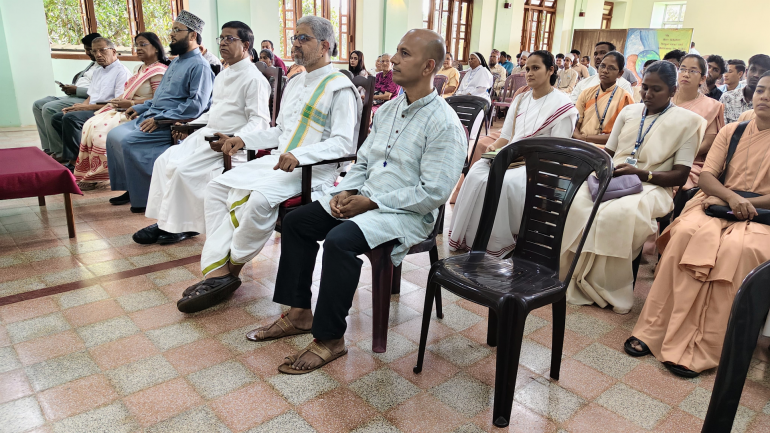
Hindu, Muslim and Christian representatives explored their respective religious traditions' understanding of creation and environmental responsibility during an interfaith dialogue organized in Pilar, in the western Indian state of Goa, on November 11.
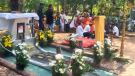
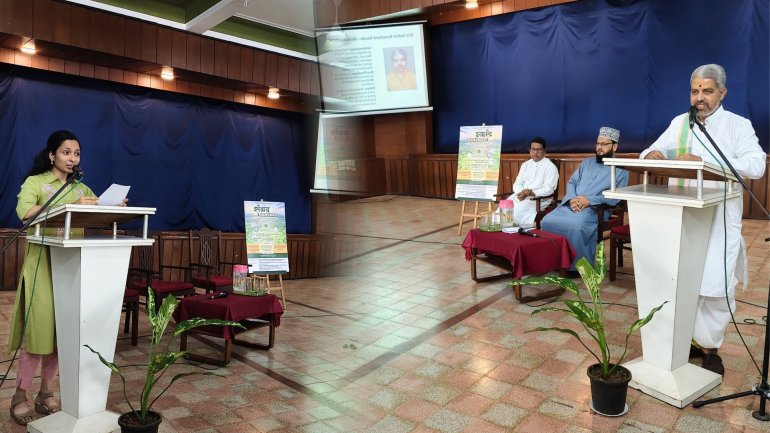
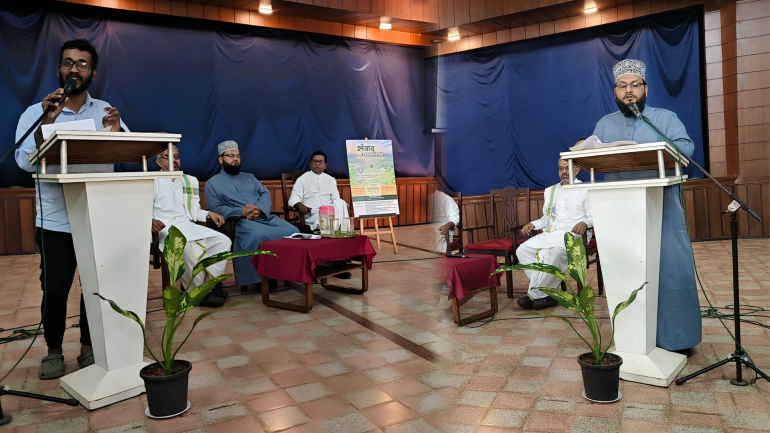
The Solidarity Forum of the Society of Pilar, in collaboration with Sadbhav and the Conference of Religious India (CRI), Goa and Daman, organized Samvaad – A Dialogue of Theological Exchange at Br Albert Hall, Pilar Seminary. The event marked the first day of the novena preparing for the 99th death anniversary of Venerable Agnelo De’ Souza, a member of the Society of Pilar whose cause of canonization is underway.
The dialogue, held under the theme “The Theology of Creation, Stewardship, and Human Responsibility,” brought together representatives of three religious traditions to examine humanity's relationship with nature and the shared responsibility to protect the environment.
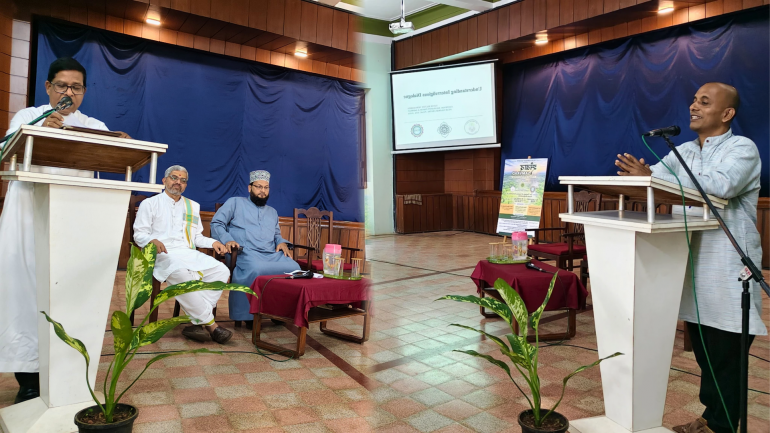
The panel featured Satish Suryakant Gaude, assistant professor of Sanskrit at Swami Brahmanand Mahavidyalaya, Tapobhoomi, Kundaim, Ponda; Hafeez Abul Kalam Khan, imam of Masjid Mehboob E Subhani in Cortalim; and Fr. Mateus Fernandes SFX, manager of Miracles High School, Sanguem. Dr Ida Rose Miller Mukherjee, a member of Sadbhav’s Core Committee, moderated the discussion.
Presenting the Hindu perspective, Prof. Gaude explained the significance of the Panchamahabhutas -- earth, water, fire, air and space -- as the five elements sustaining life. He stressed that human beings are inseparable from creation and must protect nature rather than depend exclusively on technological solutions. Referring to Hindu traditions concerning Brahma and Vishnu, he highlighted the complementary principles of creation and preservation.
Prof. Khan, presenting the Islamic perspective, described the Earth as belonging to Allah and humanity as entrusted with its care. Referring to Quranic passages, particularly Surah Al-Baqarah (2:30), which describes human beings as Khalifa (stewards) on Earth, he said this responsibility excludes the exploitation of natural resources.
He also cited Surah Ar-Rum (30:41), connecting environmental destruction with human actions. He identified pollution, deforestation and the careless use of resources as concerns requiring collective action, including everyday practices such as conserving water.
From the Christian perspective, Fr Mateus Fernandes described creation as God's gift entrusted to humanity for responsible care. Drawing on Pope Francis' encyclical Laudato Si', he emphasized the interconnectedness of human life and the natural environment, noting that ecological destruction disproportionately affects poor and vulnerable communities.
He urged practical measures, including reducing plastic consumption, protecting trees, conserving water and preventing food waste. He also called on schools, parishes and religious communities to strengthen ecological awareness.
In her concluding remarks, Dr. Mukherjee highlighted the complementary contributions of science, politics and theology in addressing the ecological crisis. While science explains the crisis and politics frames responses, she said, theology reminds humanity why creation must be protected.
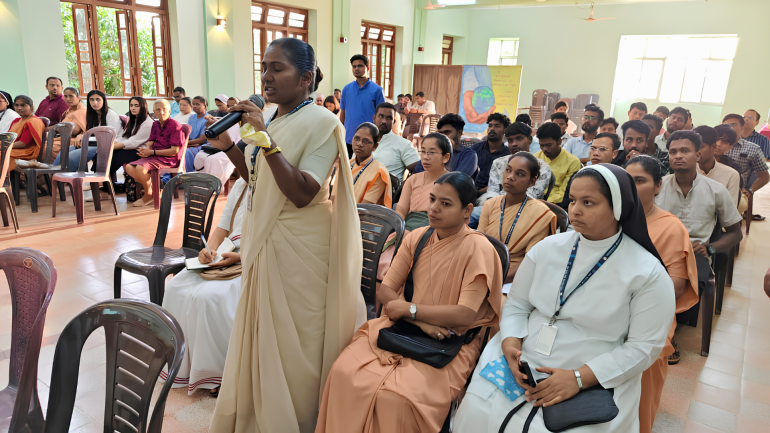
Participants welcomed the opportunity to understand different religious perspectives. Br. Stephen CSSR, a philosophy student, and Sr. Selvi FMM, a student at the Institute Mater Dei in Old Goa, described the encounter as enriching and eye-opening.
Fr. Valentine Alphonso SAC said interreligious encounters help transform theological learning into lived empathy, dismantle prejudice and prepare seminarians, religious and laypeople to become bridge-builders. He called for more frequent initiatives promoting mutual understanding, peace and harmony.
Fr. Elvis Fernandes SFX, convenor of Sadbhav at the Society of Pilar, welcomed the participants. Scholastic Augustine Coelho proposed the vote of thanks, while Jisha Ponnachan anchored the program.
Radio Veritas Asia (RVA), a media platform of the Catholic Church, aims to share Christ. RVA started in 1969 as a continental Catholic radio station to serve Asian countries in their respective local language, thus earning the tag “the Voice of Asian Christianity.” Responding to the emerging context, RVA embraced media platforms to connect with the global Asian audience via its 21 language websites and various social media platforms.
Latest News