



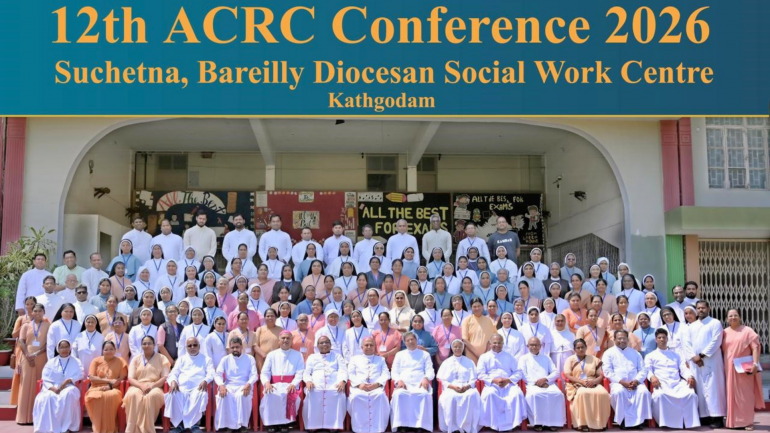
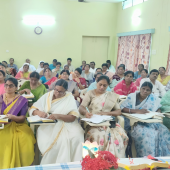
The Association of Catholic Rehabilitation Centers (ACRC), a Catholic network in India that coordinates rehabilitation and social service centers, held its 12th National Conference from April 16 to 19, bringing together around 140 caregivers and experts in the field of rehabilitation from across the country.
The conference was held at Suchetna, Bareilly Diocesan Social Service Centre in Kathgodam, northern India, under the theme “Caregivers are Peacemakers,” highlighting the vital role of Catholic caregivers in building a compassionate, inclusive, and peaceful society.
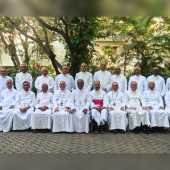
In his inaugural address, Cardinal Antony Poola, President of the Catholic Bishops’ Conference of India (CBCI), described nuns, religious, and priests who work tirelessly for differently abled children as “the pride of the Catholic Church.” He acknowledged their selfless commitment and lifelong sacrifice in caring for some of the most vulnerable members of society.
Referring to the conference theme, the Cardinal said it was a most fitting tribute to these servants of Christ, whose compassionate ministry brings hope, healing, and dignity to countless lives.
Cardinal Poola also expressed happiness in accepting the request of Fr. Roy Kannanchira, CMI, President of ACRCI, to bring the movement under the aegis of the CBCI, marking an important step forward in strengthening the Church’s mission of care and inclusion.
In his keynote address, Archbishop Anil Joseph Thomas Couto of Delhi reflected on the Church’s mission of service to differently abled persons, describing it as “a ministry that is deeply and authentically Catholic in spirit.”
Looking back over the past thirteen years, he expressed joy at the remarkable growth of ACRCI into a vibrant national movement. He encouraged the organization to continue its mission with renewed zeal, urging members to grow further and remain faithful witnesses of Jesus Christ in the contemporary world.
Archbishop Raphy Manjaly of Agra expressed deep appreciation for all those engaged in the noble ministry of serving differently abled persons. He said it was a joy to be among people wholeheartedly committed to this important apostolate.
He noted that this ministry brings hope and dignity to many lives, adding that the world becomes a better place because of the dedication, compassion, and selfless service of those involved.
According to Fr. Roy Kannanchira, President of ACRCI, the association brings together more than 300 member institutions from various states of India. These include heads and management representatives of Catholic special schools serving children with physical disabilities, hearing impairment, visual impairment, and intellectual disabilities. Fr. Roy added that ACRCI regularly organizes national and zonal conferences across the country, providing opportunities for members to share best practices in rehabilitation and special education..
Sr. Mercy Lytt, a Bethany Sister, has been working with children with intellectual disabilities for 24 years. She said, “The special thing about these children is that they are very affectionate. They know only how to love and they seek love. They overcome hurt feelings quickly, and that inspires me to do more for them.”
Sister Anne Jose of the Sisters of the Destitute noted that many physically challenged children trained at their centre in Changanassery, Kerala, have gone on to become successful professionals. She cited the example of Jilu Mole Maria Thomas, who had no hands but learned to drive a car—the first such case in Asia.
Expressing gratitude, Sr. Juliette Rebello, Canossian Sister and Principal of Canossa Special School, Mumbai, said, “Your encouragement and support have enabled us to gain knowledge, broaden our perspectives, and grow both personally and professionally.”
Radio Veritas Asia (RVA), a media platform of the Catholic Church, aims to share Christ. RVA started in 1969 as a continental Catholic radio station to serve Asian countries in their respective local language, thus earning the tag “the Voice of Asian Christianity.” Responding to the emerging context, RVA embraced media platforms to connect with the global Asian audience via its 21 language websites and various social media platforms.
Comments

Latest News



- Reply
Permalink