India: “The Examiner” Media Workshop Explores Writing and Imagination in the Digital Age

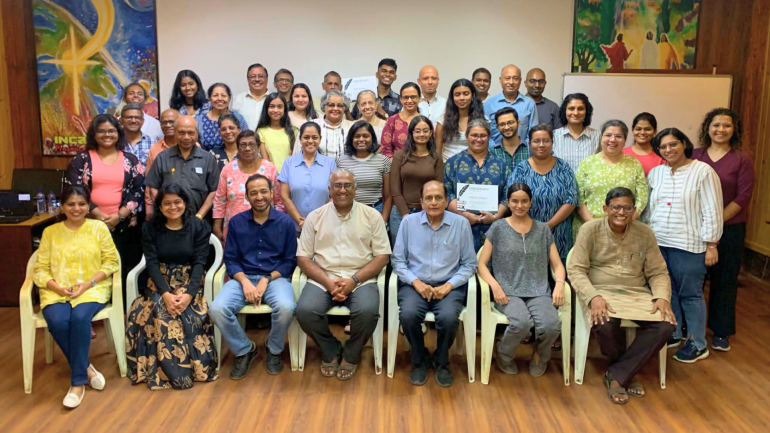
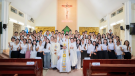
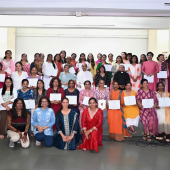
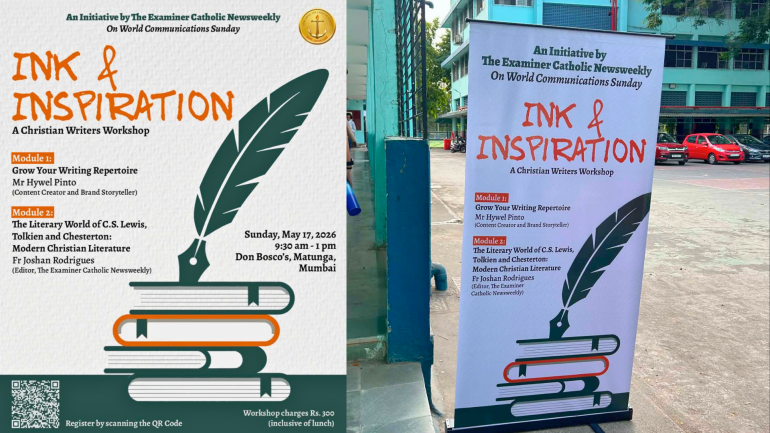
The Examiner, the Catholic newsweekly of the Archdiocese of Bombay, marked the 60th World Day of Social Communications with a writers’ workshop titled Ink and Inspiration, reflecting on the theme “Preserving Human Voices and Faces” in an era increasingly shaped by artificial intelligence.
The workshop was held on May 17 at the Don Bosco Youth Services Hall, Matunga, a neighborhood in central Mumbai in the western Indian state of Maharashtra.
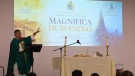
The program opened with a session by novelist Hywel Richard Pinto titled Grow Your Writing Repertoire. Born and raised in Mumbai, Pinto works in advertising and has authored several novels, including The Monday Murder, which was shortlisted among notable manuscripts in a DNA–Hachette selection initiative.
He later published ICE BOUND, Europa, and Monsters of Mithi, with his most recent novel titled High Tide.
Speaking to participants, he challenged common assumptions about writing and publication.
“The best stories are written not when you write for others, but when you write for yourself,” he said.
He outlined the demands of different writing formats, noting that novels require character depth and narrative layering, articles demand clarity and precision, blogs rely on relatability, scripts depend on visual structure, and advertising prioritizes brevity and impact.
Participants said the session reframed writing as a process shaped by revision rather than sudden inspiration.
The second session was led by Fr. Joshan Rodrigues, Chief Editor of The Examiner, who guided participants through the literary legacy of C.S. Lewis, J.R.R. Tolkien, and G.K. Chesterton.
He focused on the informal literary circle known as The Inklings, which met in Oxford during the 1930s and 1940s, often at the Eagle and Child pub, where members read drafts aloud and exchanged ideas that later shaped major works of English literature.
Among those works were early drafts of The Lord of the Rings and The Chronicles of Narnia.
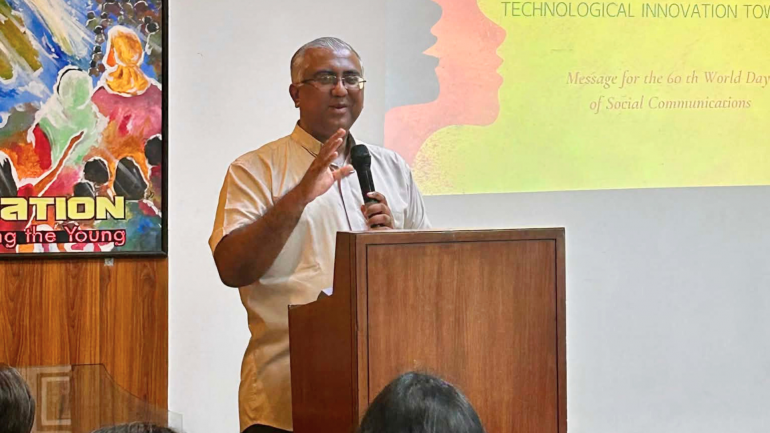
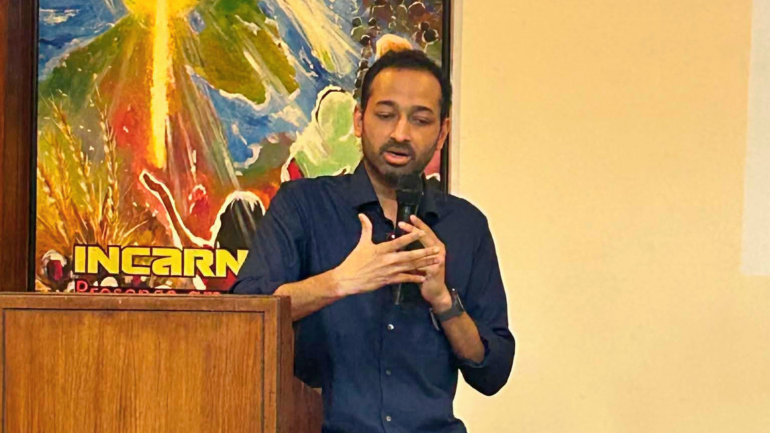
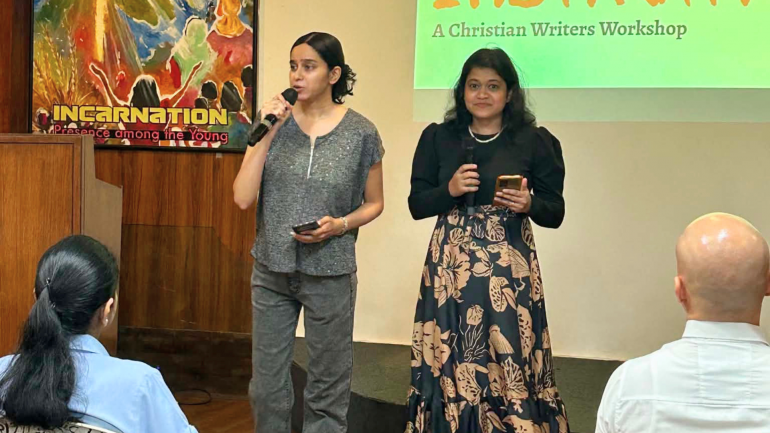
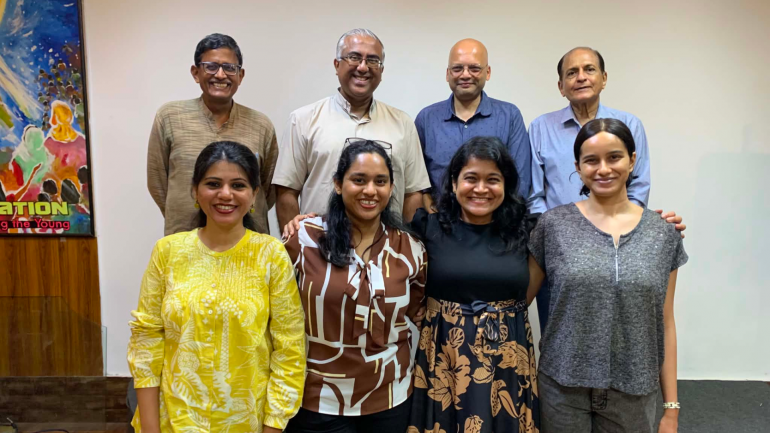
Fr. Rodrigues highlighted the distinct literary approaches of the three writers.
Chesterton’s writing, he noted, was grounded in paradox, often reversing assumptions to reveal deeper meaning. Lewis used allegory and imaginative “what if” narratives, including the theological imagination behind Narnia, where themes of sacrifice and redemption are central. Tolkien developed “mythopoeia,” constructing entire fictional histories and languages as an expression of creative imagination. He noted that for Tolkien, storytelling was not escape but “sub-creation,” a reflection of divine creativity expressed through human imagination.
The session emphasized a shared conviction among the writers: imagination can communicate faith and ideas more effectively than argument alone.
As the workshop concluded, participants reflected on how storytelling has evolved in the digital age. Long before algorithms and artificial intelligence, writers gathered in informal spaces to refine ideas, revise drafts, and test meaning through conversation and collaboration.
The day closed with a shared reflection that stories rooted in truth and imagination often outlast their writers and the contexts in which they were created, continuing to speak across generations.
Radio Veritas Asia (RVA), a media platform of the Catholic Church, aims to share Christ. RVA started in 1969 as a continental Catholic radio station to serve Asian countries in their respective local language, thus earning the tag “the Voice of Asian Christianity.” Responding to the emerging context, RVA embraced media platforms to connect with the global Asian audience via its 21 language websites and various social media platforms.
Latest News