

Indian Entrepreneur Uses Flower-Based Enterprise to Support Rural Women and Sustainable Livelihoods

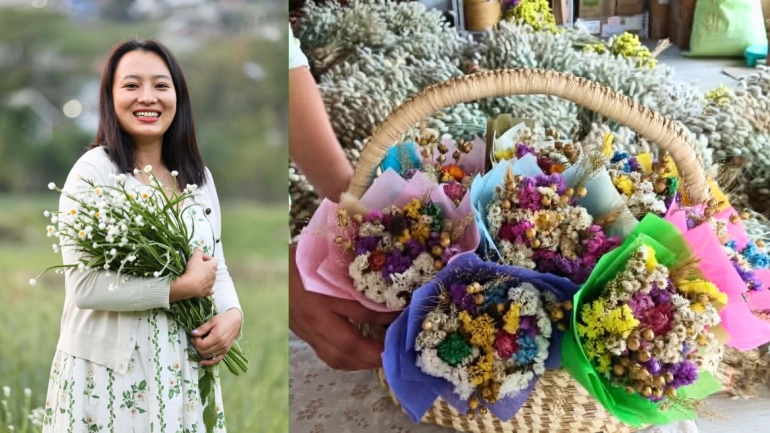
A young entrepreneur from Senapati district in the northeastern Indian state of Manipur is helping rural women build sustainable livelihoods through a flower-based enterprise that combines environmental responsibility with income generation.
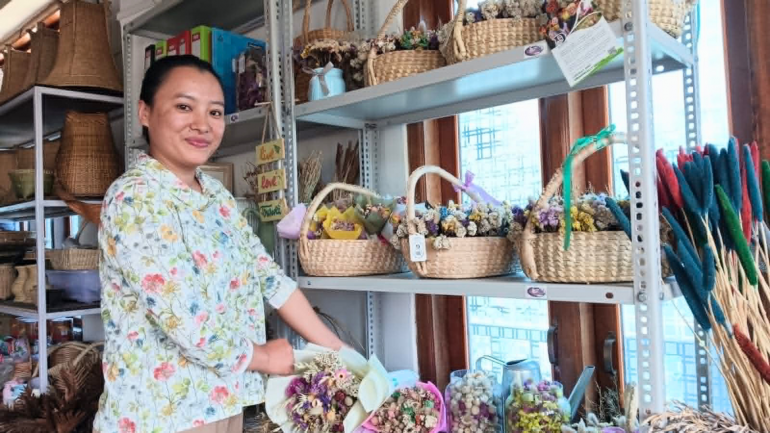
Chokhone Krechina, a biotechnology graduate and professional florist, founded Dianthe, an initiative that transforms locally grown flowers into preserved floral products and eco-friendly decorations. Through the venture, she has built a network of more than 300 farmers and artisans, many of them women from rural communities.
Senapati district, often known for its rich floral diversity and mountainous landscape, relies heavily on agriculture. However, many farming families struggle with low returns from perishable crops and limited economic opportunities.
Krechina told RVA that the idea for Dianthe emerged from her experience growing up in a farming family and recognizing the untapped potential of flowers as a source of income.
The initiative works with both fresh and dried flowers, using natural preservation methods to create bouquets, decorative items, and other floral products. By extending the lifespan of flowers, the enterprise reduces waste while creating additional value for local growers.
Dianthe promotes the use of locally sourced flowers, biodegradable packaging, and environmentally friendly production methods. It also encourages alternatives to plastic-based floral decorations, including naturally preserved funeral wreaths and ceremonial arrangements.
Beyond environmental goals, the project focuses on community development. Women from self-help groups and farming communities are involved in flower cultivation, preservation, and the production of handcrafted items.
According to Krechina, the initiative helps women earn additional income while making use of traditional skills and local resources. The project also seeks to preserve indigenous knowledge related to cultivation and handicrafts.
The entrepreneur said one of the major challenges has been encouraging consumers and growers to adopt sustainable practices in a market where plastic decorations and chemical preservation methods are often cheaper and more widely available.
To address this, Dianthe conducts workshops and awareness programs highlighting the environmental and economic benefits of eco-friendly alternatives.
Krechina's work has received recognition from several entrepreneurship and innovation platforms. Her initiative was also featured in an episode of the Indian radio program Mann Ki Baat.
Looking ahead, Dianthe plans to expand its range of environmentally friendly products and strengthen community-based entrepreneurship. The initiative also promotes balanced farming systems that support both flower cultivation and food production, helping rural communities improve income while maintaining food security.
Through its work, Dianthe demonstrates how small-scale enterprises can contribute to environmental sustainability and economic empowerment in rural India.
Radio Veritas Asia (RVA), a media platform of the Catholic Church, aims to share Christ. RVA started in 1969 as a continental Catholic radio station to serve Asian countries in their respective local language, thus earning the tag “the Voice of Asian Christianity.” Responding to the emerging context, RVA embraced media platforms to connect with the global Asian audience via its 21 language websites and various social media platforms.
Latest News