Indian Churches Launch National Federation Amid Rising Concerns Over Legal Restrictions

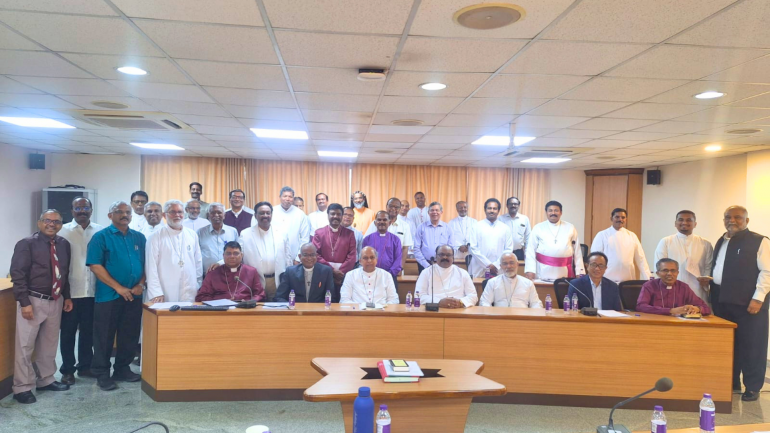
Church leaders from across India have launched a new ecumenical body aimed at presenting a united Christian voice amid growing concerns over violence, legal pressures, and challenges affecting minority communities in the country.
The National Federation of Churches in India (NFCI) was formally launched on May 8 during the Fourth National Ecumenical Bishops’ Fellowship Meeting held at St. John’s National Academy of Health Sciences in Bengaluru, the capital of the southern Indian state of Karnataka.
The federation brings together Catholic, Protestant, Evangelical, and other Christian denominations under a common national platform. Church leaders said the initiative emerged from a growing need for cooperation as Christians in parts of India face violent attacks, restrictive anti-conversion laws, and concerns over government oversight of church properties and foreign funding.
India, a Hindu-majority nation of more than 1.4 billion people, is home to about 28 million Christians, representing roughly 2.3 percent of the population. Christian groups have increasingly voiced concern over laws enacted in several Indian states that regulate religious conversion, arguing that such measures are sometimes misused to harass pastors and minority communities.
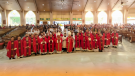
Around 45 bishops, church heads, and delegates from various denominations attended the meeting. The gathering opened with an ecumenical prayer service based on materials jointly prepared by the Dicastery for Promoting Christian Unity and the World Council of Churches.
Cardinal Anthony Poola, president of the Catholic Bishops’ Conference of India (CBCI), welcomed participants and stressed the need for unity among churches in addressing challenges facing the Christian community.
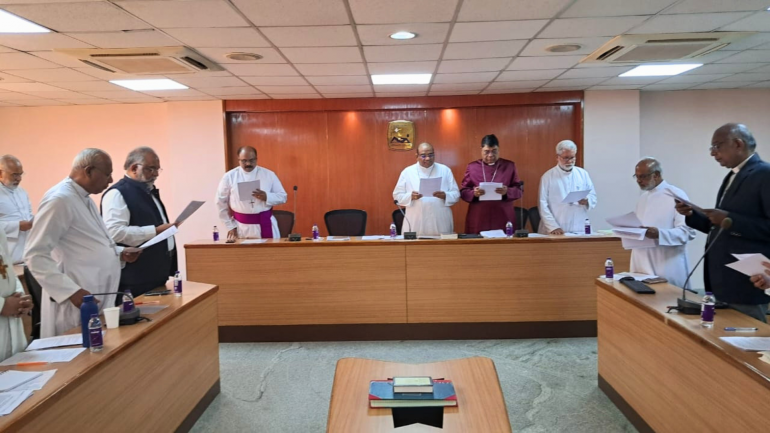
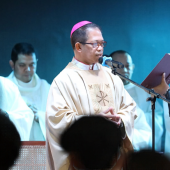
In his inaugural address, Bishop Mar Joseph Kallarangatt, chairman of the CBCI Office for Dialogue and Desk for Ecumenism, emphasized the importance of collaboration among Christian traditions to strengthen witness and solidarity.
The ecumenical dialogue session was moderated by Archbishop Joseph D’Souza, president of the Good Shepherd Church in India and the All India Christian Council.
Following approval of its governing guidelines, the federation elected Cardinal Poola as chairman. Archbishop D’Souza, Bishop Kallarangatt, and Bishop Vincent Vinod Kumar of the Church of South India’s Karnataka Central Diocese were named conveners.
Church leaders described the launch of the NFCI as a milestone in India’s ecumenical movement and a significant step toward strengthening cooperation and advocacy among the country’s diverse Christian communities
Radio Veritas Asia (RVA), a media platform of the Catholic Church, aims to share Christ. RVA started in 1969 as a continental Catholic radio station to serve Asian countries in their respective local language, thus earning the tag “the Voice of Asian Christianity.” Responding to the emerging context, RVA embraced media platforms to connect with the global Asian audience via its 21 language websites and various social media platforms.
Latest News