Indonesian Religious Celebrate Advent in Rome with Focus on Inculturation and Mission

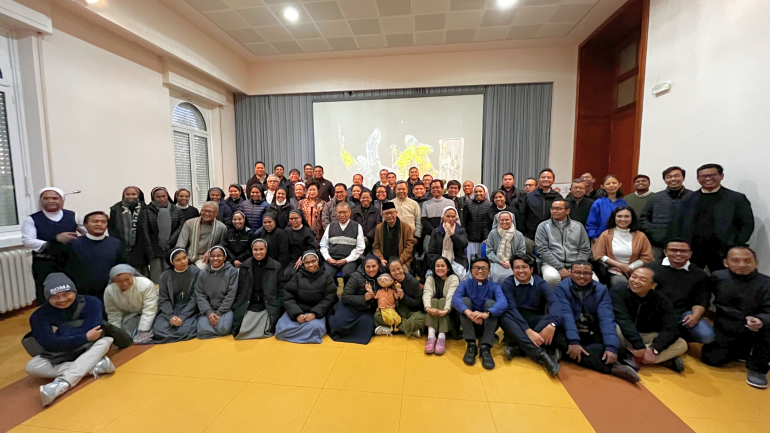
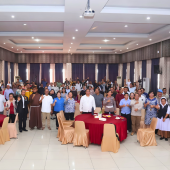
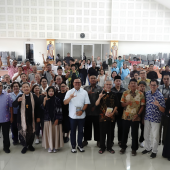
The Association of Indonesian Religious Men and Women in the Eternal City (IRRIKA) held its Advent Retreat on December 7, drawing approximately 90 members to the Collegio del Verbo Divino in Rome.
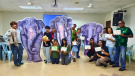
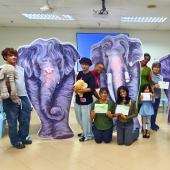
The session, titled “Weaving of Hope, Menenun Harapan,” centered on profound spiritual reflection on the most compelling symbol of Indonesian faith currently exhibited in the Vatican: the “Presepe Indonesiano” (Indonesian Nativity Scene).
Guided by Father Gregorius Budi Subanar SJ and his team, the retreat highlighted this Presepe as far more than mere decoration; it stands as a powerful statement of diplomatic maturity and a theological "Reversed Current" (Arus Balik) from the local church to the universal center.
The Diplomatic Significance: A 75-Year Milestone
The event opened with an address by Mrs. Nina Handoko, who narrated the ambitious journey of the Presepe. The idea, initiated by Indonesian Holy See’s Ambassador Michael Trias Kuncahyono, dared to fill a 75-year gap in diplomatic history: the absence of an Indonesian representation in the prestigious Vatican exhibition, 100 Presepi.
Despite initial challenges regarding the project’s size, the spirit of “for the children of Jesus and for Indonesia” drove its realization. Supported by Paper Moon, Sanata Dharma, and the Catholic Women of the Republic of Indonesia (WKRI), the Presepe Indonesiano now stands as the capstone of the 75th anniversary of diplomatic relations between Indonesia and the Holy See.
Mrs. Handoko expressed hope that this symbol would inspire courage, self-confidence, love, and solidarity, and encouraged Indonesia’s 37 dioceses to continue sharing their cultural wealth annually.
Theological Reflection: The 'Reversed Current' of Inculturation
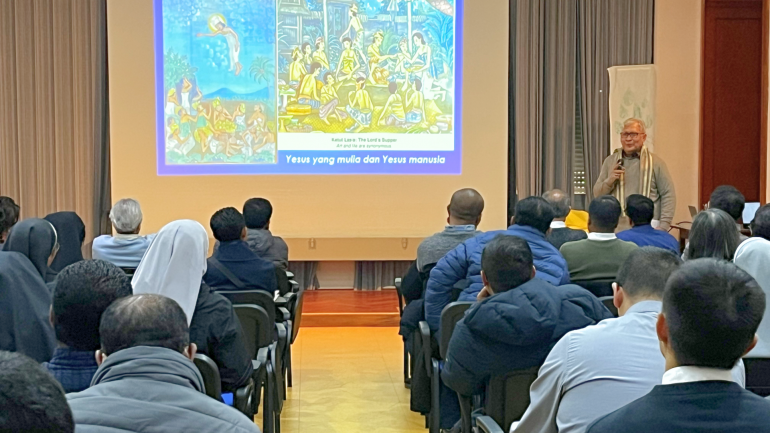
Father Gregorius Budi Subanar SJ led the theological core of the retreat, asserting the Presepe's presence as a significant "Reversed Current." This phenomenon marks a pivotal shift: Indonesia, once solely the object of European missions, has matured into a subject actively contributing its spiritual and cultural wealth to the universal Church.
Father Subanar explained this shift using the metaphor from Vatican II, viewing local churches as "small rivers" enriching the mainstream. He showcased how Catholic Indonesian artists have long embodied this inculturation:
-
Ancient Artifacts: Citing historical pieces like the Stone Altar of the Sacred Heart (Vatican Archaeology Museum).
-
Biblical Adaptation: Highlighting Basuki Abdullah's painting of the Nativity, which places the birth of Jesus on a Lotus Flower, a Hindu-Buddhist symbol of wisdom and eternity.
-
Local Christology: Discussing the work of common people, such as Nyoman Lumsir, whose depiction of Mary features guardian angels bearing a keris (traditional dagger).
Father Subanar emphasized that the inculturation process is dynamic and often involves the "liminal experience", a state of being on the threshold, crucial for communicating with the Divine.
The discussion concluded with participants, including Father Aldo, affirming that the Presepe is a powerful theological statement, not merely a decoration.
The Art of Perseverance: 'Weaving Hope' and the Women of Molo
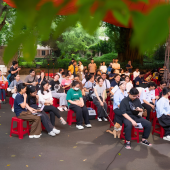
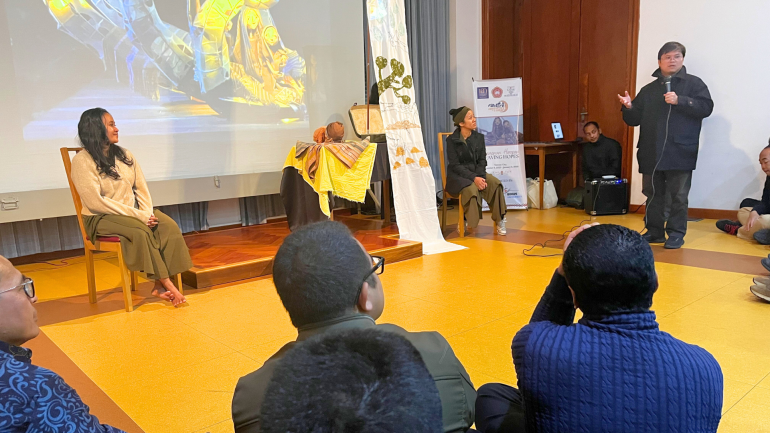
The most moving part of the afternoon was the performance of “Weaving Hope” by the Papermoon Puppet Theatre (Maria Tri Sulistyani and Sekar Kinanti).
The non-verbal show was inspired by the real-life struggle of the "mama-mama" of Molo, East Nusa Tenggara (NTT), who famously protected Mount Mutis from marble mining by symbolically weaving at the foot of the mountain.
This poignant act of resistance, where the shepherds in the Presepe were replaced by weavers, symbolized that the hope of the present is firmly in our hands.
Profound Reflections on Motherhood and the Earth
The performance generated intense reflection among the audience:
-
The Power of the Mother: Many saw the main puppet, "Mama Tua," as a source of unshakeable hope and comfort, linking the figure to the brave role of mothers in both church and society.
-
Cultural Connection: Participants from NTT personally connected with the story of protecting Mount Mutis (Gunung Mutis) and the Atoni philosophy that “water is blood, trees are hair, land is flesh, and stone is bone.”
-
The Cut Thread: The final act of cutting the thread, which was dyed with natural colors directly from Molo, was interpreted as an invitation, making the Molo struggle with the personal story ("cerita kita") of every person present.
Artist Ria explained that the non-verbal nature of the puppet show encourages imagination, allowing the audience to truly own the narrative, while critiquing the modern tendency to forget these profound ecological values.
From Receiving to Sending – The Missionary Body
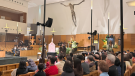
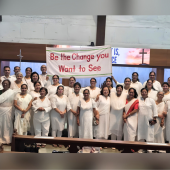
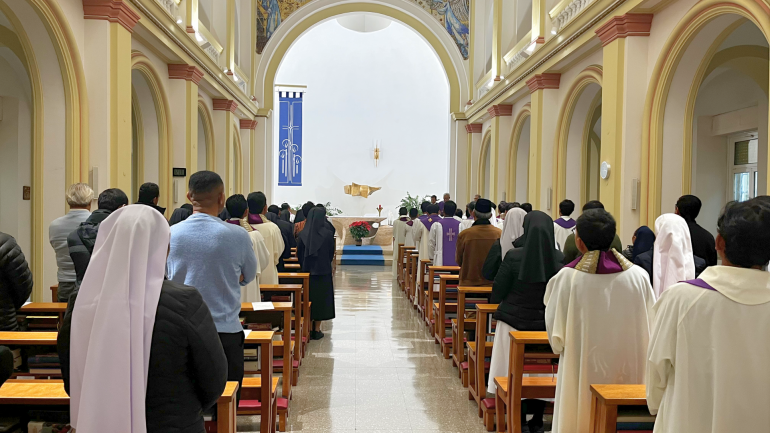
The retreat culminated in the celebration of the Eucharist, where five priests (Father Budi, Father Lorenzo Tarpin, Father Agustinus Purnama, Father Yulius Yasinto, and Father FX. Sudarmanto) delivered a stirring homily, re-emphasizing the theme of the Reversed Current and global mission.
They stressed the simple philosophy of salt: though small and unremarkable, it provides essential taste and transformation. "We are called to be the salt," they shared, "bringing the 'light of Indonesia', our cultural richness, perseverance, and spirit of brotherhood, to the ends of the earth."
The homily highlighted the reality of Indonesia's missionary body, with members of the congregation now serving across many countries in the world.
This is definitive proof that the Indonesian Church is no longer just a recipient of missions but a mature subject that sends and contributes its own staff and vision to the world.
The call to action was clear: Be the Salt, Be the Light, and Work Together to write the next chapter of the Church's history. The IRRIKA Advent Retreat successfully affirmed that the faith of Indonesia has come of age, giving a strong cultural, diplomatic, and spiritual contribution to the Universal Church.
Father Albertus Gatot, IRRIKA’s chair, expressed his gratitude for the speakers and participants present, including the Indonesian Ambassador to the Holy See.
Radio Veritas Asia (RVA), a media platform of the Catholic Church, aims to share Christ. RVA started in 1969 as a continental Catholic radio station to serve Asian countries in their respective local language, thus earning the tag “the Voice of Asian Christianity.” Responding to the emerging context, RVA embraced media platforms to connect with the global Asian audience via its 21 language websites and various social media platforms.
Latest News