On International Day Against Human Trafficking, Talitha Kum Bangladesh Renews Commitment to Protect the Vulnerable

In a remote Bandarban village, where children climb hills to reach school, a stranger from Dhaka arrived offering promises of opportunity. He convinced the poor parents of a Tripura boy, here called Nitol (not real name), that he would receive a good education in the capital. Hoping for a better future, they agreed. But in Dhaka, Nitol was forced into domestic work instead of school. Only after neighbors identified him was he safely returned home—another reminder of how easily traffickers exploit poverty and trust.
A similar ordeal was faced by Rahima Begum (not real name), a mother of two, and abandoned by her husband. Seeking a better future, she migrated to the Middle East as a domestic worker, but suffered sexual abuse at the hands of her employer. With embassy support, she managed to return, later saying that even begging in Bangladesh would have been better than the abuse she endured abroad.
When Talitha Kum, Bangladesh learned of her situation, the team visited Rahima to express their condolences and offer emotional support. Along with pastoral care, they provided financial assistance to help her restart her life through small-scale income-generating work. For Talitha Kum, every survivor is more than a statistic; each story carries pain, resilience and a warning for others.
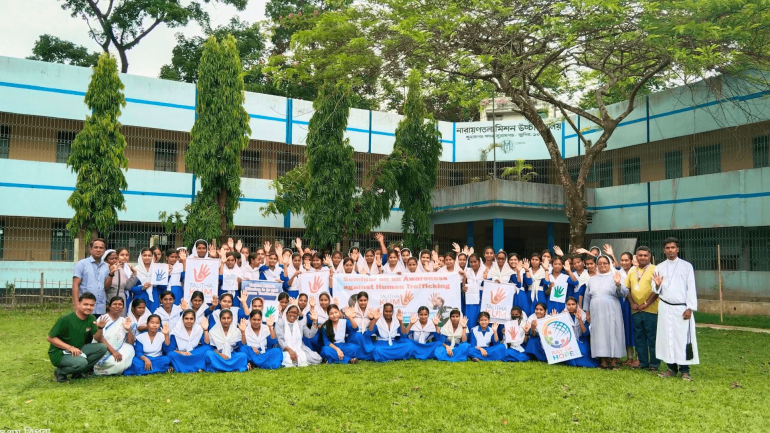
This year, the International Day of Prayer and Awareness Against Human Trafficking was observed globally on February 8, with strong participation from the Catholic Church in Bangladesh.
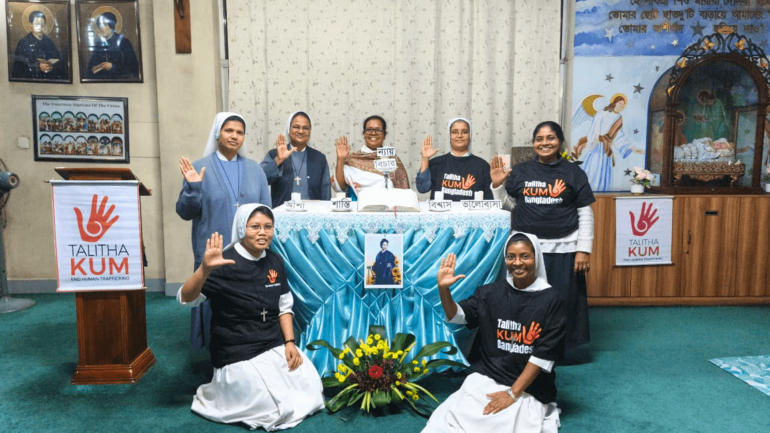
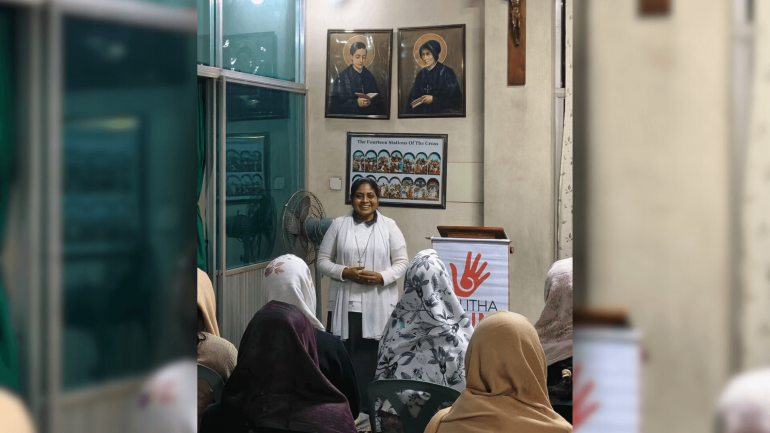
For Sr. Suporna Rozario, a Missionary Sister of the Society of Mary and Secretary of Talitha Kum, Bangladesh, this day marked another reminder of the urgency of their mission. She has spent years leading awareness sessions in rural parishes, meeting vulnerable families and explaining how traffickers operate. Through her work, she has seen how poverty, unemployment, broken families and misinformation push countless people—especially women and children—into situations they cannot escape.
According to the US State Department’s Trafficking in Persons Report 2024, Bangladesh identified 1,210 trafficking victims in 2023. Among them were 210 victims of sex trafficking, 795 forced labor victims and 205 victims exploited through other forms. These numbers reveal only part of the picture, as many cases go unreported, especially in remote districts.
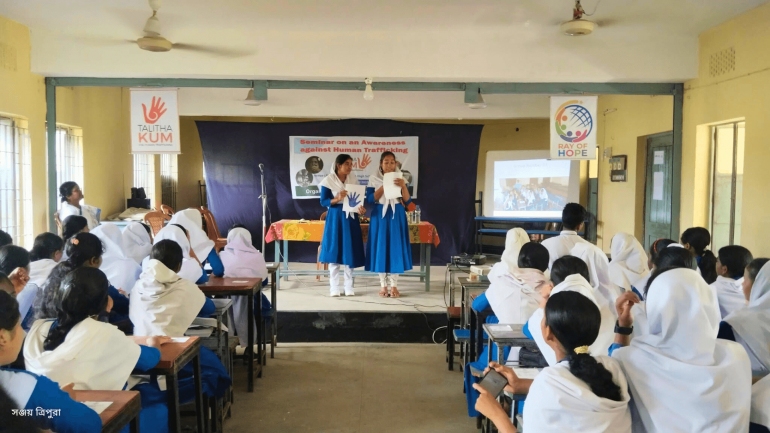
Talitha Kum, Bangladesh has traveled from villages to crowded slums, from student hostels to youth seminars, listening to survivors like Nitol and Rahima and raising awareness to prevent such tragedies from repeating. The network has already trained more than 30 young men and women—including Catholic sisters—to serve as ambassadors. These ambassadors carry forward awareness work in places where sisters cannot always reach.
One of them is 23‑year‑old Durjoy Nokrek, a university student from Mymensingh Diocese. He explained that the sisters are deeply involved in education, pastoral work and mission activities, and therefore need well-trained youth to expand the awareness mission. Since attending a three-day workshop in 2020, Durjoy has been actively working with Talitha Kum Bangladesh and has already reached more than 3,500 people in eight parishes and multiple youth gatherings. As he prepares for another three-day campaign from February 8 to 10, he says he is motivated by the stories he encounters. He had never imagined how many people were deceived with false promises of jobs, marriage prospects or foreign employment. Seeing their suffering changes him, he said, and the work feels like a service not only to others but to himself.
Sr. Suporna believes that lack of awareness remains one of the main reasons behind trafficking. She points to a combination of factors—poverty, low literacy, unemployment, unsafe environments and social vulnerability—that create fertile ground for traffickers. To counter this, Talitha Kum focuses particularly on young people, organizing awareness programs year-round in parishes, formation houses and student hostels.
Earlier this month, during National Youth Day in Banpara in Rajshahi Diocese, they reached around 500 young people through interactive sessions on safe migration and trafficking prevention.
She adds that border districts pose the highest risk because traffickers often operate there with false promises of well-paid foreign jobs. While Talitha Kum continues working at the grassroots level, she believes the government should take broader initiatives so that no one leaves the country unaware and becomes a victim abroad.
Across Bangladesh, the stories of survivors like Nitol and Rahima echo in villages and cities alike. Through listening, accompaniment and awareness, Talitha Kum, Bangladesh continues to stand beside them—one journey, one story and one rescued life at a time.