

Jakarta Archdiocese Urges Families to Bring Young Children Into the Full Eucharistic Celebration

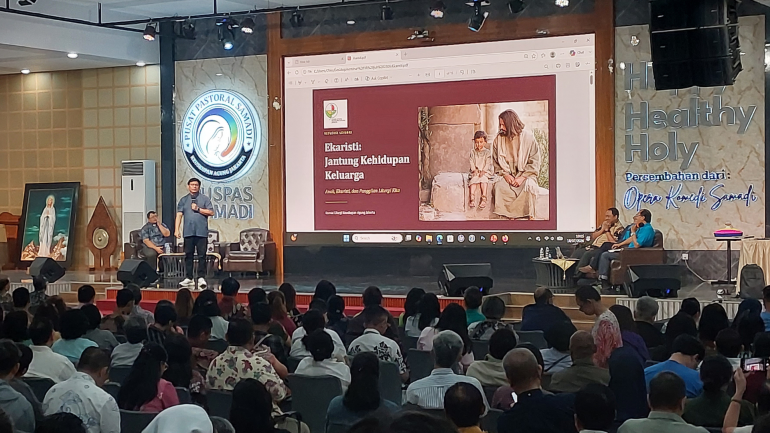
The Archdiocese of Jakarta is encouraging Catholic families to bring young children to participate in the full celebration of the Eucharist, marking a shift away from the long-standing practice of placing them in separate children's rooms during Mass.
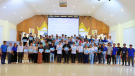
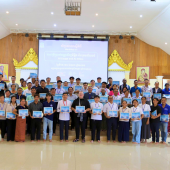
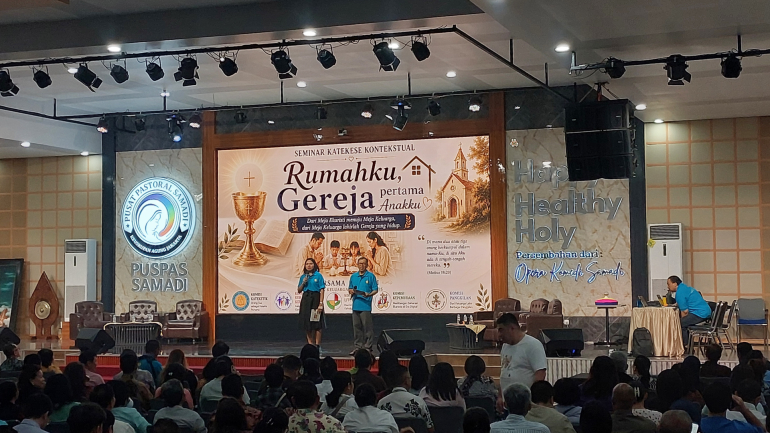
The new pastoral approach was presented during a seminar titled "My Home Is My Child's First Church," with the theme "Building Eucharistic Spirituality in the Family," held at Wisma Samadi in Klender, East Jakarta, on July 18.
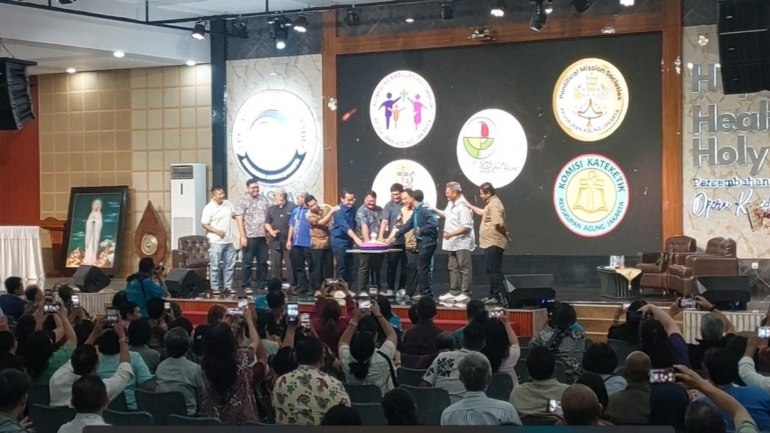
Organized by the Archdiocese of Jakarta's Catholic Class Desk in collaboration with its Catechetical Commission, the seminar gathered 443 participants from 70 parishes across the Indonesian capital. Representatives from the archdiocese's catechetical, liturgical, family, youth, and vocations commissions attended the event.
The initiative reflects a growing conviction that children develop a lasting love for the Eucharist by participating in the liturgy with their families rather than being separated from it.
"For decades, many parishes have provided separate rooms where young children could play during Mass before returning to the church for the final blessing," said Fr. Carolus Putranto "Uut" Tri Hidayat, chairman of the Archdiocese of Jakarta's Catechetical Commission.
"Love for the Eucharist cannot grow if children are kept away from experiencing the liturgy itself," he said.
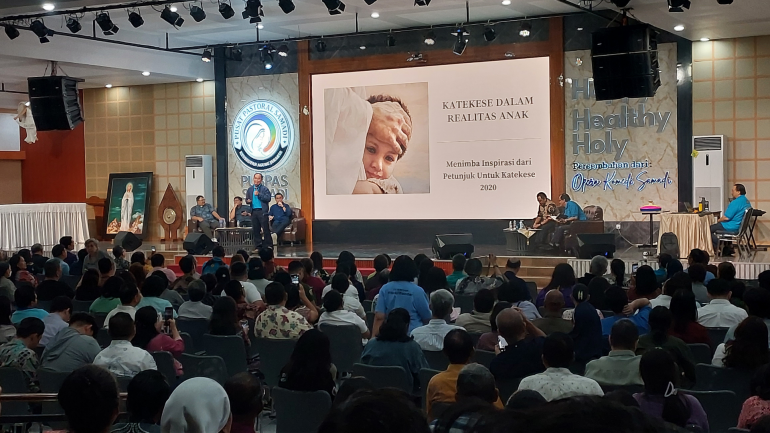
To support the new direction, the commission has introduced Prokat Dia-Rekat (Early Childhood, Children, and Youth Catholic Catechesis Program), which places the Eucharistic celebration at the center of children's faith formation.
Maria Fifin Finetta, who oversees the archdiocese's Children's and Youth Faith Formation Desk, said the program encourages children to experience every part of the Mass alongside their families—from the entrance procession and Scripture readings to the prayers, music, incense, and reception of Holy Communion.
"The goal is to help children encounter Christ through the liturgy rather than simply learn about the faith in a classroom setting," she said.
Frans Widiyanto, chairman of Catholic Class Jakarta, said these experiences gradually cultivate a genuine love for the Eucharist.
"Let children experience the beauty of the Eucharistic celebration firsthand. Through those experiences, their love for Christ will naturally grow," he said.
Speakers throughout the seminar stressed that parents remain the primary educators of faith.
Fr. Fransiskus Asisi Budiyono, MSF, chairman of the archdiocese's Family Ministry Commission, described the family as "the first school of faith."
"The home is where children first learn to pray with their father, mother, and siblings. From that experience, they are prepared to participate meaningfully in the Eucharist at church," he said.
Fr. Albertus Monang "Almo" Rianto Sidabutar, chairman of the Liturgical Commission, recalled that his own lifelong attachment to the Eucharist began because his parents consistently brought him to Mass.
Meanwhile, Fr. Salto Deodatus Simanullang, chairman of the Youth Commission, said research conducted by the archdiocese found that many young Catholics continue to seek authentic spiritual experiences through Eucharistic Adoration and the celebration of the Mass, despite the distractions of digital life.
Fr. Uut acknowledged that changing long-established pastoral practices will take time but said the renewal is essential if children are to develop a personal relationship with Christ through the Eucharist.
The archdiocese plans to expand formation programs and workshops to help parishes implement the renewed approach, while strengthening collaboration among its catechetical, liturgical, family, youth, and vocations ministries.
Church leaders said the initiative seeks to help families become the "first church" for their children by making participation in the Eucharist the foundation of lifelong faith formation.
Radio Veritas Asia (RVA), a media platform of the Catholic Church, aims to share Christ. RVA started in 1969 as a continental Catholic radio station to serve Asian countries in their respective local language, thus earning the tag “the Voice of Asian Christianity.” Responding to the emerging context, RVA embraced media platforms to connect with the global Asian audience via its 21 language websites and various social media platforms.
Latest News