

Indonesian Bishops’ Commission Demands Prosecution of Forest Burners, Restoration of Burned Forests


The Indonesian Bishops’ Conference has called for firm, fair, and transparent law enforcement against those responsible for forest and land fires, urging authorities to restore burned forests rather than allow their conversion into plantations, mining sites, or other commercial developments.
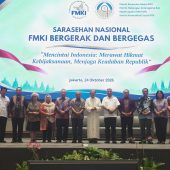
The Commission for Justice and Peace, Migrants and Itinerants (KKP PMP) of the Indonesian Bishops’ Conference (KWI) issued the appeal in a moral statement titled “Listening to the Cry of the Earth, Defending Life Amid Forest and Land Fire Disasters in Indonesia,” released in Jakarta on October 26.
The commission expressed concern over fires affecting several Indonesian regions, particularly Sumatra, Kalimantan, Papua, Maluku, and Sulawesi, warning that the disasters threaten human dignity, public health, livelihoods, and ecosystems.
The statement, signed by commission secretary Fr. Mathen Jenarut, cited Ministry of Forestry data recording 11,772 hotspots nationwide as of October 10. The Ministry of Health reported that more than three million people in seven provinces were exposed to haze in August, while 311,363 cases of acute respiratory infections had been recorded in fire-affected areas of Sumatra and Kalimantan as of October 17.
Although not every hotspot represents an active fire and not all respiratory infections can be directly attributed to haze, the figures highlight the scale of the public health threat.
The commission stressed that economic interests must not outweigh human safety, environmental protection, and the right to a healthy environment. It called for stronger forest governance, transparent accountability, effective fire prevention, and greater protection for Indigenous peoples and local communities whose livelihoods depend on forests.
The commission outlined seven appeals to the government, businesses, civil society, and other stakeholders: prioritize public health and safety; enforce environmental laws; protect Indigenous peoples’ rights; strengthen sustainable land governance; promote humanitarian solidarity; restore burned forests as forests; and translate ecological conversion into concrete action.
It emphasized that restoring damaged forests is both a moral and legal responsibility, warning against treating forests solely as economic resources.
Drawing on Pope Francis’ encyclical Laudato Si’, the commission said the cry of the Earth cannot be separated from the cry of the poor, as vulnerable communities often bear the heaviest consequences of environmental destruction.
The statement urged Catholics and all people of goodwill to support affected communities, promote ecological education, advocate just environmental policies, and adopt sustainable lifestyles.
It also called for coordinated action among government agencies, businesses, religious institutions, and civil society to protect Indonesia’s forests and safeguard life for present and future generations.
Radio Veritas Asia (RVA), a media platform of the Catholic Church, aims to share Christ. RVA started in 1969 as a continental Catholic radio station to serve Asian countries in their respective local language, thus earning the tag “the Voice of Asian Christianity.” Responding to the emerging context, RVA embraced media platforms to connect with the global Asian audience via its 21 language websites and various social media platforms.
Latest News