Five Catholic parishes in the Archdiocese of Jakarta are strengthening a shared culture of solidarity by supporting families facing illness, bereavement and financial hardship.
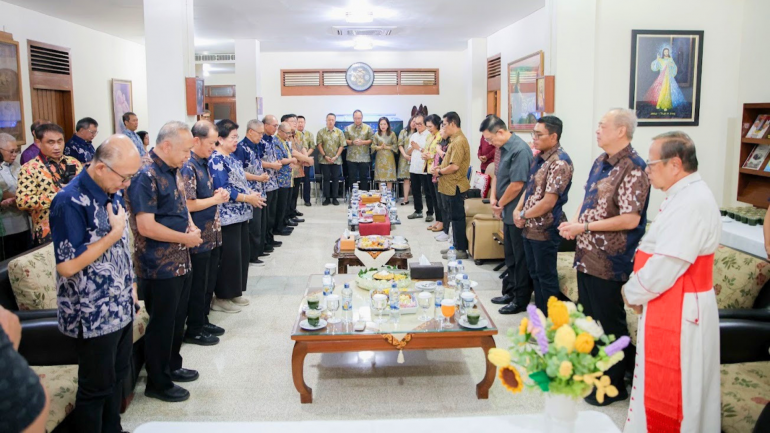
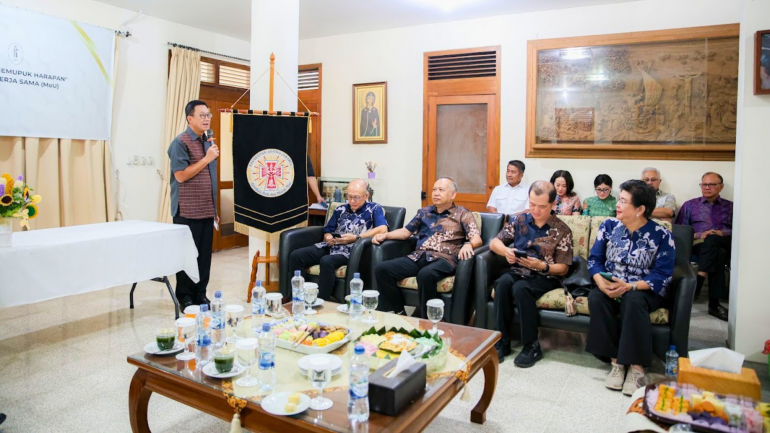
The commitment was reaffirmed during a meeting at the Jakarta Archdiocese Pastoral Center on September 4, attended by Archbishop Ignatius Cardinal Suharyo, priests, parish representatives and coordinators of the Blessing of St. Joseph (BKSY) program.
The Solidarity Movement, developed through BKSY, encourages Catholics to share a portion of funds raised in their parishes with families and communities experiencing hardship. The initiative grew from a pastoral concern about how parishes can remain close to members during difficult times while also extending assistance beyond their own communities.
One concrete form of assistance is support for families when a member becomes seriously ill or when they experience the death of a loved one. Depending on local arrangements, assistance can include funeral services, transportation of the deceased, preparation of the body for viewing, coffins and cremation arrangements.
The program can also provide charitable assistance of about 10 million Indonesian rupiahs to families who need help with funeral expenses and related needs.
“We hand the funds directly to each family according to their needs,” said Theodorus Wiryawan, one of the BKSY program coordinators.
At Alam Sutera Parish in Tangerang Regency, part of the wider Jakarta metropolitan area, about 400 million rupiahs was raised. The parish council determines how much should be allocated to families in need and to other communities requiring assistance, including educational institutions.
At Puspa Gading Parish in North Jakarta, about 202 million rupiahs was raised, with approximately 80 percent allocated to families in need and the remainder shared with other communities requiring assistance.
Similar efforts are being developed at Jakarta Cathedral Parish in Central Jakarta, while Kelapa Gading Parish in North Jakarta is also preparing fundraising for the same mission. The five participating parishes are Puspa Gading, PIK, Alam Sutera, Jakarta Cathedral and Kelapa Gading.
Jakarta, Indonesia’s capital and one of Southeast Asia’s largest metropolitan areas, has Catholic communities serving people from diverse social and economic backgrounds. The initiative seeks to make solidarity a regular part of parish life rather than an occasional response to crisis.
One priest described the movement as a positive “virus,” a virus of love that can spread from one parish to another.
In his closing remarks, Cardinal Suharyo thanked the priests, parish leaders and Catholics who have supported the initiative and expressed hope that it would continue to grow.
“I sincerely want to thank the women, men, and priests, especially the parishes that have started this movement,” he said. “We all hope that this movement will continue to grow and increasingly benefit those who are in need.”
Cardinal Suharyo acknowledged that solidarity involves questions about funding but stressed that money is not its central purpose.
“As long as the purpose is good and it is carried out to help others, I hope this movement can continue to receive support and be developed,” he said.
During the meeting, he also shared a story about a two-headed bird depicted at Mendut Temple in Central Java. In the story, one head received the best food while the other felt neglected and eventually ate poison. Because both heads shared the same body, both died.
For Cardinal Suharyo, the story illustrates why members of a community cannot remain indifferent when others suffer. The BKSY Solidarity Movement seeks to put that principle into practice by encouraging Catholics to care for one another and parishes to share their resources with those in need.
Radio Veritas Asia (RVA), a media platform of the Catholic Church, aims to share Christ. RVA started in 1969 as a continental Catholic radio station to serve Asian countries in their respective local language, thus earning the tag “the Voice of Asian Christianity.” Responding to the emerging context, RVA embraced media platforms to connect with the global Asian audience via its 21 language websites and various social media platforms.
Latest News